

Executive Director, Nature Finance, Oxford Sustainable Finance Group. Director, Transition Asia
Joined December 2008
- Tweets3.2K
- Following278
- Followers728
- Likes946





Some rough thoughts on the climate/nature topic from the WB meetings in Bangkok.
First, WB climate change action plan has been extended indefinitely. It was due to expire this June.
Second, previously announced, WBs 45% climate finance target is gone. The Bank actually hit 48% in FY2025, so 45% was really more of a floor. Dropping the target makes the COP29 climate finance goal of US$300bn/year by 2035 that much harder.
Third, still in the plan is Paris alignment for all operations, which is basically a screening tool, and one of three lines of defence for climate at the WB:
a.) The exclusion list, which includes upstream oil and gas
b.) PA screening
c.) climate finance target (now off the table).
Certain countries is pushing to remove the oil/gas restriction. If that goes, screening is pretty much the only thing left, since the climate finance target is already out.
Fourth, the WBs big push now is into private capital (ft.com/content/0e57c134-bb4b…). The Bank mobilised a record US$112bn last year, a lot via guarantees. Since FY22, upper-middle-income countries went from US$12bn to US$50bn, while low-income countries stayed flat at US$3bn. But money is going to where risk is most manageable (hence the key role of guarantees), and less to countries in most distress (where grants and special trust funds play a role).
Fifth, re: Nature Finance, this barely came up, with one line on natural capital in the official statement.

Lovely, interesting piece on how women in China navigate reproductive choices ft.com/content/a6f9e7c6-996e… by @EleanorOlcott

It’s really nice to come across people reading hardcover classics. I’m on a plane getting ready to take off, and across from me is a Chinese man quietly reading Romance of the 3 Kingdoms 三国演员. Meanwhile here is idiot me tweeting about it. 🤪

Calvin Quek retweeted

Whoever thought Carney would just be a technocratic prime minister should watch this. Perfect timing…


Calvin Quek retweeted

Ajay Banga’s unfinished business ft.trib.al/sFUUnWm
Calvin Quek retweeted

China's coal imports fell 6% in September year on year, crude oil imports fell 22% and fossil gas imports by 2%. Mirrors reductions in consumption as solar and wind displace coal and gas and EVs and rail displace oil.

Great FT lunch that reveals so much of the hubris that informs AI development today ft.com/content/462c303b-b96c…

He wrote one of the first books I ever read. Not a penny more, not a penny less. ft.com/content/5235f78e-5c94…

Interesting take about AI models not being able to come up with cancer cure

Yes, high powered simulation models would help, but these simply do not exist.
On the molecular level, we can simulate the behavior of individual molecules (or small molecular assemblies) with reasonable accuracy, but everything larger than that becomes very unreliable. We do not have accurate simulations of metabolic networks currently available. Throw in kinase cascades, differential post-translational modifications of proteins and lipids, production and relocalization of cellular organelles etc. and everything becomes foggier and foggier in terms of accuracy. In short, there is so much data missing that we cannot dream of simulating a single human cell. Even if we could, a single cell is nothing on the scale of the human body with hundreds of fundamentally different cell types each doing things differently.
All the people phantasizing about AI "curing cancer" do not see how far we still are from feeding the AI all the data that would be required for such a statement to make any sense.
Fantastic article - China built out solar and wind generation at a colossal scale. Now it needs to harness that green power to win the AI race. bloomberg.com/graphics/2026-…


China races to build AI data centres across energy-rich hinterland ft.com/content/e1dd8bff-b06d… via @ft


1. Singapore's haze woes continues. Current PM 2.5 levels at 64 µg/m³ which 4x times WHO guidance 24-Hour Mean Limit: 15 µg/m³. Here's a photo I took looking out at the downtown area today.


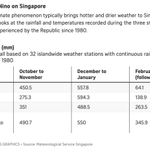
7. So a very difficult situation for Singapore and alas no quite respite from the Haze until wetter weather and northern winds come in November/December period. (straitstimes.com/singapore/e…)
That said, it might be helpful to put this Haze crisis in context. It still pales in comparision to past air pollution crisises in China and India. The difference is that for China and India, these were mainly domestic borne air pollution issues. In Singapore's case, this is a transboundary regional approach, with its own set of inherent challenges and sensitivities.

8. Besides the aforementioend links, I found these links and articles below very helpful in writing this post.
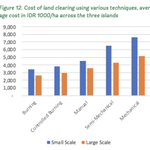
The economics of forest fire
thereformist.id/p/the-econom…
Improving Governance of Indonesia's Peatlands and Other Lowland EcosystemsPublication:
openknowledge.worldbank.org/…
EU palm oil ban: Malaysia, Indonesia seek trade justice
dw.com/en/eu-palm-oil-ban-ma…
