

HK's leading NGO on air pollution, the city's biggest public health crisis, killing 8 people a day.
23/F Chun Wo Commercial Centre
Joined July 2009
- Tweets10.2K
- Following8.2K
- Followers9.7K
- Likes66


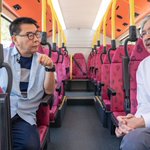


Began in October 2021, The Clean Air Challenge invited secondary school students across Hong Kong to a myriad knowledge/skillset-transfer events/workshops organised by HKUST.
Zero Emissions Mobility Consortium: CAN Collaborates with Industry to Formulate Policy Recommendations for E-bus Transition

4. Identify areas requiring cross-bureau policy coordination.
5. Define an appropriate funding model for commercial operators to support the implementation of the roadmap.
6. Make significant investments in achieving a quantified modal shift target to public transport.
1. Provide clarity on a time-specific zero-emission roadmap for road transport.
2. Expedite and enlarge scale of trials for both battery electric buses and hydrogen fuel cell buses.
3. Remove the regulatory barriers for technology development and adoption.
The white paper has been launched today, with an aim to seek opportunities to work with the government on this issue.
we have made a great step forward – for the first time, CAN collaborated with franchised bus operators, power companies, and the academia to form the Zero Emissions Mobility Consortium (ZEMC) and work on an in-depth white paper outlining ZEMC’s policy recommendations.
3/Ability to retrofit urban design and transport planning to prioritise public transport-walk connectivity and de-prioritize from motor vehicles
1/Adaptability to liberate resources to address emerging or even unknown risks to support "what could be"(instead only on "what is")
In order to achieve the goal of clean air, either measured by meeting the standard of World Health Organization or levelling the actual air quality level of other comparable
global cities, there are a couple key competencies to be built:
After reviewing the past 5 or 25 years of how HK has been doing, key question remains - whether HK has developed the necessary capability to solve ongoing/emerging problems, including the air pollution that we concern.
