

The AI Traffic Infrastructure for Optimized Model Access
Joined February 2025
- Tweets261
- Following18
- Followers173
- Likes19





Pinned Tweet
Running AI shouldn't lock you into one model just to save money.
ClawRouter gives you one endpoint for OpenAI, Claude, and Gemini — native formats, no code changes — and every model is guaranteed 30%+ cheaper than going direct.
This week: which model for which job, and exactly how much you save. → clawrouter.com/

Tens of new inference providers pop up almost every week, per Deedy Das. Low barrier to entry, low-ish margins.
Great for token prices. Risky if your app is wired to one of them.
One OpenAI-compatible endpoint, failover where a backup route exists, a hard spend cap per key.

Same 50,000-token contract, sent to Claude Opus 5.5 ten times.
Full price every call: $1.40.
With prompt caching: $0.24.
83% less in our test. Each cached read was 95% cheaper.
The change is one line:
cache_control={"type": "ephemeral"}
clawrouter.com


If LiteLLM 1.107.0 touched a machine or image, "we never imported it" isn't a defense.
The payload runs at Python startup, before the package is even imported.
Rotate credentials from a clean environment and pin 1.106.2 by digest.
How many of your images pulled it?

🚨 LiteLLM 1.107.0 compromised in a supply chain attack.
Malicious PyPI packages and Docker images delivered a credential stealer and backdoor.
⚠️ The malware runs at Python startup, targeting cloud credentials, private keys, and AI tool credentials.
🔗 Full story: thehackernews.com/2026/10/li…

Anthropic's first new Claude API version since 2023 is out: 2026-10-21. 2023-06-01 isn't deprecated, so nothing breaks until you move.
When you do, check:
1. temperature, top_p, top_k: any value now returns a 400, even the default. Remove them, and retest prompts that relied on a lower temperature.
2. document blocks in assistant messages, and citations on text blocks in user messages, also return a 400.
3. The new SDK majors (Python 2.0.0, TypeScript 1.0.0) send 2026-10-21 by default. Treat the SDK upgrade as a migration, and replay real payloads in CI first.
Requests that still need non-default sampling can stay on 2023-06-01.

Same prompt, two models: a campfire in a forest at night.
Claude Opus 5.5: a 3D scene with real lighting, where the fire lights, burns and goes out.
DeepSeek V4.1 Flash: a clean 2D loop.
Pick by the job. On ClawRouter, both run on one key; switching is a model-name change.
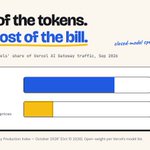
Open-weight models handled 71.5% of the tokens on Vercel's AI Gateway in September. They took 23% of the spend.
From Vercel's AI Gateway Production Index (Oct 15; September traffic, spend estimated at list prices):
→ open-weight models: 71.5% of tokens, 23% of spend
→ 68% of teams that spent more on open-weight models spent more on closed ones too
→ teams with 100M+ tokens since December used 26 models on average
So it's not a fork. It's a mix: open-weight where the volume is, a frontier model where the task needs it.
A mix needs one place to see it. On ClawRouter, open-weight models like DeepSeek, Kimi and GLM run through the same OpenAI-compatible API, and usage shows cost per model.
Two kinds of model. One usage view.


How many people on your team share one API key?
If the answer is "all of us":
→ the bill is one number
→ nobody can tell whose script ran all night
→ someone leaves, the key gets rotated, every service breaks at once
Split the keys. Share the wallet.

Gemini 4 Argon is Google's new flagship.
Output limit went from 64K to 1M tokens.
Launch pricing: $2 in / $10 out per 1M.
Right now only cyber defenders get access. Paid API customers are next.
When it opens up, want it on ClawRouter?
Same endpoint. OpenAI format or Gemini native. No new SDK.
Tell us what you'd run on it.

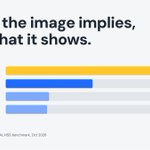
Humans score 93.1 on a new vision benchmark. The best AI scores 53.6.
Humanity's Sixth Sense (HSS), from Elorian and Scale AI, doesn't ask what's in the image. It asks what the image implies.
Will one more book fit on that shelf? Can that chain take the load of the plow?
522 questions. 288 images. 17.6 hours of video. Four categories: time and cause, physical space, social cues, abstract rules.
Top AI score: GPT 6 Astra at 53.6.
GLM-5.3-flash: 26.8. Kimi K3: 25.5.
The failure breakdown is the useful part.
21%: the model missed the one detail that decided the answer.
20%: it misidentified an object, person, or role.
Both happen before reasoning even starts. A longer chain of thought won't save a model that looked at the wrong thing.
If you ship vision features, two takeaways.
First, the gap between models on visual tasks is wider than general benchmarks suggest. Here the top score is roughly double what strong open models got.
Second, don't run every task through one model. Test vision on your own images, route it to the model that actually sees them right, and keep cheaper models on the text work they already handle well.
That's a model string per request. Not a rewrite.
One endpoint for text, images, audio, realtime:
clawrouter.com

Meta had 3.5B daily users and a Llama 4 that underdelivered.
They didn't chase coding agents. They bet on personal AI and built Muse in 7 months with under 200 people.
Early 2025, the consensus was clear: coding agents are the killer use case. Alexandr Wang pitched Zuckerberg the opposite. Instagram, WhatsApp, Facebook are where people follow friends and interests. Not where they write code.
So Meta played the edge it already had: distribution.
That's the real lesson. When model quality converges, the advantage moves somewhere else. For Meta, it's 3.5B users. For most builders, it's narrower: the workload you understand better than anyone.
The part worth stealing is how they decided Muse was ready.
A spreadsheet of 100+ behaviors. Every row had a launch-blocking bar. 80 green and 20 red meant no launch. The first build to clear every row was a specially trained Musepark 1.3.
Write your own version of that sheet. Then run it on more than one model.
A personal agent touches email, photos, voice, live input. That's text, vision, audio, realtime. One model rarely wins every row.
That's what a routing layer is for. One endpoint for Chat, Embeddings, Audio, Realtime, Images. Swap the model per row. Keep the code.
Try it: clawrouter.com
Claude Haiku 5.5 is out at $0.10 in / $0.50 out per 1M tokens.
Exactly GPT-6 Luna's price.
Same sticker doesn't mean same bill. 3 things the pricing page doesn't show 🧵
So which one?
Stays under 100K (classification, short summaries, API wrappers): Haiku 5.5 is a solid pick.
Long context (RAG, repo review, long agent memory): Luna's curve is far flatter.
Pick per workload, not per brand.
That's what a routing layer is for.
Short calls to one model. Long context to another.
Change the model string per request. Same endpoint, same code.
Count tokens on your real prompts before you migrate.
Try it: clawrouter.com