
Germany
Joined January 2008
- Tweets882
- Following401
- Followers122
- Likes2.4K


Claus Klingberg retweeted

Ich war acht Jahre bei der Bundeszentrale für politische Bildung #BPB Meine Bilanz: Linke Kampfschriften statt überparteiliche Information | Cicero Online cicero.de/innenpolitik/bunde…

Claus Klingberg retweeted

Von den 6,2 Mio. € an "Zuschüssen" die 2022 an @AmadeuAntonio geflossen sind gingen fast 6 Mio. € nur für die Personalkosten drauf.
Projekte wurde gerade mal mit 1 Mio. € gefördert.
In welchem Universum dient so etwas der "Zivilgesellschaft"?
AFUERA kann man da nur sagen.

Claus Klingberg retweeted

Andere Länder geben übrigens Reisewarnungen für Deutschland raus. Und zwar nicht wegen „den Rechten“.
Aber gut, dass die Brandmauer hält ✊


Claus Klingberg retweeted

Seriously considered buying a new laptop today because my python environment is completely broken.
I tried uninstalling everything python-related and...couldn't.
I've been programming for 25 years.
This is so sad.
Claus Klingberg retweeted

"Let's do startups" - Germany edition
But first... some paperwork:
1. Put aside €25,000 for company formation
2. Find a notary to draft articles of incorporation (1-2 weeks)
3. Open bank account (4-6 weeks)
4. Deposit share capital and send to notary
5. Entry into commercial registry
6. Ignore official looking scam letters asking for money
7. Entry into transparency register
8. Register with local trade office
9. Register with tax office
10. Wait for your company's VAT ID
11. You need an official address (don't use your home, can't use PO box), so rent virtual office
12. Buy company insurance
13. Buy accounting software
14. Set up payroll (you have to employ yourself as manager)
15. Pay for on-going accounting costs (€2-3k a year)
16. Prepare monthly, quarterly and yearly taxes
17. Make sure you have a GDPR-compliant privacy policy, and DPAs with all service providers
18. Make sure you have a compliant legal notice on your website and emails, or risk getting a €50,000 fine
19. Make sure your invoices are actually compliant with regulations
20. Don't ever move out of Germany while owning the company, or else go bankrupt due to the exit-tax with no liquidity problem
Now you may invoice your first customer - if you dare ;)
(obviously not legal/tax advice, this is satire)
Claus Klingberg retweeted

At least 10 of them expressed similar views that after voting for the DPP in the last two presidential elections, they see no improvement or change in the situation for young people in #Taiwan: wage remains low and housing prices remain unaffordable high.
Claus Klingberg retweeted
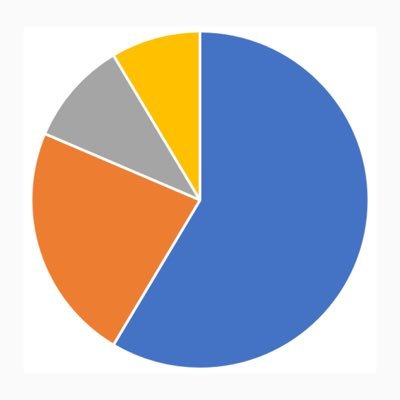
👮♂️ Hours of police training required by country:
🇺🇸 USA: 652 hours
🇨🇦 Canada: 1,040 hrs
🇬🇧 UK: 2,250 hrs
🇦🇺 Australia: 3,500 hrs
🇩🇪 Germany: 4,050 hrs
🪦 Killings by law enforcement in 2020:
🇺🇸 USA: 1,021
🇨🇦 Canada: 52
🇦🇺 Australia: 16
🇩🇪 Germany: 9
🇬🇧 UK: 5
According to The Institute for Criminal Justice Training Reform, Police shootings database
Claus Klingberg retweeted

The concept of civilization is often associated with various tangible artifacts and advancements, such as tools, architecture, or systems of governance. However, anthropologist Margaret Mead presented a different perspective when she was asked about the first sign of civilization in a culture. Rather than focusing on material objects, she emphasized the significance of a healed femur bone.
In Mead's view, the animal kingdom provides a stark contrast to human civilization. When an animal breaks its leg, survival becomes nearly impossible. The inability to escape from danger, access water, or procure food renders the injured animal vulnerable to predators. Consequently, no animal lives long enough for a broken leg to heal naturally. Thus, the healing of a femur bone is a profound indication of civilization.
Why is a healed femur bone considered the first sign of civilization? Mead's explanation lies in the collective care and empathy demonstrated by a community. When someone breaks their leg, it is a moment of extreme vulnerability and danger. However, if the injured individual receives aid and support from others, they can overcome this critical period.
The act of caring for someone with a broken leg requires time, compassion, and a sense of responsibility towards others. Mead suggests that the healing process involves multiple steps. First, someone must have witnessed the accident and recognized the injured person's distress. Then, they would have provided immediate assistance, possibly by binding the wound and ensuring the person's safety. Finally, they would have stayed by their side, offering ongoing care and support during the recovery period.
By highlighting the significance of collective care, Mead emphasizes that civilization begins with the recognition of the suffering of others and the willingness to help. It is through acts of compassion and support that a community establishes its foundations of empathy, cooperation, and social cohesion. The healing of a broken femur, symbolizing the survival and recovery of an individual within a community, reflects the values and actions that underpin a civilized society.
Mead's perspective challenges the notion that civilization is solely determined by material progress or technological advancements. While such developments are undoubtedly important, they are built upon a deeper foundation of human connection and mutual aid. The healing of a broken femur bone serves as a metaphor for the care and support that individuals provide to one another, promoting the well-being and progress of society as a whole.
In conclusion, Margaret Mead's unconventional response to the question about the first sign of civilization reminds us of the fundamental importance of collective care. Civilization, she argues, is not solely defined by tangible artifacts or structures but by the empathy and support extended to those in need. The healing of a broken femur bone represents the compassion and responsibility that underpin a civilized society, highlighting the significance of human connection and mutual aid in fostering progress and well-being.


Claus Klingberg retweeted

The recent wealth tax increase in Norway was expected to bring an additional $146M in yearly tax revenue
Instead, an estimated $54B-worth of ultra-rich left the country, leading to a lost $594M in yearly wealth tax revenue
A net decrease of $448M+
(sources and calculations ↓)
Claus Klingberg retweeted

"Women don't realize how cruel men are to each other when women aren't around. The idea that women are a civilizing influence is true. With one woman in the room, men's behavior improves considerably." aporiamagazine.com/p/what-an…

Claus Klingberg retweeted

Introducing the Bun Bundler
A fast JavaScript bundler deeply integrated into Bun's runtime
bun.sh/blog/bun-bundler?cb



Claus Klingberg retweeted

Reddit comment on why so many Google products get shut down
“Internally, we called it the LPA cycle: Launch, Promo, Abandon”

Claus Klingberg retweeted

How to do a media interview while being carried away by police for protest. 10/10, no notes.
Claus Klingberg retweeted

I have Asperger’s and my “special interest” is gender ideology, which means I spend every waking minute thinking and problem-solving on how to quell this monster. Everything points to exposing the abysmal quality of “scientific evidence” that props up their beliefs. 🧵 – at Nashville, TN
Claus Klingberg retweeted

BREAKING: more than 100,000kg of plastic removed from the Great Pacific Garbage Patch (GPGP).
Thank you to our determined offshore crew and supporters worldwide; together, we have now officially cleaned up 1/1000th of the GPGP.
