

Chemical Neurobiologist at UCSD
La Jolla, CA
Joined October 2009
- Tweets524
- Following229
- Followers726
- Likes727





Pinned Tweet
new pub from the lab describing a strategy for caging amidated peptides (most neuropeptides); applied to CCK, oxytocin, substance P, and GRP pubs.acs.org/doi/10.1021/jac… congrats to all authors, incl. @XIANGMa13 @jennyxinyi & 1st author aryanna layden, now starting her PhD at Berkeley

Matt Banghart retweeted

It's clear that many do not understand what @NIH-funded research does to improve health. It's time to revive a study published 10 years ago that provides incredible information about this. link in the comment
Every single new drug approved by the FDA from 2010–2016 was built on NIH-funded research—that’s all 210 drugs. But what the public sees is just the tip of the iceberg.
Pharma takes credit for the final product, but beneath each drug developed, there are ~20 years of basic research, and 90% of the cost is from basic research funded by the NIH, which discovers drug targets, understands disease mechanisms, and creates life-saving treatments.
Figuring out how cancer evades the immune system, how addiction rewires the brain, and how heart disease develops is the role of the NIH, creating the foundation for the breakthrough drugs that come 20 years later, and the NIH does all that with only 0.8% of the US budget.
Without NIH, there would be no cancer immunotherapy, no anti-overdose medication, no anti-heart attack or stroke medication, no cutting-edge treatments.
If NIH funding is cut, the iceberg will melt. That means fewer cures, more suffering, and more lives lost.
The science beneath the surface keeps us afloat.
Invest in NIH. Invest in life

Matt Banghart retweeted
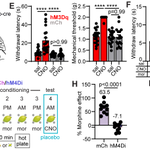
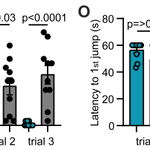
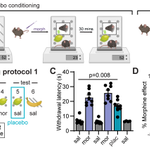
Curious about the placebo effect, especially placebo pain relief? If so, check out our pre-print on placebo analgesia in mice bit.ly/3QlktPq, in which we ask how pain-modulatory neural circuits become activated in the brain to suppress pain in the absence of a drug. 1/9
Although we only conditioned the mice to suppress a paw withdrawal (antinociception), the placebo effect extended to unconditioned pain-related behaviors, such as avoidance and escape, indicating that the conditioning protocol produces a general state of analgesia. 3/9

Understanding the neural basis of placebo will help us develop better therapies for pain and depression. Capitalizing on placebo can reduce our reliance on dangerous drugs, whereas reducing placebo in clinical trials will help reveal the true efficacy of emerging therapies. 9/9
Curious about the placebo effect, especially placebo pain relief? If so, check out our pre-print on placebo analgesia in mice bit.ly/3QlktPq, in which we ask how pain-modulatory neural circuits become activated in the brain to suppress pain in the absence of a drug. 1/9

an excellent update on current hot topics in chemical neurobiology!

Read about the latest circuit tools for studying neuromodulator & neuropeptide signaling in vivo!
We describe the use of neurochemical sensors, actuators, and probes in our lab’s first Review @ScienceMagazine
tinyurl.com/4mcfb24w
Congrats @jessie_muir & @LatinaNeuroNerd!
Matt Banghart retweeted

Excited to share our new paper in @NatureMetabolism! OGT fine-tunes glycolysis and mitochondrial coupling in neurons via HK1, revealing new insights into energy metabolism and efficiency. 🧠🔬 #Neuroscience #Metabolism #Mitochondria : nature.com/articles/s42255-0…
Matt Banghart retweeted

1/6 Exciting news! Our paper is now online in @CellCellPress! We've developed PRESYNAPTIC sensor and silencer for peptidergic transmission. The sensor detects LDCV release events, and the silencer specifically degrades neuropeptides inside the LDCV. authors.elsevier.com/a/1jTSj…

Matt Banghart retweeted

Synapses and Circuits 2024! Thank you for a great section!! @AizenmanLab @chromism @mjhigley @CocasLab @EManiax @Juanonyme

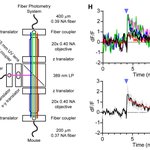
What an amazing experience teaching at the @MblNeuro course with stellar students @WallsAria and Anna Brennan! Huge thanks to @MBFBioscience for loaning us the Neurophotometrics V2 fiber photometry system, which worked perfectly with our UV laser for in vivo photopharmacology.


Matt Banghart retweeted

Endogenous opioid dynamics in the dorsal striatum sculpt neural activity to control goal-directed action biorxiv.org/cgi/content/shor… #biorxiv_neursci
Matt Banghart retweeted

Want to capture both transient and sustained changes of neuromodulator levels? Want to compare neuromodulator dynamics at high resolution across animals and extended periods? Happy to share our new finding on bioRxiv: tinyurl.com/bdf7ny7s (1/8)

Matt Banghart retweeted

⚡️🧠Thrilled to share our new preprint on pain-related valence cell-types + circuits — A nociceptive amygdala-striatal pathway for chronic pain aversion
Check out the stellar work of Jessica Wojick, in a co-senior collab with @KorbLab
biorxiv.org/content/10.1101/…
THREAD 1/13
