

Life is not only about kicks.
- Tweets62.6K
- Following260
- Followers404
- Likes126K







ALT A long-exposure photo of Earth taken from aboard the International Space Station. The nighttime view of Earth shows long streaks of city lights and a soft, green airglow outlining the planet. Blurry stars fill the background, and space station hardware appears in the foreground.

ALT The blue NASA "meatball" insignia overlaid on top of a Martian background.


ALT A young star cluster filled with many stars that display Webb’s unique eight-pronged diffraction pattern. At its center is a yellow star that sports the largest diffraction pattern. To its left, there is a region filled with yellow dust and gas that extends from the star to the left and the bottom, covering about two-thirds of the frame. The yellow region has several embedded blue stars of different sizes. The top third, which lies outside the yellow region, has a few bright protostars, within dense gray gas. These stars illuminate the gas, making it appear blue. A few red outflows from other protostars are visible above this grayish-blue region. To the right of the central star, there is a clumpy, flame-like plume of red dust and gas with protostars that emit a soft white light within. The plume is surrounded by more dense gray gas and dust. It is about one third the size of the yellow region. There are several background galaxies strewn throughout.




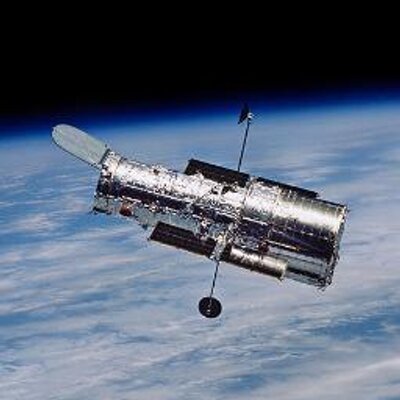


ALT A pair of galaxies undergoes an extreme gravitational transformation. On our left side of the frame is a ghostly galaxy with a pale white core and faint outer ring. On our right is a pale white sphere-shaped galaxy surrounded by a grainy neon blue cloud, flecked with purple dots. The cloud has a funnel-like shape, pointing toward its ghostly neighbor.

ALT A pair of overlapping galaxies at the center of the image appear to form a leaping dolphin shape. More distant galaxies and stars dot the black background of space.




ALT The SpaceX Crew Dragon Freedom spacecraft is seen moments before splashing down in the Pacific Ocean off the coast of California in this Oct. 8, 2026, photograph. Aboard were NASA’s SpaceX Crew-12 members NASA astronauts Jessica Meir and Jack Hathaway, ESA (European Space Agency) astronaut Sophie Adenot, and Roscosmos cosmonaut Andrey Fedyaev. The four spent nearly eight months aboard the International Space Station. Image credit: NASA/Keegan Barber

ALT In this 480-second long exposure photograph, a SpaceX Falcon 9 rocket carrying the company’s Dragon spacecraft launches on NASA’s SpaceX CRS-35 mission to the International Space Station and its first stage returns to land at Landing Zone 40, Tuesday, Oct. 13, 2026, as seen from Cocoa Beach, Florida. The mission lifted off at 6:33 a.m. EDT from Space Launch Complex 40 at Cape Canaveral Space Force Station, carrying scientific investigations, supplies, and equipment to the orbital outpost on SpaceX’s thirty-fifth commercial resupply services mission for NASA. The rocket’s exhaust plumes, illuminated by sunlight against the predawn sky, were visible across the eastern United States. Photo Credit: (NASA/John Kraus)


ALT Artist’s concept of a star and its debris disk against the black background of space. The star is in the background, right of center, and depicted as a small, luminous sphere. The debris disk is a large blue ring that encircles the star. The debris disk is angled toward the viewer, so that the portion nearest to the viewer extends beyond the bottom frame of the illustration. Many dark, rocky fragments are scattered throughout the debris disk. In the foreground, toward the left, is a small planetary embryo colliding into the left side of a larger spherical object. The impact site glows bright yellow and orange and has a mottled appearance, as though chunks of both colliding bodies are breaking up and being destroyed. Orange-yellow streams of vapor extend outward from the collision area. Behind the debris disk and its star are many small stars in the background. A label in the bottom right corner reads “Artist’s Concept.”




ALT A young star cluster filled with many stars that display Webb’s unique eight-pronged diffraction pattern. At its center is a yellow star which sports the largest diffraction pattern. To the left of the star, there is a region filled with yellow dust and gas. This yellow region extends from the bottom, covering about two-thirds of the image. The yellow region has several blue stars of different sizes embedded within. The top third, which lies outside of the yellow region, holds a few bright protostars, within dense gray gas. Those stars illuminate the gas, making it appear blue. A few red outflows from other protostars are visible above this grayish-blue region. To the right of the central star, there is a clumpy, flame-like plume of red dust and gas with protostars that emit a soft white light within. The plume is surrounded by more dense gray gas and dust.

ALT Northrop Grumman’s Cygnus XL cargo spacecraft rests at its capture point on April 13, 2026, 12 meters from the International Space Station, as the Canadarm2 robotic arm prepares to grapple the resupply ship.