MORU highlighted research and laboratory capacity during the visit of Her Royal Highness The Princess Royal to @MahidolU on 17 July.
The visit included a film featuring melioidosis suvivors and a MORU malaria laboratory tour.
Photo: @ukinthailand
#PrincessRoyalinTH

ALT Her Royal Highness The Princess Royal visits a MORU malaria laboratory, where researchers introduced work relevant to infectious-disease surveillance, laboratory capacity and regional health security. Photo: British Embassy in Thailand.

ALT Her Royal Highness The Princess Royal speaks with a melioidosis survivor from Ubon Ratchathani during the visit to the Faculty of Tropical Medicine, Mahidol University. The conversation was joined by Dr Claire Chewapreecha, Head of the Melioidosis Genomics Group at MORU. Photo: British Embassy in Thailand.
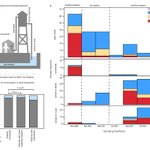
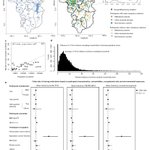
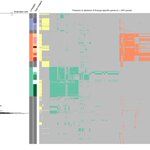
Delighted to see our study published and selected as an editorial highlight in #NatureCommunications nature.com/articles/s41467-0…
This work came from a collaborative effort to improve environmental detection of Burkholderia pseudomallei, the bacterium that causes melioidosis [1/n].
This is a collaborative effort with Maturada Patchsung, @TaoUttamapinant , and @PWongpalee leading the CRISPR work; along with the field grit and persistence of Mick Pakdeerat, Chalita Chomkatekaew, Phumrapee Boonklang, Raiwin Mothong, Arin Wongprommoon and many others [4/n]
Also grateful to @wellcometrust for supporting this environmental surveillance work on melioidosis and other waterborne diseases, and for its continued expansion.
Guwahati in the morning - gearing up for the South Asian Melioidosis Congress and feeling excited already!
Humbled and deeply grateful to @wellcometrust for awarding us another 8 years of support through the Wellcome Career Development Award to study melioidosis in the Lower Mekong region - a neglected tropical disease that affects my home country and our neighbours. (1/n)
We will profile the omics of 1,500 healthy individuals and 1,500 patients, along with the causative bacteria from the environment and patients, to understand the full spectrum of the disease - from exposure to infection, acute illness, and post-discharge readmission (2/n)
If you're passionate about tackling antimicrobial resistance through genomics, we’d love to welcome you to the AMRTarget community! Join us at targetamr.org.uk/
We currently have just a few members from South and Southeast Asia - let’s grow this part of the family together!
A great policy piece led by the Wellcome Trust, on the challenges of involving wider communities in genomic research—and how we can start to break those barriers. wellcome.org/reports/ethical…
Claire Chewapreecha retweeted
A thread about antibiotic access that ends with our new commentary: As we reviewed in #TheLancetAMRSeries last year thelancet.com/series/antibio…, (in)access is as much a problem as excess in addressing infection management and antimicrobial resistance.../2
Claire Chewapreecha retweeted
If you have experience in sc/spatial transcriptomics with an interest in microbes....come and join our team as a computational postdoc:
sanger.wd103.myworkdayjobs.c…...
Incredibly exciting datasets on host-microbe interactions in the lung.
Pls RT and reach out if you are interested
Behind every great woman in science is another amazing woman in science, inspiring, supporting, and lifting her up. Happy International Women Day! nature.com/articles/d41586-0…
It has been a privilege to work with the Sanger Institute and be an International Fellow. Thank you so much for recognising both me and our work on melioidosis. I am so grateful for our collaboration during this fellowship and beyond 🙏😃 linkedin.com/posts/wellcome-…
Conducting research in LMICs is undeniably challenging, with brain drain often surpassing reverse brain drain. Grateful to
@NatureRevMicro for the opportunity to share an opinion discussing both the difficulties and rewards of working in this space. rdcu.be/d7O5Q [1/2]