
CIS PhDing @Penn @CIS_Penn. Intern @NVIDIA, @Adobe. BEng and MEng @Tsinghua_Uni
Pennsylvania
Joined October 2016
- Tweets193
- Following550
- Followers415
- Likes266



Pinned Tweet
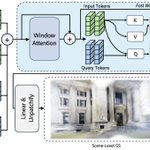
Excited to present our #CVPR2026 Highlight paper tttLRM today!
We design a LRM with Test-time Training that supports high-res, long sequence and feedforward/online 3D reconstruction with linear complexity.
📍 ExHall A #39
🕞 6/7, 3:30 PM
🎥 Video: youtu.be/uOlNkq_io4c?si=OAKd…
Chen Wang retweeted

Late to the party, but happy to introduce our #ECCV2026 paper: On the Diffusibility of High-Dimensional Latents.
We found that finetuning representation autoencoders (RAEs) for reconstruction can hurt diffusibility under standard velocity prediction in flow matching. Why?(1/10)

Great work! Our recent work cwchenwang.github.io/harmony also uses agents for 3D reconstruction.


Over the past few weeks, GPT-6 Astra, Claude Code with Opus 5.5, and other recent foundation models have surprised many of us in graphics, CAD, and robotics. They can now work directly with Blender, CAD kernels, game engines, physics simulators, and real robots very well. New examples appear almost daily, faster than the publication cycle can capture.
📝To keep track, we maintain a Living Survey of frontier AI for Design & 3D Modeling & Robotics:
🌐 mit-cdfg.github.io/Survey-AI…
Currently, it organizes 243 cases from 345+ public showcases and developer reports across 3D modeling, CAD and industrial design, animation, simulation, and robot control, each linked to its original source.
(If you are working on related projects, it's better to check this out: )
Different from a traditional survey, three ideas guide it:
1. Horizon scanning beyond publication lag
In an era where frontier foundation model capabilities evolve rapidly, traditional academic publishing cycles could lag behind public community developments and empirical findings. This platform establishes a centralized, high-velocity empirical synthesis repository to provide researchers and engineers with timely visibility into ongoing developments across 3D generation, parametric CAD, and embodied robotics—anchoring these observations in objective evaluations of strategic opportunities and critical safety boundaries.
2. Demonstrations as a distributed record of use
We analyze the corpus of over 345 publicly documented showcases and developer reports as an extensive, distributed "crowdsourced user study." This framing captures how models operate when prompted across diverse geometry kernels (CGM, Open CASCADE), DCC software (Blender), physics simulators (Isaac Sim, MuJoCo, Genesis), and physical robot hardware—revealing real-world workflow friction, prompt overhead, and boundary failures that static benchmarks miss.
3. Ranking by open verifiability
A central challenge is balancing the timely collection of rapidly emerging results with the need for high-quality, evidence-based evaluation. Our approach is to rank cases by open verifiability—the amount of evidence that others can directly inspect.
Equally impressive demos can carry very different evidence, so every case is ranked by what others can inspect:
- Rank 1 · Demo + Implementation Code: public code, scripts or CAD/robot harnesses (availability/verifiability)
- Rank 2 · Demo + Interactive Web Link: a live web app, 3D viewer or cloud CAD project
- Rank 3 · Demonstration Media Only: video or screenshots only
Note: Rank 1 means the evidence is inspectable, not necessarily reproducible from a clean setup.
Gallery: mit-cdfg.github.io/Survey-AI…
Contributions are very welcome via pull requests on GitHub. We especially welcome Rank 1 contributions (demos with code) and Rank 2 contributions (demos with interactive webpages).
Many thanks to our collaborators: Jamison Meindl(@meindljamie), Akihisa Watanabe(@Akihisa_Wat ), Anna Deng, Tianyu Huang(@tyanyuy3125), Igor Sadalski(@igorsadalski ), Harrison Liang, Minghao Guo(@GuoMh14 ), Benjamin Tod Jones, Wojciech Matusik(@wojmatusik ).
Chen Wang retweeted

When we started HARMONY six months ago, we were curious how far agentic approaches could take 3D reconstruction. The field has advanced quickly, and we see strong potential in combining high-level reasoning with geometric optimization. We’re releasing an open-source framework competitive with Astra in reconstruction quality, together with the HARMONY300 benchmark. Proud of @sofine_sun and @chenwangcw!

Excited to share our new 𝗼𝗽𝗲𝗻-𝘀𝗼𝘂𝗿𝗰𝗲 work, 𝗛𝗔𝗥𝗠𝗢𝗡𝗬, a framework for reconstructing compositional 3D scenes from single indoor images.
Much like a 3D artist, our VLM agent builds the scene in a 𝗵𝗶𝗲𝗿𝗮𝗿𝗰𝗵𝗶𝗰𝗮𝗹 𝗼𝗿𝗱𝗲𝗿: first the room structure and camera, then wall-mounted objects, free-standing furniture, and finally dependent decorations. After each stage, it compares its render against the input image, reflects on what went wrong, and iteratively corrects the scene to prevent errors from accumulating.
Even with older VLM backbones, our framework remains 𝗰𝗼𝗺𝗽𝗲𝘁𝗶𝘁𝗶𝘃𝗲 𝘄𝗶𝘁𝗵 𝗚𝗣𝗧-𝟲 𝗔𝘀𝘁𝗿𝗮 𝗶𝗻 𝘃𝗶𝘀𝘂𝗮𝗹 𝗾𝘂𝗮𝗹𝗶𝘁𝘆, 𝘄𝗵𝗶𝗹𝗲 𝗮𝗰𝗵𝗶𝗲𝘃𝗶𝗻𝗴 𝗯𝗲𝘁𝘁𝗲𝗿 𝗴𝗲𝗼𝗺𝗲𝘁𝗿𝗶𝗰 𝗮𝗹𝗶𝗴𝗻𝗺𝗲𝗻𝘁 for single-image 3D scene reconstruction.
We also release 𝗛𝗔𝗥𝗠𝗢𝗡𝗬𝟯𝟬𝟬, a benchmark for single-image 3D scene reconstruction with 300 scenes across three difficulty tiers: easy, medium, and complicated.
🔗 Project: cwchenwang.github.io/harmony
📊 Leaderboard: cwchenwang.github.io/harmony…
🤗 Data: huggingface.co/datasets/Shuf…
📄 Paper: arxiv.org/abs/2609.26793
Chen Wang retweeted
Incredibly honored and grateful to receive the ACM SIGGRAPH Significant New Researcher Award! My sincere thanks to SIGGRAPH and the award committee, and to my mentors, students, collaborators, colleagues, and family for all their support along the way. It’s an exciting time for 3D and AI, and I feel fortunate to be part of this community. Thank you, Kostas, for the kind words and continued support!

Congratulations to @LingjieLiu1 for receiving the ACM SIGGRAPH Significant New Researcher Award! We are thrilled and so proud of you!
siggraph.org/awards/signific…

Chen Wang retweeted

If you work on shape skeletonization/medial axis/point sampling, you may want to check this out.
We made Coverage Axis a GPU version to accelerate it. The point-selection step
is a set-cover problem, and we solve it exactly on the GPU, so you get the same optimal selected points, just faster.
Also, a fun one: if you do a double-cover over the surface and use Coverage Axis to solve for the points, you get a surface sampling.
We tried to make a QMAT GPU version (beta) too.
Skeleton points matter. They are critical features for shape description, both for static and dynamic shapes (think correspondence, animation, deformation, retrieval).
Code:
- Coverage Axis (+ GPU solver): github.com/Frank-ZY-Dou/Cove…
- Q-MAT GPU: github.com/Frank-ZY-Dou/Geom…
---- Thanks (tools we built on) ----
- NVIDIA Warp (GPU kernels): github.com/NVIDIA/warp
- Google OR-Tools / CP-SAT (exact integer solver): developers.google.com/optimi…
- HiGHS via SciPy (reference MILP): highs.dev
- Polyscope (visualization): polyscope.run
And the works this builds on:
- Coverage Axis (Dou et al., EG 2022): arxiv.org/abs/2110.00965
- Q-MAT: Computing Medial Axis Transform by Quadratic Error Minimization (Li et al., ACM TOG 2015)


Chen Wang retweeted

With flashdreams, you can also create your own game, without paying anyone! Entirely open-sourced with Apache 2 license.
All from a text prompt and a single image
nvidia.github.io/flashdreams…

Google'ın yeni "açık dünya oluşturma" aracı Project Genie nihayet ABD dışında globalde daha fazla kişiye de açıldı, ben de hemen denedim.
Metin yazarak (ya da görsel yükleyerek) kendi açık dünyanı yaratıp gerçek zamanlı içinde gezebiliyorsun. Ben de hemen denedim ve İstanbul'da geçen GTA tarzı bir açık dünya oluşturdum. Yayalar ve arabaların tepkisi hiç fena değil fakat şu anda tepkime süresi ve FPS biraz düşük, elbette bazı bug'lar var ama geleceği düşündükçe gerçekten heyecan verici bir teknoloji. Kod yazmadan, oyun motoru kullanmadan kendi dünyanı yaratmak… Bu işin geleceği burada gibi duruyor.
Sizce bu teknoloji 1-2 yıl içinde nerelere evrilir?
Chen Wang retweeted

🚀 Excited to share PointAction:
A new Video-Point-Action Model that uses dynamic 3D pointmaps as a universal, geometry-grounded action representation for robot control.
VLA → VAM → ? Lift RGB to RGB+XYZ, then decode robot-specific actions.
arxiv.org/abs/2606.03943
[1/6]
Chen Wang retweeted
Here are more results from #RigidFormer: predicting physical dynamics with purely neural simulators — an attempt to learn physical dynamics in a scalable manner.
🤖 1) Controllable Articulated Body Simulation — More Results
Additional Unitree G1 humanoid rollouts under controlled motion. Each sample uses a different initial state and control signal (direction and velocity).
🏺 2) Object Fragmentation
Simulating the cracking and fragmentation process of objects. Thanks @zzigakovacic for suggesting this experiment!
🎬 3) Combining Rigidformer with Diffusion-as-Shader for controllable video generation.
Note: the meshes shown here are only for visualization — the network takes point clouds as input and predicts the updated state of each point.
Introducing ✨RigidFormer: Learning Rigid Dynamics with Transformers - our attempt to scale learning-based physical dynamics with Transformers.
RigidFormer learns rigid dynamics with Transformers. It is a mesh-free, object-centric Transformer for multi-object rigid-body contact dynamics from point clouds.
Learning physics with purely neural simulators, without relying on traditional physics engines, is an important and widely studied problem. Prior SOTA methods often use graph neural networks for accuracy and generalization, but still struggle with efficient, high-fidelity simulation at scale.
RigidFormer uses only point inputs, matches or outperforms mesh-based baselines on standard benchmarks, runs much faster, generalizes across point resolutions and datasets, and scales to 200+ objects. We also show a preliminary extension to command-conditioned articulated bodies by treating body parts as interacting object-level components.
RigidFormer is mesh-free: it does not require mesh connectivity, SDFs, or vertex-level message passing, making it well-suited for point-cloud observations and scalable simulation.
This architecture can also be adapted to learn soft-body dynamics by replacing the rigid-body module (differentiable Kabsch alignment).
🎬See our video for more details.
Many thanks to my amazing collaborators: Minghao Guo @GuoMh14, Haixu Wu @Haixu_Wu_1998, Doug Roble, Tuur Stuyck @TuurStuyck, and Wojciech Matusik @wojmatusik.
Project page: people.csail.mit.edu/frankzy…
Paper: people.csail.mit.edu/frankzy…
Depending on the query schedule, our model supports either feedforward or online reconstruction. We also proposed distributed 3DGS training across multiple GPUs to scale to sequences up to 1M tokens.


Great thanks for all the collaborators @HaoTan5, @toomanyyifans, @ZhiqinChen3, @yuhengliu02, Kalyan, @Sai__Bi, Yiwei and my advisor @LingjieLiu1!
Chen Wang retweeted

It’s kind of sad that 90%+ of the oral sessions are just presenters standing on the podium reading script in front of poorly designed slides
Chen Wang retweeted

From PIXIE → UniPixie: physics from pixels becomes *generative*.
UniPixie learns a controllable soft↔stiff spectrum of 3D physical properties from visual input, across simulators: MPM/LBS/spring-mass.
#CVPR2026 Highlight ✨
Poster: ExHall F, 11:45 AM today. Come say hi!

Chen Wang retweeted

📢 Excited to share MoScale, the first next-scale prediction framework for text-to-motion generation!
If you’re attending #CVPR, come visit our poster in Session 3, #199, 11:45 AM. We’d love to discuss ideas and feedback!
Paper and code can also be found at zhiwei-zzz.github.io/MoScale.
Chen Wang retweeted
Will be presenting two papers at #CVPR2026, welcome to drop by and chat!
Unipixie (Highlight): ExHall F #528, 6/6, 11:45AM
openaccess.thecvf.com/conten…
tttLRM (Highlight): ExHall A #39 6/7, 3:30PM cwchenwang.github.io/tttLRM/
Chen Wang retweeted

🔨 Presenting HAMMER at #CVPR2026 today!
📍 Poster Session 4 · ExHall A · Board #221
MLLMs for intention-driven 3D affordance grounding. Code, weights & data all open.
Keen on 3D scene & object understanding? Come say hi!
🔗 rayyoh.github.io/Hammer

Will be presenting two papers at #CVPR2026, welcome to drop by and chat!
Unipixie (Highlight): ExHall F #528, 6/6, 11:45AM
openaccess.thecvf.com/conten…
tttLRM (Highlight): ExHall A #39 6/7, 3:30PM cwchenwang.github.io/tttLRM/
Chen Wang retweeted
SAD: Soft Anisotropic Diagrams for Differentiable Image Representation has been accepted by #SIGGRAPH2026
Check it out, and huge congrats to Lucky! @Luckyballa
#SAD represents an image as a soft, anisotropic, differentiable diagram over learnable sites. Each pixel is modeled as a softmax blend over its top-K nearby sites under a site-dependent distance, yielding a differentiable partition of unity with explicit ownership and content-aligned boundaries. A GPU-friendly top-K propagation scheme keeps the cost constant per pixel, enabling fast fitting at matched or better quality.
Classical geometric structures can still inspire fresh perspectives in modern visual computing.
Voronoi and Power diagrams have long been elegant tools for 3D shape analysis, reconstruction, and geometric reasoning; here, related diagram ideas, with connections to Apollonius-style diagrams, are explored for image representations.
Homepage: luckyiyi.github.io/SAD/
arXiv: arxiv.org/pdf/2604.21984
#SIGGRAPH2026 #SIGGRAPH #CV #Vision #Graphics #CG – at Cambridge, MA

This January, I decided to give it a shot and wrote my first paper
Today, I am happy to share that it was accepted by #SIGGRAPH2026
SAD is a differentiable image representation with soft, anisotropic partitioning, with up to 20x faster encoding time🧵
luckyiyi.github.io/SAD/index…