
Building Digital Infra Robots @ https://xitter.cf/t.co/9CofWYd0yC, time-series world models and hardcore telco telemetry. ex-@fairwaves CTO, #hackerspace co-founder.
Cape Town, South Africa
Joined July 2009
- Tweets3.9K
- Following598
- Followers861
- Likes426






Pinned Tweet
The gap between Time-Series analysis and the rest of AI is so painful that I decided to research in public, publishing experiments, thoughts, and interesting papers to stir things up a bit.
Comment or follow if you believe the future is just the next step in time series.
Alexander Chemeris retweeted

Fork-and-Flush: help your agents escape Idea Basins!!
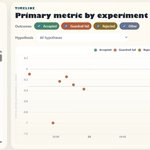
I love thinking of AutoResearch as Idea Descent: a metric of interest goes down, as a function of ideas/experiments, where the agents get pulled towards one idea or another. But we've seen very often an agent develop this weird tunnel vision, and honing in just one type of "idea", kinda like GD stuck in a local minimum.
We studied this and seems we can fix it with Fork-and-Flush, a super simple and kinda cute idea. Every so often, fork the agent into T copies in the same workspace but empty the context, let them run for a bit, and continue from the best one.
If you like the GD analogy, it's basically basin hopping en.wikipedia.org/wiki/Basin-….
BTW we found a silly way of also plotting "idea basins": an LLM rewrites every experiment as a spec and answers a few thousand binary queries "is Experiment A closer to B or to C?". Then we embed this NXN matrix into 2D and indeed see in many cases that each run saturates into a small region and keeps polishing it.
We call these idea basins!
At equal compute Fork and Flush beats single runs and best-of-N on 12/13 long-horizon tasks (some 4+ days), and in my own research projects it's been working really well!
BTW we only use it at test time, but it could also be part of training or RL.
Led by @jackcai1206 @christos_ziakas during Jack's internships with us, along with @vkontonis @ShivamGarg91462 @Tea_Pearce Sid Sen and Akshay Krishnamurthy.


Alexander Chemeris retweeted

meet @mostik_ai!
what happens when you put 12 PhDs in one room for four months? first place on the ARC-AGI leaderboard, which I can't say much about while the competition is still running. and this, which I can.
everyone's arguing about whether open models will catch up to frontier models. we think it's the wrong question. here's the one we pose: why does a frontier model have to generate your answer at all, when the only thing you need from it is the reasoning?
we do this by enabling models to communicate in latent space. through our protocol, hidden states pass straight from a frontier model into a small one running on your infrastructure -- no text between them, and neither model is fine-tuned. two models from different families, sharing reasoning, both left untouched.
how do we know it works? we tested it on a setup where a 753B model reads the problem, and a 4B edge-class model writes the answer. with this approach, we get results 80% as accurate as the frontier model, but at 20x faster performance.
we're committed to preventing frontier model lock-in and are already partnering with inference providers to accelerate open-weight adoption. we've done this between 15 of us, in four months, 12 PhDs and a Fields medalist, backed by @generalcatalyst
WIRED has the first external account of the company and the work: wired.com/story/russian-star…
full writeup, the setup, and all the numbers: mostik.ai/read-more

Alexander Chemeris retweeted

If you missed our opening remarks:
- 4th world modeling workshop: Aspen, CO, February, world models for physics, wmw-aspen.github.io
- 1st world modeling conference: Bay Area, CA, May, icwm.cc
In collaboration with @ylecun @LambdaAPI @amilabs and more TBA!

Alexander Chemeris retweeted
We are two weeks away from the third World Modeling Workshop!
- check wm-booth.org/ for all the latest info/links
- livestream and recordings will be available for free to everyone, no registration required
- a few surprises will be announced during the opening remarks
I wonder when we'll see AI designing communication protocols.
Why? Because it requires imagining all possible failure modes and the consequences of various ways to mitigate them. I.e., it depends on a strong world model (implicit or explicit).
A big difference between robotics and infra management tasks is that robotics use specific image as the target, while in infra management there is no single target - you solve a multi-dimensional optimization task.
Small change that renders most benchmarking approaches useless.
I thought we're past the "are world models useful" and into the "do we need explicit/modular WMs, or implicit WMs that exist inside LLMs are good enough"?
Explicit WMs are more efficient to train and serve, allows MPC-style control loop harness, more control over the objective. And most importantly - allow you to work with dynamic systems, changing in real time.
LLMs are, well, already out there. Efficient for some tasks, grossly inefficient for others. You can't (explicitly) control the amount of computation/WM rollouts, as it's baked into the model (except for the reasoning effort), but for some tasks it's ok - where you're fine with working on a static object.
With the recent work on controlling model behavior without explicit action inputs, the difference seems to blur even more - see the works of @thomas_fel_ @GoodfireAI and recently blocket-league.vercel.app/ by @mathemagic1an
PS World = data distribution you're training on. My understanding had been that @ylecun has always been taking about physical intelligence and that's where LLMs are not great at / inefficient?


imma just highlight this part for @GaryMarcus and @ylecun because it's easy to miss: no tools no coding => no symbols, just AR LLM

One of the coolest things to watch in modern AI is how even ninth- and tenth-graders (15-16 years old) can already publish decent conference papers and lead research at real AI companies.
Great work on stochastic World Modeling with Flow Matching.
FlowWM paper (arxiv.org/abs/2606.29059v2) shows that flow matching can generate multiple plausible future trajectories directly in frozen DINOv3 feature space, rather than collapsing uncertainty into one averaged prediction.
The result is strong on their branching-futures benchmark, F1 mode error falls from 17.1 for a matched deterministic predictor to 4.31. On Waymo, the predicted features also improve object detection and depth.
I've been thinking about replacing JEPA's point predictor with a conditional flow over future latent trajectories, so it's exciting to see evidence for the core mechanism.
What's still missing to make this useful for a wide range of industrial applications is calibration. Best-of-N tells us whether at least one sample matches reality. It does not tell us whether recovery has 60% probability and failure 1%—or whether the model gets those weights backwards.
Those probabilities are what we need to make decisions. They let us estimate expected cost, reason about tail risk, and compare how candidate actions shift the distribution.

Early computers were so unreliable that engineers cleaned contacts and pulled literal bugs from relays to keep them running. Engineering turned those fragile machines into computers that "just work".
I believe the same will happen with AI.
I love flying — it gives me enough distraction-free focused time to learn something new.
I've been wanting to learn how flow matching works for modelling complex probability distributions in data, as it's critical for modelling telemetry and infrastructure failure modes.
On my flight from ICML back to Cape Town, I listened to the flow matching lectures by @peholderrieth. It's the best explanation I've seen — very well structured. Highly recommend:
diffusion.csail.mit.edu/
Strongest impression from ICML: main-track talks often feel like award ceremonies. The work is ~1 year old; the author has moved on.
Workshops feel alive because the lag is shorter. You’re talking to people still wrestling with the problem, not just presenting finished work.
A non-technical friend has asked me to explain what langotime.ai is about in pictures.
The first iteration with Claude prompting gpt-image-2. Not great, not terrible, but has promise, I guess 😅
🤖 Made with AI


Two of my papers were accepted to @kdd_news MILETS workshop! Blog posts coming soon.
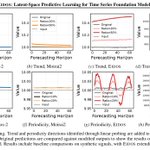
1. LeNEPA: No-Augmentation Next-Latent Prediction for Time-Series Representation Learning (arxiv.org/abs/2607.00958)
2. Aionoscope: Debugging Latent-State Accessibility in Time-Series Representations (arxiv.org/abs/2607.00956)
If you're not a GPU-rich lab, do time-series research.
Smaller models than vision.
Faster iteration loops.
Real applications right away instead of theoretical demos.
I find that if an experiment takes >1h to run, I'm not moving fast enough.
Awesome work on JEPA for real-time control

What should a world model for agile quadrotor control actually provide?
📄 Arxiv: arxiv.org/pdf/2606.23444
🌐 Project: pratyaksh10.github.io/skyjep…
💻 Code: github.com/arplaboratory/Sky…
Excited to share SkyJEPA:
Learning Long-Horizon World Models for Zero-Shot Sim-to-Real Control of Quadrotors
A useful quadrotor world model should provide:
✅ Accurate long-horizon prediction
✅ Interpretability
✅ Real-time inference for closed-loop control
✅ Zero-shot task generalization
SkyJEPA learns dynamics in latent space, uses a physics-inspired prober to recover meaningful states, and enables real-time control in outdoor flights.
🔑 Takeaways:
• Less compounding error
• Smoother latent trajectories
• Robustness to corrupted/noisy inputs
• Generalization to unseen settings like propeller switching and payload changes
• Zero-shot sim-to-real transfer without real-world fine-tuning to scenarios not seen during training such as propeller switching and payload changes.
Huge thanks to my collaborators: @kevinghstz, @randall_balestr, @ylecun, and @loiannog
#Robotics #Quadrotors #WorldModels #Sim2Real #JEPA #RepresentationLearning #Drones
Alexander Chemeris retweeted
Awesome work!
Have you thought about training it to choose the width at inference time - to maximize quality at a given FLOPs budget?
So that the shape is the result of the model's training and could be different for different types of the input. Recent papers from @sainingxie team showed that e.g. text and images "propagate" differently through a transformer, so the most optimal shape is likely different. I further suspect that even within a a single modality inputs of different complexity "propagate" differently.
I'm tracking this idea here: alex-wiki.langotime.ai/ideas…

The first glimpse into @kubernetesio gym. Teching robots to control your digital infrastructure.
alex-wiki.langotime.ai/ideas…
langotime.ai/
