

From Property to Protocol,
Las Colinas Golf & CC
Joined July 2022
- Tweets1.9K
- Following144
- Followers386
- Likes3.6K






Charles B retweeted

Tokenized stocks on Solana in the U.S. via @Securitize
Charles B retweeted

BREAKING: $4 trillion JPMorgan is working with Solana to enable financial institutions settle trades onchain within seconds.
This is HUGE!


Charles B retweeted

Alpenglow is officially running on devnet ⛰️🎉
The handoff completed at slot 504148999: Alpenglow genesis block formed and TowerBFT is retired.
App developers: test your programs and integrations now during our observation period leading up to mainnet-beta migration.


Why could the proposed $CFG → equity transition actually be positive for CFG holders?
Because it could finally close the gap between Centrifuge’s success and the value captured by holders.
Today:
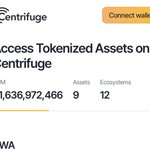
• ~$1.6B in assets
• Major institutional partners
• Growing tokenization infrastructure
• Yet $CFG market cap remains below ~$100M
The proposal changes the equation.
1 $CFG = 1 tokenized share.
Instead of relying on future tokenomics to create value accrual, eligible holders could become actual owners of the business.
That potentially means exposure to:
• Company revenue and growth
• Future institutional funding rounds
• Strategic investors
• M&A / IPO optionality
• A real external equity valuation
• Potential secondary markets for tokenized shares
Look at companies such as Securitize: institutional tokenization businesses can command valuations far beyond today’s $CFG market cap.
That does NOT mean Centrifuge will receive the same valuation.
But it shows why connecting CFG holders directly to the equity value of the company could matter.
The biggest question may eventually change from:
“When will value accrue to $CFG?”
to:
“What is Centrifuge itself worth?”
Still many details to resolve eligibility, dilution, liquidity and the post-conversion cap table.
But if structured correctly, this could turn a long-standing weakness of $CFG into one of its biggest opportunities.
@centrifuge

Centrifuge has published a governance proposal: exploring a transition from token to equity.
The CFG token was designed for a different Centrifuge. The business today is institutional infrastructure, and the token structure has become a constraint on the partners we can work with and the capital we can raise.
The proposal explores giving eligible CFG holders the option to convert tokens into equity.
This is a request for comments, not a decision. The comment period is open for 14 days.
Read the proposal and comment here: gov.centrifuge.io/t/cp172-ex…

This could be a defining moment for @centrifuge and $CFG.
Centrifuge is exploring a transition from token to equity:
• 1 $CFG = 1 share
• Equity shares would be tokenized
• Same share class for team, community & partners
• 100K+ CFG holders registered directly as shareholders
• <100K through a CoinList trust structure
• Conversion is optional
• No explicit conversion cost
Why now?
Centrifuge has evolved from a crypto/RWA protocol into institutional tokenization infrastructure working with names like Janus Henderson, Apollo and New York Life.
The current token structure may now be limiting access to strategic investors and institutional capital.
The ambition is clear: one value-accrual mechanism, stronger alignment and more capital to compete in what could be the defining years for tokenization.
After years of asking how Centrifuge’s growth would ultimately accrue to $CFG holders, this proposal could provide a very direct answer:
From token holder → shareholder.
Still only a proposal. The 14-day community discussion comes first.
But this could fundamentally change how the market values $CFG.
Centrifuge has published a governance proposal: exploring a transition from token to equity.
The CFG token was designed for a different Centrifuge. The business today is institutional infrastructure, and the token structure has become a constraint on the partners we can work with and the capital we can raise.
The proposal explores giving eligible CFG holders the option to convert tokens into equity.
This is a request for comments, not a decision. The comment period is open for 14 days.
Read the proposal and comment here: gov.centrifuge.io/t/cp172-ex…
Charles B retweeted

The next 2 years will shape leadership in tokenization. Centrifuge should be structurally prepared.
We are exploring converting CFG token to equity. Read the proposal and join the discussion.
gov.centrifuge.io/t/cp172-ex…

Charles B retweeted

Centrifuge has published a governance proposal: exploring a transition from token to equity.
The CFG token was designed for a different Centrifuge. The business today is institutional infrastructure, and the token structure has become a constraint on the partners we can work with and the capital we can raise.
The proposal explores giving eligible CFG holders the option to convert tokens into equity.
This is a request for comments, not a decision. The comment period is open for 14 days.
Read the proposal and comment here: gov.centrifuge.io/t/cp172-ex…
Charles B retweeted
New York Life Investment Management, with $800B+ under management, chose Centrifuge for its first step into tokenization.
180 years of credit discipline, open to a new base of allocators.

#Tokenization is moving beyond T-bills and becoming part of the broader conversation about the future of capital markets infrastructure.
We're proud to partner with @centrifuge as we take this step. For us, technology can evolve, but investment discipline remains essential.

“Tokenization is moving beyond T-bills.”
And this time, it’s New York Life Investment Management saying it.
One of the world’s largest asset managers is positioning tokenization as part of the future of capital markets infrastructure with @centrifuge as its partner.
HYB takes Centrifuge beyond tokenized Treasuries and into institutional corporate credit.
The infrastructure is here.
Now the capital needs to follow.
$CFG #RWA #Tokenization
#Tokenization is moving beyond T-bills and becoming part of the broader conversation about the future of capital markets infrastructure.
We're proud to partner with @centrifuge as we take this step. For us, technology can evolve, but investment discipline remains essential.
Charles B retweeted
Nine years of tokenization history in one article, and the right conclusion:
Most tokenized value still sits still. The work now is making it usable: as collateral, in lending markets, within strategies.


Charles B retweeted

Stablecoins → Treasuries → AAA CLOs.
Most people see this as institutions moving onchain for another 100 bps of yield.
They’re missing the portfolio architecture.
Stablecoins are settlement capital. Treasuries introduced a sovereign yield benchmark.
AAA CLOs add something fundamentally different: floating-rate exposure to corporate credit — senior in the CLO waterfall, but still exposed to credit spreads, liquidity conditions, and the underlying loan market.
That distinction matters.
A Treasury sleeve answers: what should idle capital earn? A floating-rate AAA CLO sleeve answers: how much credit spread should capital earn without taking meaningful rate duration?
For automated allocators, this is not just a higher-yield alternative to cash. It is a new primitive for allocating between sovereign duration and floating-rate credit.
The endgame was never putting Wall Street assets onchain. It was making the logic of institutional portfolio construction composable.
Still digging.
AAA CLOs came onchain because the allocator demand is here, and because they are already a core institutional tool in offchain portfolios.
@NickCherney of @JHIAdvisors on the timing.
Charles B retweeted

Centrifuge V3.3: The Onchain Execution Policy
Advancing vault infrastructure
Centrifuge V3.3: The Onchain Execution Policy
Onchain lending vaults have converged on a workable answer to manager risk: caps the curator cannot exceed, roles split between parties, and a timelock with a guardian over the parameters that matter.
That answer works when the strategy is a fixed set of actions, agreed in advance. Many strategies are not, and what bounds the manager there is a mandate: the objectives and constraints they operate within, historically set out in a document.
V3.3 makes it a contract. The Onchain Execution Policy holds the actions permitted for a pool, publishes them before the first deposit, and enforces them on every action the manager takes.
centrifuge.io/blog/onchain-e…

Charles B retweeted
Everyone tokenized the asset.
Almost nobody tokenized the rules around how it can be managed.
That’s the more interesting part of what @centrifuge is building.
In TradFi, the mandate is usually a document. The manager acts, and investors find out later whether those rules were followed.
Centrifuge’s Road to v3.3 takes a different approach: put those rules directly into the execution layer.
Some actions can happen immediately. More material ones can be delayed by a timelock, giving sentinels time to step in.
The manager still has discretion. The difference is that the boundaries are defined before capital moves — and enforced when it does.
I think the really interesting part is the timelock itself.
Risk isn’t just about setting a limit anymore. It can also be about giving the system enough time to react.
The bigger the action, the more time there is to see it, question it, or stop it.
That feels like a much bigger shift than just “onchain fund management.”
The endgame was never just the tokenized fund.
It’s the tokenized mandate.
Still digging.

Charles B retweeted
Issuer materials provide the facts and disclosures. Independent researchers can examine the underlying and help readers evaluate what sits behind an onchain token.
@serotonin_hq’s article on $JAAA is a good example of the value independent research can add to tokenized RWA.

How well do we understand what sits behind a tokenised asset?
Was going through this recent article by Patryk @Solofunk from @serotonin_hq on $JAAA👇.
It gives a crystal-clear explanation of the underlying Janus Henderson fund, why it was brought on-chain via @centrifuge, and the use cases emerging around the token.
It made me think about where the transparency gap in tokenisation actually is.
On-chain, we’ve made decent progress in making issuance, transfers, liquidity and other mechanics transparent.
But with RWAs, the underlying asset sits off-chain. And understanding an ETF, CLO, private credit facility or other traditional financial instrument isn’t necessarily straightforward.
That’s where I think a large gap still exists.
Too few tokenised asset issuers clearly explain what sits behind the token, how the underlying product works, what it holds and where the return comes from.
I’m judging from a retail perspective, of course. I’m sure the information provided to institutional investors is much more extensive in many cases.
And I’m obviously not equating an independent research piece (like this one by Serotonin) with issuer materials. They serve different purposes.
An issuer needs to go much deeper into risk disclosures, portfolio composition – using the asset page itself as well as supporting materials across its website and social media.
But the clarity and structure of Patryk’s pieces, as well as those from other great researchers in the space, should be the baseline for how any tokenised asset is presented and explained.
As an industry, we still lack the standards TradFi has developed around how financial products are documented and explained to investors.
This needs to change. And it definitely will.
Charles B retweeted
Every fund has a mandate.
Traditionally, it lives in a PDF: a set of rules telling a manager what they can do with investors’ capital.
The problem? That mandate is usually checked after the fact — through reporting, audits, and disputes.
@centrifuge V3.3 points to a different model: define permitted actions before the first deposit, then make those rules part of the execution layer.
A manager can still have discretion. But discretion no longer has to mean a blank check.
It can mean operating inside a pre-defined set of actions that investors can inspect before capital enters the pool — and that the system enforces when capital moves.
That’s a much bigger shift than “onchain fund management.”
It moves the industry from asking whether a manager followed the mandate to making unauthorized actions impossible within the policy itself.
The real RWA primitive may not be the tokenized asset.
It may be the tokenized mandate.
Still digging.

This is what happens when tokenization stops being an experiment.
$687M in AAA-rated CLOs. Onchain.
Vault Street just published new research on JAAA the Janus Henderson Anemoy AAA CLO Fund, tokenized by @centrifuge.
→ $687M onchain
→ Managed by the team behind the $25B+ JAAA ETF
→ Custody at @jpmorgan
→ Largest & longest-running tokenized AAA CLO fund
Institutional tokenization is moving well beyond proof of concept.
@centrifuge is building the infrastructure behind it.
$CFG #RWA #Tokenization

New research is live: JAAA, the Janus Henderson Anemoy AAA CLO Fund, tokenized by @centrifuge.
JAAA holds $687M in AAA-rated CLO tranches, the largest and longest-running tokenized AAA CLO fund, run by Janus Henderson team managing the $25B+ JAAA ETF, with custody at @jpmorgan.
