

Citizen Science project researching cephalopods in the wild. Find us on Facebook and Instagram @cephcitscience and visit our website to get involved!
Worldwide
Joined September 2020
- Tweets208
- Following112
- Followers486
- Likes170






Pinned Tweet
🎉 NEW RESEARCH PAPER: Cuttlefish Shoaling 🎉
We are extremely pleased to share that two of our researchers have published a brand new paper investigating social behaviour in Sepia officinalis (the European cuttlefish or common cuttlefish)! 🦑🐙
(1/5)

The Cephalopod Citizen Science Project retweeted

🚨New paper alert🚨
Using both scientific data of the past 30 years as well as #CitizenScience observations from @cephcitscience, we determined the spatial and temporal variablity of the spawning ranges of two of our important inshore #squid species.🦑
doi.org/10.1093/icesjms/fsac…


Another result of productive cooperation between researchers of ICES WGCEPH (ICES Working Group on Cephalopod Fisheries and Life History) and enthusiasts of the international citizen science @ICES_ASC @CefasGovUK

The Cephalopod Citizen Science Project retweeted

Very large cuttlefish at Chesil Cove, Dorset. #cuttlefish #cephalopods #diving #underwaterphotography @VisitWestDorset @DorsetWildlife @OandA_Dorset @OandA_Dorset @SteveHarrisDJ @BBCSouthNews @HOBBYMANUK @BBCSpringwatch @Seasaver @mcsuk @BSACdivers @cephcitscience


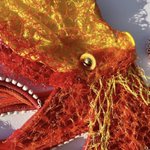
This is #cephalopod art has been made from #plastic pollution collected from beach cleans! The artist behind this beautiful work is Carmen Haselup (@tidelinetrashandtreasures on Instagram).


“I create creatures from the pollution that harms them to raise awareness of plastic #pollution and the importance of conservation. It is a way to engage an audience, start a discussion and make people think differently.” - Carmen Haselup, artist and activist


Together, we discussed the issues of plastic pollution, what inspired her to pick cephalopods as her recent muse, and the concept of #artivism.
Visit our blog to read the full, fascinating interview, which explores the importance of art in science: cephalopodcitizenscience.com…
It’s world seagrass day!
#Seagrass is vital for cephalopods.
Cuttlefish lay their eggs at the base of seagrass blades. These black, ink-stained sacs are known as ‘sea grapes’. Once hatched, juvenile #cuttlefish use seagrass meadows to hide from predators.
📷 Louisa Xu
#HappyValentinesDay 🐙💘
We can’t think of anything we love more than cephalopods! Love is definitely in the air today, just look at these two pale octopuses (Octopus pallidus).
📷 Sam Glenn-Smith

The Cephalopod Citizen Science Project retweeted

Celebrating Galentine’s Day with some of our favorite deep-sea gals. 💕
These octopuses (Muusoctopus robustus) were observed tucked into crevices in the lava seafloor on the edge of Davidson Seamount, each one carefully guarding the developing eggs underneath. #galentinesday
How do octopuses stop their arms getting stuck to each other?! Read this thread to find out👇
📷 Bella Zandona
Therefore, it is thought that this response is mediated by a chemoreceptor in the sucker itself. This is a form of chemical self-recognition. (3/4)
It is thought that this mechanism works through local inhibition, as each sucker can act independently. One sucker could attach, while its neighbour does not! (4/4)
#octopus #cephalopods
The Cephalopod Citizen Science Project retweeted
Slow your scroll and hang out with this supercool squid for a minute. 〰️
Gonatus onyx or the black-eyed squid is one of the most common squids we see in the deep midwater. They grow rapidly, are active swimmers, and have among the highest metabolism of all cephalopods.
The Cephalopod Citizen Science Project retweeted
Pillow fight with an octopus—who's in? 🐙
These pillows may be a little harder than your average square of fluff! Pillow lava looks like rounded blobs of solidified lava. It is formed as lava slowly pours out of the seafloor, and cold seawater quickly cools the outer edge.
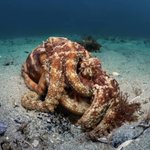
Just a curled octopus on an evening walk…
Eledone cirrhosa is commonly known as the curled octopus, named for the way it curls its arms at rest (which you can see here!). Its other names are the horned octopus or lesser octopus.
📷 Mike Etheredge, Falmouth Bay
The Cephalopod Citizen Science Project retweeted

It's o-fish-cial! CCI is now registered as a #charity! It's been 2 years in the making, but this little idea that started as a student project has really come a long way. I would like to thank all the team for their incredible work, our trustees for guiding us, (1/2)

A recent research paper by G. Ferreira and team (January 2022) has identified the first evidence of #microplastic contamination in deep sea #cephalopods in the South Atlantic.
Video: @MBARI_News
The authors suggest this is due to the vampire squid feeding on marine snow and particulate organic matter, which is a key pathway of microplastics travelling from the surface to the deep. 🌨
These two species can be prey for fish stocks, suggesting that deep sea cephalopod species could be a source of microplastic pollution for species further up the food chain. 🎣🍽
Read the full article here to learn more: reader.elsevier.com/reader/s…