

Trader
Dubai, United Arab Emirates
Joined December 2021
- Tweets803
- Following65
- Followers211
- Likes8.4K



💎

Another little educational post:
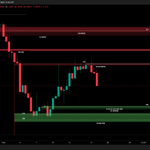
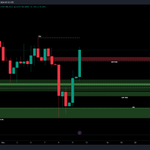
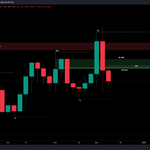
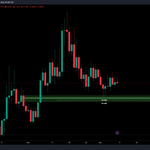
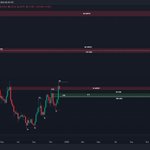
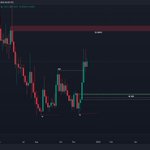
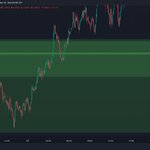
✔️The Power of Simplicity: Why Your Chart Needs Less, Not More :
I get asked all the time about my charts and how I arrive at those clean, one-line price POIs. It’s a massive subject I’ll dig into properly one day, but for now let’s talk about the absolute fundamentals – your chart itself.
I’ve seen some truly dreadful charts over the years. Not just from traders who are just starting out (that’s completely understandable – I was once glued to RSI and EMAs myself, hunting for that mythical magic indicator that would somehow unlock the markets). What really grinds my gears is when the self-proclaimed “coaches” charging thousands of $ still present charts so cluttered you can barely make out the price. They’re plastered with cycle nonsense, Fibonacci levels, EMAs of every period under the sun, and every other indicator imaginable. The actual information you need is buried under a visual mess.
👉What you actually need is a clean understanding of something as simple as candlesticks and the context behind them. Nothing more.
That’s why my charts have stayed simple white and grey for years. I’ve been trading trading for a year and a half now. Before that it was all spot gambling – the stuff we all go through. As soon as I got to a decent level, I changed everything on my chart and that helped me massively to just focus on PA itself.
First off, I properly hate colour for the sake of it. Second – and far more importantly – it gives real clarity. You can see PA in all its glory without some external indicator interfering or distracting the eye. When the chart is stripped back, the market’s story becomes obvious: the reaction points, the imbalances, the pure structure. No noise, no clutter, just the raw language of price.
☑️A clean chart forces you to focus on what actually matters. It removes the temptation to over-complicate, stops analysis paralysis in its tracks, and builds genuine confidence in reading the tape rather than relying on lagging tools. The best traders I know keep their screens ruthlessly simple for exactly this reason. Complexity is often just a comfort blanket for uncertainty. Clarity, on the other hand, is power.
Keep it clean. Let the price speak for itself.
Have a great weekend, lads.
Caleb retweeted

A little educational post on trading psychology:
Most traders obsess over trading psychology (the old me did too.).
They devour books on discipline, journal every emotion, buy expensive courses/mentorships, and treat mindset as the missing piece of the puzzle.
Yet they still cannot explain, with any real conviction, why they are taking the trade in the first place.
👉Here’s the uncomfortable truth:
✍️Trading psychology is largely a downstream problem.
When you actually know your setups cold — when you have put in the screen time, refined the criteria, and can clearly articulate exactly what you are looking for and why (traders tend to ignore WHY) — confidence appears of its own accord. You stop second-guessing every candle. You stop needing external validation. The internal noise quiets because the edge is no longer theoretical.
☑️Conviction in your process is what stabilises the psychology. Not the other way round.
You do not “fix” your mindset first and then magically start trading well.
You develop genuine skill and clarity in your strategy… and the psychology begins to align with that confidence.
🎯Master the craft.
🎯The mindset follows.
PS: I’m not knocking the idea of trading psychology as an insignificant area — it’s important to a certain degree, maybe — but IMHO, if you’ve got confidence in your skills, you’re very unlikely to suffer from TP as you’re able to read the market correctly for the most part and profit from it consistently. Where TP really matters is: can you still trust your analysis despite, say, taking 5 losses in a row?
Have a great Sunday, lads.

Caleb retweeted

The single most important thing you can do as a trader is track the data on your trading/and use that data to refine your trading. It is a logistical Nightmare to track the things you need to track manually, but you have to do it.
Most people track nothing, but tracking and journaling is not optional. You must do it, how you do it is up to you.

Caleb retweeted
A quick Educational Post on TFs:
Lads,
Quick one on HTF / MTF / LTF trading because I keep seeing people get this wrong.
👉HTF (Daily / 4H) gives you the bias and the big picture.
👉MTF (1H / 15m) helps you refine the narrative and find the better zones.
But the actual craft? That is developed on the LTFs.
LTF (m5, m1, 30s, even 15s and 5s) is where you learn real execution.
This is where you train your eye to see:
☑️Clean liquidity sweeps
☑️Proper internal structure shifts
☑️Quality RTZ into your POI
☑️Precise entries with tight stops
☑️When to add size and when to stay out.
Anyone can mark a Daily or 4H level.
Very few people can take that same level and refine it down to a sniper entry on the micros without getting chopped up.
The reason most traders stay average is because they refuse to put in the hours on LTF.
They want the big moves without learning the precision required to actually catch them consistently.
Master the lower timeframes and suddenly the higher timeframe levels become much easier to trade.
👉You start seeing the same patterns everywhere.
👉Your timing improves.
👉Your RM gets sharper.
👉And most importantly — you stop forcing trades.
HTF tells you the direction.
LTF is where you actually become a trader, imho.
P.S. You have to understand MS and the complete set of PA though, as the margin for error on scalping is really tight. Once you are successful on the LTFs and Micros, you can eventually scale up and make so much more than a HTF trader (they say the contrary, obviously) :) But it’s logical, as your RR is relatively huge.


Caleb retweeted

If I hadn't closed that position I would be funded.
Another quote I've heard countless times.
It feels like the truest thing in the world when you say it. but its the biggest bs ever
You were mentally not able to execute or hold the trade. So first stop that woulda shoulda coulda bs. It's not existent, you didn't managed the trade. Stop lying to yourself with these fairytales.
Here is what actually happens in your body when a trade goes wrong or you manage the trade bad.
Your nervous system fires like you got chased, Heart rate spikes, Jaw tightens. You cannot think clearly because thinking clearly is not the body's priority right now, surviving is. I've talked about this countless times in previous posts.
The problem is you are still staring at the charts while this is happening. And its the same thing either you are to scared to execute or to overconfident, it goes both ways.
You look back and calculate what your PnL would have been if you hadn’t exited.
You tell yourself: “I was right, the only reason it didn’t work is because INSERT HERE ANY EXCUSE”
Now you feel smart with your analysis, but your not. It’s just your brain trying to find a way to reduce the stress you’re feeling.
Lets talk about nature.
Animals in the wild do something interesting after a predator attacks. They walk around. You can see them shake!! for a moment and then they relax and become calm again. Important is they shake! Physical movement!!!!
Not journaling like you(if ur even doing it). No "what did I do wrong." The body resets itself, and then the animal is back to normal.
Traders skip this step entirely. The trade closes, the loss registers, and they are already considering taking the next stupid trade just to avoid the feeling of the loss.
you cannot think your way out of a feeling when your body is still in the stress state. The thinking part of your brain is offline. You are doing math with a computer that is not plugged in.
The reset is not about mindset. It is about getting the body back to a baseline where the thinking brain can actually work again.
I said it 1000 times, A walk. Actual physical movement. Not scrolling your phone, not watching another trader's recap video. Moving your body until the jaw loosens and the chest stops feeling tight.
So stop making decisions while ur body is still in fight mode.
This needs to be your skill set, understanding your body and mind how it reacts and act before you explode
I still catch myself doing it. Loss hits, and I am already trying to revenge trade before I have taken a single breath. The "I would have been funded" story is always waiting there.
Do u step away from the screen after a losing trade?
Caleb retweeted

A pattern i've observed over the years: those who, at some point, began journaling their ventures and inner thoughts almost inevitably became financially free.
Because journaling turns the unconscious into data. It exposes the recurring loops, the subtle errors, the self-sabotaging patterns, and invites correction. You start upgrading yourself like code. Improvement becomes intentional, not accidental.
This is why psychologists help the average person as they observe, take notes, and identify patterns that the person themselves cannot see. Journaling lets you become your own observer.
If you don't believe this, simple: you don't understand the power of human psychology, so don't do it.
But when you watch others who were once at your level pull far ahead in a few years, don't be surprised if they tell you they wrote not to the world, but to themselves. And in doing so, rewrote their future.
Caleb retweeted

The $KAS educational example evolved beautifully in a timespan of 1 year. (Fanboys, can I now have your attention?)
The 15th of August Wyckoff distribution idea played out perfectly in the midst of hype for the arrival of the "new Bitcoin", the "superior coin" that should have demolished every other project.
I won't talk again about the hate that I took for sharing such a controversial and unpopular opinion (even because you can clearly refer to the old post and check by yourself) but I will talk about how deceptive fundamentals are.
There's always a reason to justify the price action, always a reason to say: "It's impossible that it will go down so much, fundamentals are too good.." but at the end of the day, what matters is just one thing: money, dollars, cash, "il vil-denaro" in order to "italianize" the concept.
All of the "hashrate is going up" and "adoption is here" statements melted like butter, reminding us of how much nonsense can be created when things go well and how much (if there's the need to repeat it) TA is the undisputed king in the arena.
Now let's dive into the technical perspective because I guess you're reading this post for having an idea on what can happen next, right?
Well, the price perfectly hit my extension box and the target of 0.05$ that I was 👁️eyeing since the last year and this, in my opinion, is a pivotal area..but why?
In AMT, when you rebalance a prior HTF impulse (started in October 2023) you essentially reset the conditions, the market comes back to full equilibrium as sellers offloaded the majority of their positions and buyers/smart money may start another long term re-accumulation.
👁️If we check properly, the 0.05$ isn't just a "random" level, it's actually:
- 1.454 extension
- HTF demand
- Psychological level
- HTF POC of the macro swing
- Discount
That's why I discussed about the pivotal area, and it's not a coincidence that we can find a truckload of volumes around here.
So which may be the macro outlook here?
Considering everything mentioned above and the fact that the majority of people completely gave up on this "asset" labeling it as "failed", attacking the team and that the R/R is extremely favorable, I wouldn't be surprised to see it trading higher in the future.
While I couldn't care less about this coin I don't think it will disappear in the dust like many small-mid caps shilled left and right for bloody money.
$0.12? More than feasible, retesting the HTF VAH.
A new high? Step by step maybe, where I still have my $0.27/0.28 HTF target, who knows..
What is sure is that the opportunity, for the ones who want to take it, is now here.


I never talk about altcoins, but today I'm gonna make an exception using $KAS as educational example. (if you're sensitive or a fanboy, this post is definitely not for you)
On the 15th of August I shared a potential Wyckoff distribution schematic as the price was at its LPSY point in the scheme.
At that moment in fact, KAS was creating a daily BOS below the 2 EQLs at 0.1544$ + below the 19 November 2023 high + below the uptrend trendline.
These signs, mixed with the 3 drives bearish pattern were highlighting a lot of weakness which has been completely ignored by the fact that fundamentals were all pointing "up only".
Cult members and fanboys pushed the "hashrate is going up", "KAS is BTC with better technology" and all of these fairytales that serve nothing but forcing retails to buy this coin at extreme premium levels.
And almost 2 months later, this is the situation:
The price has broken below the 0.15$ confirming the thesis.
"Does this mean that KAS is cooked? Macro top?"
Unlikely, especially if BTC will reach new highs as we expect but this weakness is costing time (and money) since the HTF trend is bearish.
Apart from the classic laws of price action to determine further downside (therefore level by level) I'm quite sure that, sooner or later, Kaspa will see 0.050$.
Not now, it has still room in the overall cycle, but this is a warning to take profits once the harvest time will come.
Respect the patterns.
Respect the price action.
Respect the blessing of experiencing huge profits.
For the rest that will prefer to believe in Kaspa fundamentals..good luck, you'll need it.


Caleb retweeted

Most of you will probably start actually printing real gains when you stop waiting for “alt season”.
A phrase legitimately created to manipulate the masses into holding forever.
Caleb retweeted

MTM - ORDER BLOCKS
- Introduction -
Order blocks (OBs) and especially hidden order blocks (hOBs) are not some magical fix to every trading challenge, but they form the backbone of @Moneytaur_ system. Mastering them is essential, since it helps align us with whales.
The way OBs are used here is not ICT textbook. MT has his own logic, structure, and use. This writeup reflects my interpretation on that approach and will differ from what ICT/SMC teaches.
“Success in this game is so much more than finding hidden liquidity. However, you’re already ahead of all CX, so put in the hours required to deserve consistent and extreme success.”
- What’s an Order Block? -
Order blocks are areas where smart money has previously executed large buy or sell orders (liquidity), and will likely do so again. Price Action gravitates toward these levels, with a high probability of producing a reaction when revisited.
The higher the timeframe of the OB, the more liquidity it holds, and the more likely price is to react meaningfully when it returns.
- Why they work.
Markets are drawn to liquidity, a constant ebb and flow of buyers and sellers. OBs represent concentrations of liquidity on their respective TFs. They are the fuel that powers price in the opposite direction. The more fuel, the longer the journey can be sustained.
📝 Especially HTF OBs, can take time to fill orders. Revisiting is normal and a direct spring into the opposite direction is not a given. PA can spend weeks in and around an OB without invalidating it. Look for HTF body closes past the level for invalidation.
“👁️ 1H OB and 2H OB. The higher the TF, the more powerful the levels are, thus the higher probability for reversal, thus me always saying to focus mostly on HTF opportunities. Less ‘noise’.”
Another reason OBs work well is that many algos use them, especially in combination with Fibonacci levels. Fibs add confluence and makes the level even more reactive. Look for premium/discount fib levels (0.5, 0.618, 0.705, 0.786, 0.886) that align with OBs, ideally refined zones within HTF blocks.
“Yes. Trading bots can be programmed to identify/respect OBs in spot trading (your trading realm), just as they do in futures trading. They’re designed to analyze historical PA and identify 🗝️ support/resistance levels. When these bots identify an OB on the spot market, it may act in different ways, depending on the bot’s strategy/programming.
Example: If the bot follows a trend-following strategy, it may wait for the price to approach an OB before initiating a trade in the direction of the HTF trend.”
xitter.cf/Moneytaur_/status/1683…
- Hidden Order Blocks -
Order blocks can lose potency when they’re obvious. If a level is visible and widely watched, it can even become a target for manipulation and is less reliable.
A hidden OB is simply an OB that sits behind one or more FVGs. The more FVGs layered in front of it, the more “hidden” it becomes and the more powerful it is.
“For any asset, on any timeframe, price will reverse @ hidden 🗝 levels rather than what everyone can easily 👁”
“2 FVGs into a 3rd FVG + 4H BB = good short”
Related: xitter.cf/Moneytaur_/status/1793…
- Refined Order Blocks -
Why Refine?
The more we can refine an order block, the more powerful it becomes. Refinement opens the door to more precise entries, tighter stops and significantly higher R:R setups. Think of it as liquidity within liquidity, helping us pinpoint the area most likely to react.
Refined levels also tell us something about the FVG it’s behind. A weekly hOB with a refined 4h level can only exist if the FVGs move past the weekly level was aggressive. Aggressive moves mean less mitigation, and more liquidity left behind when PA revisits.
- What Are We Looking For? -
Location matters. MT often places his SL outside the full OB zone, usually based on the highest timeframe “outer” OB. Given this, optimal refined zones are at EQ or near the base of the OB, ideally in confluence with fib levels. When these align, we can confidently expect a higher chance of a reaction, with greater RR, because we were able to enter the trade at a more precise level & closer to invalidation.
- Choosing Timeframes -
Many traders overthink which TF to use, or only cycle through the basic ones.
Here is MT’s approach:
He starts with typical HTFs -> Refines through mid and lower TFs -> and only when he wants further confirmation, he will use more exotic TFs.
“Do you ever look at TF that at first glance seems a little bit odd”
“If I’m looking to fully confirm the level, yes. If I don’t need more than what I’ve already found, no. Sometimes I look through 30+ different TFs.”
Even “odd” timeframes like 23H can offer strong reactions, but keep in mind: That 23H block is just a 1H + 23H combination. Often the 1h candle is the one sitting behind a FVG. These levels work and tend to have great RR. But essentially it is a 1h candle body.
🔺Refinement is a tool. Use it when called for. Don’t get lost in over refining.
- The Hierarchy of Order Blocks -
Not all OBs are created equal. MT’s system emphasizes identifying optimal blocks that follow a clear structural and contextual hierarchy.
Optimal levels are:
- Untouched
- Hidden behind FVGs
- On HTFs
- Multiple H/M/LTF levels
- Refinable to under 8H
- Located at premium/discount (Extremes +1)
- Aligned with fibs
- Found on high-volume assets like BTC and ETH
- Classification
Optimal
HTF untouched hidden key level, containing multiple HTF levels and refinable to under 8H.
e.g. 1W → 5D, 4D, 2D → 12H, 8H, 4H
Semi-Optimal
HTF untouched hidden key level, not containing other HTF levels, but refinable to under 8H.
e.g. 2D → 6H, 3H, 2H
Lower Quality
Single TF = use reduced risk
Partial level = use reduced risk
Partial past EQ of origin candle body = not actionable
Confluence (each of these adds weight to the setup)
Multiple hidden
Structure
Fib alignment
Extreme P/D locations
Standard OBs
The more boxes a level ticks, the more powerful it becomes. True optimal levels are rare and mostly found on BTC and ETH due to their depth and consistency of volume.
📝The 0.5 of the block acts as a great spot to enter when refined levels are not present.
🔺The size of the candle body is very relevant. Small candle bodies hold less liquidity!
“I’ve mentioned ‘hidden liquidity’ or ‘hidden OB’ = HOB. Optimal levels are best found on BTC and ETH. Hidden OBs on HTF, refined into LTFs and located at/near range extremes are far more powerful.”
xitter.cf/Moneytaur_/status/1902…
“Explained a few times before. MS matters. The higher the timeframe, the more powerful. The more you can refine, the more powerful. If you find a key level on Weekly, that is also a key level on 5D, 3D, 2D, 8H, it’s a strong level. If you find a key level on 2W, W, 5D, 3D, 2D, 8H, and can refine entry with timeframes below 8H, it’s semi-optimal and potentially optimal if it’s Bitcoin or a high trading volume coin. If you find a key level on a single timeframe, such as daily, it doesn’t mean you should completely ignore because it’s not on any other timeframe and you can’t refine, but you can’t expect it to be anywhere near to as powerful.” xitter.cf/Moneytaur_/status/1839…
- Order Blocks & Market Context -
Market Structure, Supply & Demand, and Premium & Discount all matter. A bullish OB in HTF premium is far less powerful than one found in HTF discount. These trades can still be taken if they tick enough boxes, but we don’t expect them to trigger new ATHs. Reduced risk and more defensive trade management are advised.
If you find a bullish OB near the top of a HTF range, but on MTF or LTF it’s in discount, the trade may still be valid (in that range). Just remember: the same OB would be far more powerful if it sat in a true HTF discount zone.
Always trade the range and have realistic targets.
“Set Fibs from Range high to Range low. Above 0.5 = Premium. Below 0.5 = Discount. Find Key-levels. Bottom of range low: Find longs. Top of range high: Find shorts. Trade on that range.
Not ‘to the mooon!’ 🤝”
xitter.cf/Moneytaur_/status/1590…
“You don’t look just @ PA near CMP. You look for heavy liquidity levels that weren’t tested yet, set alerts, wait, and enter your plays. The real skill is in the ability to refine/ultra-refine into the best R:R possible. You literally break the markets once you master the right skillset.” xitter.cf/Moneytaur_/status/1718…
At times, multiple levels will sit near each other. Often, the one closer to CMP will fail, it may offer a bounce, or be ignored entirely. Price eventually gravitates to the deeper, more powerful block.
“If you’re a thief and discover a pile of gold, but right beside it lies a diamond, and the only way to unlock the diamond is to use the gold as the key, what do you choose?”
xitter.cf/Moneytaur_/status/1846…
- Reading Order Block “Footprints” -
During buy programs, bullish OBs offer stronger reactions. The same applies to sell programs and bearish OBs. These reactions act as early signs of market makers’ current intent. These levels being front-run can also be an early sign of intent.
In MTM Price Action we learned that “Liquidity is the destination”, based on this we can use key levels to gauge how PA will likely react in certain scenarios.
If PA is approaching supply or demand and has left behind key liquidity on the way, there’s a high probability it will return to those levels before continuing, to collect fuel for the next leg.
Find the level → Set alerts → Be patient → Execute.
Inversely, if PA breaks out of a range without collecting that fuel, the probability that the breakout is false increases. In those cases, possibly look for short setups, PA is more likely to retrace.
If PA is approaching key resistance and no meaningful liquidity has been left behind the probability of a BO without a retrace increases.
“Pump above ATH, leaving a large FVG behind, and you can expect a pullback rather than a BO (break out) into price discovery IF there’s a powerful hidden BB left behind, which is the “fuel” for bullish continuation. The hint that it’s likely going for such BB, is only if it has a HTF close above ATH and you can find a powerful hidden BB at lower levels. If you cannot find such, the probability for BO into price discovery, without looking back (for a while) is higher.”
xitter.cf/Moneytaur_/status/1886…
- Invalidations -
When we see a HTF (4H+) candle close outside of an OB, we can consider that block invalidated.
Like everything in trading this is fluid. Refine your judgement through experience. A 4h body close outside of a 6m OB is not the same as out of a 12h block. But it should still act as an early warning sign.
The EQ of the OB is especially important, particularly on HTFs. Once the EQ is taken, the block becomes less actionable, especially on MTF and LTF. On HTF blocks, multiple touches are common and can still be valid, but with each touch, the area is drained of more liquidity and loses strength.
Risk accordingly.
- Nothing Exists in Isolation -
Like everything in trading, nothing is static, even a perfect HTF OB can fail. It’s critical to zoom out and consider the broader market context.
Financial markets are interconnected. Smaller fish follow the big ones. BTC may reach a textbook HTF reversal level, but if SPX is falling off a cliff, that single chart setup likely won’t be enough to reverse BTC’s direction.
Inversely, when an altcoin’s chart aligns with a key BTC or majors level, that becomes a +1 confirmation, a strong signal that the level is likely to hold and trigger a reaction.
This is a game of probabilities.
“You can’t find all answers in one chart alone. They need to ‘collide’ almost at the same time for you to have a powerful confirmation that an HTF reversal is imminent.
Example: This chart reaching for 5.80% is a potential powerful bullish reversal level, and if it was to happen when Bitcoin is closing Daily above $65,700 high, it’s more powerful than if it happens without Bitcoin doing so. Track both.” xitter.cf/Moneytaur_/status/1790…


That monthly OB looks like a potential reversal level. If it's to get nastier (yet more "fuel" for further upside) send it to 7ish % (lower probability Vs reversal @ monthly OB but both are 🔑 levels)
You can't find all answers in one chart alone. They need to "collide" almost at the same time for you to have a powerful confirmation that an HTF reversal is imminent.
Example: This chart reaching for 5.80% is a potential powerful bullish reversal level, and if it was to happen when Bitcoin is closing Daily above $65,700 high, it's more powerful than if it happens without Bitcoin doing so. Track both. You should take decisions on size and risk according to the % probability you can build when considering all the confirmations you find. Alts would be 🩸 a bit more if this scenario was to happen, and that would be ideal as there's still a % of the highest trading volume coins still to hit their HTF 🔑 levels, such as MATIC, DOGE, and AGIX being three of those coins. This doesn't mean they all have to. Many did already.
It's even more powerful if there's no HTF close < the 🔑 level i shared on TOTAL2 ($940Bn). The more liquidity related confirmations you find, the higher the probability to succeed if you play for a reversal. Important to track the SPX as it's a market with $50tn and Bitcoin is unlikely to moon if this chart is 🩸 regardless of "decoupling!" dreams. The SPX is flirting with ATH and the price level 🇺🇸 banks forecasted in early 2022. The most important charts are the ones showing all the liquidity rather than random shitcoin charts.
Pay attention to a future potential triple bottom @ 3.80% on USDT Dominance. Alts can get a hit again. Pay attention to the news and sentiment whenever this chart is nearing 3.80% support. It's weaker Vs the first hit though (explained several times why)
Ps:. I couldn't have shared more warnings than i did, on several charts and sentiment-wise. Don't pay it all back again while hoping for the moon. Start journaling and connecting dots or you will be running after your own tail for perpetuity. It won't be hard to identify the macro-top. Looking at all the data i have at the moment, i believe the next leg up (2024) will be the last one before a drop of larger magnitude and that'll last longer.


Great way to assess the strength of a candle close/BOS above or below SH/SL's by @IamZeroIka
A good BOS is validated not simply by price trading momentarily beyond a swing high or swing low, but by the portion of the candle body that closes past that structural reference.
The body of the candle is the clearest expression of market acceptance, since it reflects where the majority of transactions occurred rather than where price briefly probed.
For my criteria, when at least 1/3 of the body closes beyond the swing point, the market demonstrates that it is willing to sustain a presence outside the prior structure.
This degree of confirmation is enough to suggest that the move is more than just a shallow test or liquidity probe, though it can still leave room for uncertainty because a significant part of the candle remains anchored within the old range.
When 1/2 or more of the candle body establishes itself beyond the swing point, the break becomes much more technically reliable.
In this case, the majority of the candle’s traded range lies outside of the prior structural boundary, showing that liquidity has been absorbed and the market is in the process of repricing.
This kind of close reflects displacement rather than inducement, since the flow of orders behind the move is strong enough to define a new area of value rather than just sweep resting liquidity.
The distinction between 1/3 and 1/2 lies in the balance between speed and confirmation.
1/3 allows for earlier recognition of structure shifts but carries higher susceptibility to false breaks, while 1/2 represents stronger conviction at the cost of a slightly later signal.
The 1/2 close therefore provides the most robust signal that a BOS is genuine, because it confirms that the new price level is being accepted as structural rather than temporary.
Underrated post
✍️Whenever the price of an asset approaches a demand or supply zone, you may expect an immediate reaction to validate strength.
You see price touching the area and anticipate a sharp rejection or bounce, as if the market is obligated to respond instantly, but in reality, sustainable movements often don’t happen this way.
For a move to carry weight and last, it is usually better to see the market spend some time within the zone rather than snapping away from it impulsively.
The reason lies in how orders are actually processed.
A demand zone is essentially a cluster of buy orders waiting to be triggered, while a supply zone is a cluster of sell orders.
These zones are not magical price levels, they are concentrations of liquidity.
When price tests them, the interaction between resting limit orders and incoming market orders determines the outcome.
If price touches the zone and immediately rejects it, that usually means only a thin layer of orders was triggered, often enough to create a short-lived reaction, but not enough to sustain a lasting move.
Once those orders are absorbed, the zone loses strength, and price often comes back to test it again or even break through.
By contrast, when price actually spends time within the area, a different process is unfolding.
Orders are being absorbed gradually.
Smart money often cannot fill their positions all at once without pushing the market aggressively, so they allow price to hover inside the zone, absorbing liquidity and executing over time.
During this period, new participants also join the "battle", reinforcing the zone and creating a healthier balance of supply and demand.
When the market finally leaves after this absorption phase, the resulting move is more likely to be sustainable, because it reflects deeper order flow rather than a shallow reaction.
This is where a common misunderstanding arises: traders sometimes confuse “spending time in the zone” with “repeatedly testing the zone.”
❗️They are not the same.
When price consolidates within the zone, orders are being filled and liquidity is actively exchanged, which strengthens the foundation for the next move, but when price keeps leaving the zone and then returning to test it again and again, each touch tends to consume resting orders and deplete the zone’s strength.
Over time, these repeated stabs weaken the area, making it more likely to break.
So the difference is subtle but crucial if you want to level up.
Consolidation inside a zone is constructive as it suggests absorption and accumulation.
Multiple rejections with constant retests are destructive as they erode the liquidity that gave the zone its power in the first place.
This is why the most reliable supply and demand zones are not necessarily the ones that spark the most dramatic reactions.
They are the ones that allow price to breathe and to build up genuine order flow before moving away.
Caleb retweeted
Market psychology isn’t random. It's engineered.
Once the herd expects a certain outcome because they finally found [late] a multi-year pattern, it fails.
The next time it happens, odds tilt toward the inverse. The real game is psychological warfare.
Whales don’t react. They design reactions, sometimes years in advance.
This isn’t divine insight. It’s just what happens when you stop thinking like a sheep and start thinking like the one laying the trap.
Caleb retweeted
4 Must know facts if you're approaching trading and want to level up:
👁️(1) The "best" method doesn't exist
There are dozens of strategies available for penetrating and milking each financial market.
I personally started studying the classic "rotten" methodologies based on indicators, but over time I realized they weren't bringing me a strong probabilistic hedge, leading me to severe losses.
I've put commitment and by pilling up hours and hours, I evolved and now my main strategy relies on Wyckoff Schematics and Smart Money Concepts.
I find myself comfortable using these tools, but I know people who are profitable using other techniques.
There is no method better than another, what matters is context and how you use the tool.
This is why knowledge is the key, the more knowledge and "arrows in your quiver" you have, the greater your chances of achieving your goals.
By "knowledge," I don’t mean just technical concepts but also self-awareness.
Understanding how you relate to the market based on your personality, character, and style, deciding which timeframe to trade on and which strategy to use according to these considerations is crucial, always keeping in mind that what works today may not work in 5 or 10 years.
👁️(2) Lifestyle is powerful as knowing how to trade
To be focused, efficient, and mentally sharp throughout the day and consequently improve your potential for profitability, you cannot afford to neglect your lifestyle.
Your body and mind are the tools you use to face the market every day, and if you don’t take care of them, you will pay the price in terms of performance, clarity, and decision-making ability.
Sleeping too little and waking up with a foggy mind, eating poorly by consuming too much sugar and junk food that causes energy crashes, leading a sedentary lifestyle without ever stimulating your body with physical exercise, and drinking too little water, leaving your brain dehydrated and impairing memory and concentration..these are all habits that undermine your performance and your ability to tackle the day with the right energy.
Many people tell me they often have headaches, struggle to focus, fail to complete their tasks, or constantly feel tired for no apparent reason.
The truth is that most of these problems stem directly from poor daily habits and, in many cases, could be resolved simply by making better lifestyle choices.
Getting enough sleep, maintaining a balanced and nutrient-rich diet, drinking enough water to keep your brain hydrated, incorporating regular workouts into your routine (whether at the gym or outdoors) to improve circulation and mental endurance, and avoiding excessive alcohol and caffeine consumption, are all factors that have a direct impact on your daily performance.
"Mens sana in corpore sano"
👁️(3) Backtesting is non negotiable
Backtesting is an essential part of trading because it allows you to take a hypothetical approach to the markets before risking real money.
If you haven’t backtested your strategy, you have no clear idea of how often the pattern leads to profitable trades or if it’s just random noise in your head.
By applying your strategy to historical price data, you can see if it would have been profitable over the past year, five years, or even longer.
This gives you concrete data on your win rate, average risk-reward ratio, and drawdowns, the periods where your strategy would have lost money.
Without backtesting, you're just hoping that your strategy works, but with backtesting, you can clearly see if it’s likely to be profitable in the long run.
For instance, if you backtest and find that your strategy produces an average win rate of 65%, with a risk-reward ratio of 2:1 over the past five years, that’s solid proof that your approach has an edge.
However, if you backtest and the strategy shows a low win rate or inconsistent results, then it’s clear you need to refine it before applying it to live trades.
Another important aspect is understanding how your strategy reacts to different market conditions.
Markets are cyclical, with periods of high volatility, trendless markets, or strong uptrends and downtrends.
Backtesting your strategy across a variety of market conditions, whether it’s a period of high volatility like during major economic events, or during a prolonged bull market, helps you identify if your strategy is versatile enough or if it’s too dependent on one sole type of market behavior.
For example, you might test your strategy over both a strong bull market and a period of sideways or bear market conditions.
You could find that the strategy performs well in trending markets but struggles in range-bound conditions.
With that knowledge, you can adjust your approach, maybe incorporating different techniques that increase your probabilities during those periods.
Lastly, backtesting gives you confidence and reduces emotional decision-making.
For instance, if you’ve backtested a strategy and it’s shown to work in the past, when you enter a trade live, you’re doing so with a sense of certainty based on data, NOT guesswork.
When the market moves against you, you can stay calm because you know the strategy has been proven over time to handle similar situations.
Without BT, you're not trading, you’re hoping, and hope isn’t a strategy that wins in the markets.
👁️(4) Trading everyday is unnecessary
One of the most crucial lessons for any trader is understanding that you don’t need to trade every day.
It might sound counterintuitive, especially when the temptation to stay active in the market is strong, but consistent success in trading comes from waiting for the best setups to align with your strategy, rather than forcing trades out of impatience or the desire to be constantly in the market.
The market doesn’t provide opportunities every single day.
In fact, one of the key elements of profitable trading is recognizing when conditions aren’t favorable and choosing to sit on the sidelines.
A strategy that works consistently requires the right conditions, which might not always be present.
Trying to trade every day, regardless of whether your setup has materialized, often leads to unnecessary losses.
These types of trades are typically taken without proper alignment with your plan, which is a surefire path to failure.
Overtrading is more than just losing money, it leads to emotional exhaustion.
Trading is mentally taxing, and if you're constantly entering the market without proper setups, you start wearing yourself down.
This exhaustion makes it harder to stay focused and maintain a level head.
The more you trade, the more you expose yourself to emotional ups and downs.
If you’ve ever traded too frequently, you’ll know how quickly the stress builds up clouding your judgment and leading to impulsive decisions, ultimately working against you rather than for you.
Moreover, trading every day can lead to a pattern of chasing losses or overcompensating after a bad trade.
When you're constantly in the market, you may begin to feel like you're "missing out" if you're not trading, even if the market isn't offering good opportunities.
This mentality can lead to poor decisions, where you’re no longer making calculated trades but are instead reacting to every market movement.
When you're reacting instead of executing based on a well-thought-out plan, your trades are often less disciplined and more emotionally driven, making it much more difficult to maintain long-term profitability.
Instead of focusing on the frequency of your trades, you should be focusing on quality over quantity.
The best setups will reveal themselves when the market aligns with your strategy, and that could happen only a few times a week or even just once a month.
The key is to have the discipline to wait for these high-probability trades and avoid the temptation to jump into the market when conditions are unclear or unfavorable.
Patience is a trader’s greatest ally.
When you learn to wait for the right moments, your decision-making improves, your emotions become more manageable, and your overall results will likely improve as well.
Caleb retweeted
XLM gave a textbook HTF reversal at the $0,21 monthly key level, launching into HTF supply where it reversed sharply. A perfect setup.
A perfect opportunity to more than double a spot position from a clean, high-probability level. That’s the kind of "easy money" this game offers, but only if you understand how to play it.
You don’t hold and hope for "a lot more" while praying for the dynamics of the game to change, because they won’t. You take profits aggressively and patiently wait for the next optimal entry. That’s how precision traders win, consistently.
So why are most still not making money?
- Because their realistic targets never satisfy their ego. They don’t want a 50% or 100% gain or even 300% gain in a single position. They want a miracle in a game that's designed and manipulated by evil players, not by God.
They want to be the next SHIB billionaire with a $200 bet. And they can’t bring themselves to sell "too early" because someone on YouTube or the cult they're part of said they’d regret it. But those stories, the lottery winners, the 1000X moonshots, are nothing more than psyops engineered to keep you gambling.
They sell you dreams so you never develop strategy. So you keep holding, hoping, and getting wrecked. Forever chasing the jackpot.
The real winners don't chase. They capitalize. They move with precision. They trade reality, not fantasies.
Caleb retweeted
The more dollars get pumped into the markets, the bigger the elites-induced event crafted to drain them later.
Liquidity in → narrative out → wealth transfer complete.
Yes, it’s great to see your bags pumping, but when the entire market's mooning without brakes, it's a setup.
In manipulated systems, major global events aren’t always random. They’re often the excuse the system uses to justify the inevitable crash it already planned.
It’s a double-edged sword: One side prints money, while the other takes it back, violently. Lives included.