

Just a rabbit building his way up. Money • Business • Freedom
Joined September 2026
- Tweets145
- Following86
- Followers227
- Likes677


Levils retweeted
Jeffrey Dahmer murdered 17 young men and boys over 13 years. He dismembered his victims and kept human remains in his apartment. In 1992, he was sentenced to 15 consecutive life terms. Just two years later, another inmate would kill him in prison. Decades later, Netflix’s Monster: The Jeffrey Dahmer Story would surpass 1 billion hours viewed in just 60 days.
In the video below, Dahmer addresses the court at his sentencing. He says: "Frankly, I wanted death for myself."
Two days before sentencing, a jury ruled 10 to 2 that Dahmer was legally sane when he committed the murders. The families of his victims were in court to hear him speak.
Errol Lindsey’s sister confronted him in the courtroom. She shouted, "Jeffrey, I hate you!"
Dahmer was sent to Columbia Correctional Institution in Wisconsin. In May 1994, a minister baptized him in a prison whirlpool bath. He was serving his life sentences when the final chapter of his story began.
On November 28, 1994, guards left Dahmer and two other inmates alone while they cleaned the prison gym bathrooms. One of them, Christopher Scarver, attacked Dahmer with a metal bar taken from the weight room.
Dahmer was pronounced dead about an hour later. Scarver later told a guard, "God told me to do it." He would later question why the guards had left the three men alone together.
Dahmer had told the court he wanted to die. Was his death in prison the justice his victims’ families deserved, or did the prison fail in its duty to keep him alive?
Levils retweeted
The Lord of the Rings trilogy made $2.9 billion. Then director Peter Jackson sued the studio, claiming he had been underpaid by as much as $100 million.
In the video below, Orlando Bloom tells Howard Stern how much he was paid to play Legolas: "$175 grand for three movies."
Jackson’s lawsuit accused New Line Cinema of miscounting revenue from the films. His lawyers argued that the studio had licensed rights for books, DVDs and merchandise to other Time Warner companies without outside bids, reducing the revenue tied to Jackson’s compensation.
New Line denied the allegations and said it would contest the case.
The dispute was eventually settled. The terms were never disclosed.
But Jackson wasn’t the only one talking about the money. Sean Astin said he received about $250,000 for the entire trilogy, with no residuals.
Cate Blanchett later joked that she got "free sandwiches" for her role. Astin also told The Guardian that he had negotiated such a small amount that he eventually had to sell his house.
Elijah Wood, meanwhile, said the studio had taken "a real gamble" by shooting all three films at once. The cast signed on for a project that would become part of their lives forever.
The trilogy made billions. Jackson’s lawsuit ended in a confidential settlement, and some of its stars say they earned surprisingly little.
Was this a fair deal for a risky production, or did the studio make billions while the people who built the trilogy got a raw deal?
Levils retweeted
Dwyane Wade earned $196 million in the NBA. He says he was sure he was going to lose everything. His first marriage alone ended with $5 million, a mansion and four cars.
In the video below, Wade admits that getting married without a prenup was one of his biggest financial mistakes and explains why he would do things differently today.
Wade made his first million at 21. “Within four years of me getting money, I’m in the court for lawsuits,” he said. He trusted no one for six or seven years.
The divorce was filed in 2007. In 2010, a judge ordered his then-wife into custody after she missed a hearing. Wade testified for about six hours: “I had no knowledge where my kids were and I got very afraid.”
He won sole custody in 2011.
In July 2013, his ex-wife sat down on a busy Chicago street and said Wade had left her homeless. His lawyer disputed that account, saying Wade had been paying her $25,000 a month, plus her mortgage and the fees of 16 lawyers.
Three days later, a judge approved the settlement: $5 million, the family mansion and four cars. His lawyer called it “very generous.”
Today, Wade chairs JPMorgan’s new Athlete Council, which teaches athletes how to handle their first big contracts. Looking back, he says he’d tell his 21-year-old self to “slow down.”
Was it a “very generous” deal, or the price of one costly mistake?
Levils retweeted
In 2007, Microsoft's CEO Steve Ballmer burst out laughing when someone asked him about Apple's new iPhone. He didn't see why anyone would pay for a phone without a physical keyboard.
“I said that is the most expensive phone in the world,” Ballmer later recalled. He also questioned whether the iPhone could win over business users.
Microsoft already had a mobile operating system and millions of devices on the market. Ballmer thought Apple was entering a market Microsoft knew better.
But Steve Jobs had a different idea of what a phone could be. The iPhone put a touchscreen, music, internet access, and software into one device built around how people actually wanted to use it.
By 2010, Apple was selling tens of millions of iPhones a year. Microsoft, meanwhile, was losing ground as the market shifted toward touchscreen smartphones.
Ballmer had judged the iPhone by what phones were supposed to do at the time. Jobs was betting on what people would want them to do next.
Microsoft eventually abandoned Windows Phone. The iPhone went on to become one of the most successful consumer products ever made.
Do you think Ballmer would still be laughing if he'd known what the iPhone would become just a few years later?

Levils retweeted
In 2011, Arnold Schwarzenegger admitted he had fathered a child with Mildred Baena, the family’s housekeeper, while married to Maria Shriver. Their son, Joseph, was born in 1997.
In the video below, Schwarzenegger speaks to Piers Morgan about the scandal. The headline says it all: “My children were disappointed.”
For years, Schwarzenegger had been one of Hollywood’s biggest stars. He had built a political career, becoming governor of California in 2003, with Maria and their four children beside him.
But the affair had happened years earlier, while Baena was working in their household.
Joseph grew up without the public knowing the full story. Schwarzenegger’s wife and children eventually learned what had happened, and the revelation became a worldwide scandal.
In 2011, Schwarzenegger publicly acknowledged Joseph as his son. He later described the moment as one of his biggest personal failures.
Maria separated from him that year. After 25 years of marriage, their family life had changed forever.
In his interview with Morgan, Schwarzenegger admitted that his children were disappointed in him.
He had spent years building a public image as a successful actor, politician and family man. Then the people closest to him learned about the secret he had kept.
Can a father earn back his children’s trust after something like this?
In 1988, Doris Duke, then 75, legally adopted Chandi Heffner, 35, whom she believed to be the reincarnation of her daughter Arden, who died in 1940. Three years later, Heffner sued her for breach of contract.
In the video below, newspaper clippings from the time show the will and the fight over her fortune.
Duke had been rich since age 12, when her father, James Buchanan Duke, died in 1925 and left her about $100 million. According to an AP story shown in the video, he told his only child as he lay dying: “Trust no one.”
Heffner’s friend Bernard Lafferty became Duke’s butler, and one biography says that after a fall in 1990 he convinced her that Heffner and Heffner’s boyfriend were plotting against her. Duke ended the relationship in 1991.
Her 37-page will, signed in a Los Angeles hospital bed according to the Los Angeles Times, said: “I am convinced that I should not have adopted Chandi Heffner. I have come to the realization that her primary motive was financial gain.” The will named Lafferty executor, with $500,000 a year plus $5 million in fees.
Duke died on October 28, 1993, at 80, with an estate of about $1.2 billion, most of it left to charity.
In May 1995 a judge removed Lafferty as executor, citing commingling, waste and substance abuse. In January 1996 New York’s highest court reversed, ruling that he had been removed without a hearing.
Probate lasted nearly three years and ended in 1996 with the creation of the Doris Duke Charitable Foundation. Heffner settled her suit against the trustees for $65 million.
Lafferty agreed to resign for a cash settlement as his health declined, according to one biography. He died in 1996, at 51.
Was the will the choice of a woman who wrote that she regretted an adoption, or of a woman in a hospital bed whose butler stood to collect $500,000 a year?
In 2007, Microsoft's CEO Steve Ballmer burst out laughing when someone asked him about Apple's new iPhone. He didn't see why anyone would pay for a phone without a physical keyboard.
“I said that is the most expensive phone in the world,” Ballmer later recalled. He also questioned whether the iPhone could win over business users.
Microsoft already had a mobile operating system and millions of devices on the market. Ballmer thought Apple was entering a market Microsoft knew better.
But Steve Jobs had a different idea of what a phone could be. The iPhone put a touchscreen, music, internet access, and software into one device built around how people actually wanted to use it.
By 2010, Apple was selling tens of millions of iPhones a year. Microsoft, meanwhile, was losing ground as the market shifted toward touchscreen smartphones.
Ballmer had judged the iPhone by what phones were supposed to do at the time. Jobs was betting on what people would want them to do next.
Microsoft eventually abandoned Windows Phone. The iPhone went on to become one of the most successful consumer products ever made.
Do you think Ballmer would still be laughing if he'd known what the iPhone would become just a few years later?
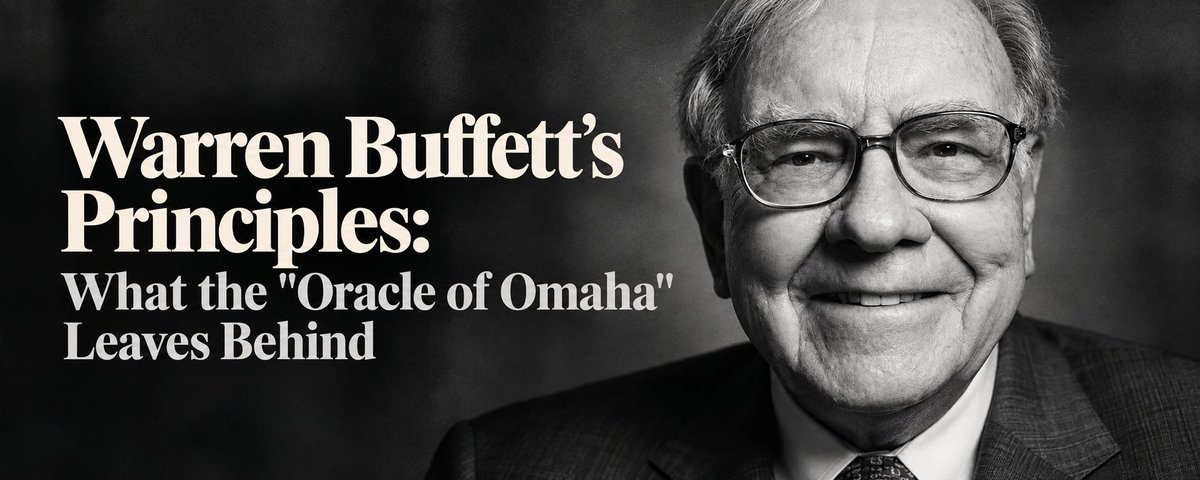
In 2017, Warren Buffett explained why predicting quarterly iPhone sales misses the point of investing. "Nobody buys a farm based on whether they think it’s going to rain next year or not."
In the video below, Buffett explains why he focuses on the value of a business rather than trying to predict its next quarterly results.
"The idea of spending hours trying to guess how many iPhones, or whatever, are going to be sold in any given quarter... to me, that’s not understanding anything about what matters," he said.
His comparison was simple. Nobody buys a farm because they expect perfect weather next year.
A farm is valuable because of what its land can produce over time. One bad season doesn’t automatically make it a bad investment.
Buffett applies the same logic to stocks. A disappointing quarter doesn’t necessarily change what a business can earn over the next decade.
Investors spend hours predicting sales figures, earnings reports, and market reactions. Buffett would rather understand the business than guess what its next report will look like.
The real question is how much a company can earn over time and whether its advantages will last. Quarterly numbers matter, but they don’t tell the whole story.
Buffett built his investing philosophy around that distinction. Instead of trying to predict every market move, he looks for businesses worth owning for years.
You wouldn’t buy a farm based on next year’s weather forecast. Why buy a business based on its next quarterly report?
TRUMP GOT CAUGHT ON A HOT MIC RIGHT AFTER HIS OWN PRESS CONFERENCE.
The cameras were still rolling. Reporters were leaving the room, and everyone seemed to think the event was over.
The microphone was still on.
Trump turned to Michael Dell and the CEOs around him and said, “Every question’s a kill, you know that, right?”
He repeated it, waited for the reaction, and got his applause.
Then Dell answered with a joke:
“Sir, we don’t have a helicopter. We have a Dell-icopter.”
The room laughed, and Trump moved on.
What made the moment interesting was where it happened. This wasn't a campaign rally or some private conversation caught by accident. It was the Oval Office, with the president surrounded by some of the most powerful business leaders in the country.
And the microphone was still live.
The reporters heard it. The cameras caught it. The clip spread almost immediately.
Trump seemed to think the press conference was finished.
The microphone disagreed.
In 2013, an interviewer asked 84-year-old Jack Bogle: "If you had five minutes to teach somebody how to invest, what would you tell them?"
Bogle's answer wasn't about finding the next great stock or timing the market. He started with something much more basic: put money aside every month and give it time.
"Just put your money away. Month after month after month after month. And don't look."
Bogle believed the biggest mistakes came from doing too much. He warned investors about high costs, unnecessary trading, sales loads, and the taxes that eat into long-term returns.
He also had an answer for the moment when markets start falling and you feel like you have to do something. "Don't do something, just stand there."
Bogle didn't claim he could predict the market. "I don't know how to time the market," he said, adding that he didn't know anyone who had consistently done it successfully.
His example was simple: start at 20, keep investing, and leave the money alone until 80. "You aren't gonna believe it," he said, when describing what 60 years of compounding could do.
What other investing steps would you add to Bogle's advice?
In 1985, Apple’s board pushed Steve Jobs out of the company he had helped build.
Twelve years later, Apple bought the company Jobs had created after leaving.
In the video below, former Apple CEO John Sculley talks about the decision that ended their relationship.
Jobs had brought Sculley to Apple in 1983. They worked together until they disagreed over the future of the Macintosh.
Jobs wanted to keep pushing the Mac. Sculley believed Apple needed to protect the Apple II, which was still generating much of the company’s revenue.
They took the dispute to Apple’s board.
The board sided with Sculley.
Jobs lost control of the Macintosh division and eventually left Apple.
He started NeXT and later bought Pixar.
Then Apple needed NeXT.
In 1996, Apple bought Jobs’ company for about $400 million.
Jobs returned to Apple in 1997.
The company had pushed him out. Then it bought the company he built after leaving and brought him back.
Was forcing Jobs out a mistake, or did leaving Apple give Jobs the chance to build the company that brought him back?
In 2011, Warren Buffett called a CEO he'd never spoken to before and told him he wanted to invest $5 billion in his company.
The CEO didn't need the money.
"I said to him, we don't need the capital."
Buffett's answer was simple:
"I know. That's why I'm calling."
The company needed stability. It needed confidence. And Buffett believed his name and capital could provide both.
It was a chaotic time. The US government was close to default, the mortgage industry was facing enormous uncertainty, and investors were nervous.
Buffett called on a Monday at 11:00 AM.
The agreement was signed by Tuesday morning.
The $5 billion arrived by Thursday.
The CEO later said his employees came back to work saying, "The smartest investor in the world just put five billion dollars into this company."
But there was another part of the story Buffett's investment proved.
If you had been a common shareholder and bought the stock that same day, you would have done just as well as Buffett.
You just needed the courage to make the investment when almost everyone else was afraid.
in 2013, 84-year-old jack bogle gave investors a rule that sounded almost too simple: keep 95% of your money boring and give yourself 5% to do whatever you want.
bogle knew many investors would eventually want to pick individual stocks, trade the market, or chase the next big idea. instead of pretending those urges didn't exist, he suggested putting that money into a separate "funny money" account and keeping it to no more than 5% of the portfolio.
the other 95% belonged in what he called the "serious money" account, built around long-term investing and left largely alone.
bogle's point wasn't that the 5% was going to make you rich. it was a way to keep a little speculation from turning into a problem for the rest of your portfolio.
"guess on funds, guess on markets, guess on stocks if you want to,” he said. “they will hurt you a lot."
he even suggested leaving the speculative money alone for five years and then comparing the results with the serious-money account. bogle said he would be surprised if at least 95% of those speculative accounts didn't do worse.
the idea was surprisingly practical: if you know you're going to feel the urge to make a bet, give yourself a small amount of money where being wrong won't change your financial future.
the rest stays boring.
and that was exactly the point.
the full bogle interview is in the video below.
In 2023, 92-year-old Warren Buffett said he'd bet $1 million that no American would lose a dollar on a bank deposit.
"No matter what the size."
Nobody took the bet.
Buffett had a personal reason to understand bank runs. In 1931, his father lost his job after a bank run shook the banking system.
Two banks faced the same problem. One suffered a run. The national bank next door didn't.
That was the kind of fear deposit insurance was designed to address.
After the FDIC was established in 1933, insured depositors gained protection against bank failures. Today, the standard limit is $250,000 per depositor, per insured bank, per ownership category.
But when US banks failed in 2023, depositors were still afraid their money could disappear.
Buffett blamed politicians, government agencies, and the press for failing to explain how the system works.
"You can have a run in a few seconds."
A bank can look fine until enough people try to withdraw their money at once. Confidence can disappear faster than a bank can raise cash.
Buffett had seen the consequences of that fear as a child. Decades later, he was still trying to explain it to people who had never experienced a bank run themselves.
In 1998, 67-year-old Warren Buffett shared a self-improvement exercise rooted in an idea Benjamin Franklin had practiced centuries earlier.
The method was simple. Study the people you admire, then decide which of their qualities you want to develop in yourself.
Buffett challenged students to make two lists.
The first: qualities they admired most in other people.
The second: traits they disliked and never wanted to develop themselves.
Then came the hard part.
Practice the qualities on the first list. Work to eliminate the behaviors on the second.
You don't need to be born disciplined, patient, or reliable. These are qualities you can build through repeated actions.
Buffett put it this way:
“You will have the habits 20 years from now that you decide to put into practice today.”
He wasn't talking about picking stocks or building a fortune. He was talking about the person you become along the way.
Your future self is being shaped by what you repeatedly do today.
Levils retweeted
Warren Buffett once paid a man in his late 20s over $2 million a year.
The man was happy with his salary until he found out someone else was making $2.1 million.
"From that point forward, they were unhappy."
Buffett saw the same thing happen in everyday life.
Your neighbor buys a better car. Then he makes a fortune on an investment you passed on.
Suddenly, you start wondering why you're not doing as well as he is.
Your salary hasn't changed. Your house is still there. Your life is exactly the same.
But now it feels like less.
Buffett explained the problem:
"You make yourself feel terrible, and the other guy that you're envious of doesn't even feel it."
Charlie Munger considered envy the silliest of the seven deadly sins.
Someone else's success doesn't take anything away from you.
But comparing your life to theirs can make you feel as if it does.
Follow for more stories about the people who built great fortunes, including the decisions, mistakes, and lesser-known details that shaped their lives.