

I’m very good at finding insects, in fact I’m a professional. Books on shieldbugs, wasps, ants, dung, limericks. Shout ‘weird bug!’ to get my attention.
London
Joined September 2011
- Tweets22.3K
- Following1.5K
- Followers5.2K
- Likes3.1K







Two-headed ant. This worker Lasius niger has been attacked by a worker Lasius flavus in one of the ant wars that must take place daily. Presumably its compatriots dismembered the attacker but were unable to remove the head now locked in place by rictus of the jaw muscles.


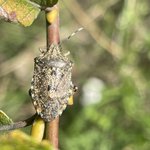
First cool bug of the Barnes Common Bug Hunt is Peribalus strictus. Once rare, now all over South-east England this year.

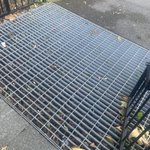
I found this grid at the entrance to a housing estate at Elephant and Castle in South London. It’s much smaller than those you see in more rural locations used to stop horses, sheep and cows escaping, so I think it’s probably to keep squirrels or rats out.

For anyone wondering what a gooseberry bottle has got to do with woodlice, you can get the full low-down when the book is published later in the year.


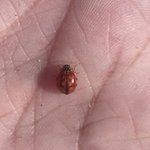
Harmonia quadripunctata, the cream-streaked ladybird. Not rare, but I hardly ever see it. Deepest Surrey today. The last field visit of the year.


Cool or yuck? I think this is Dermacentor reticulatus the ornate cow tick, or marsh tick. Either it’s very localized in Britain, or there aren’t many tick recorders out there. It’s known from the West Country, Wales, and Essex. These were on the outskirts of Basildon today.

Britain’s largest shieldbug, Rhaphidigaster nebulosa, spreading out since its first UK discovery in Peckham in 2010. Basildon today.

A once common butterfly from my youth. Wall brown, Lasiommata mergera named for its habit of resting on brickwork. Now seriously declined and vanished from much or ifs former range in the last 40 years. The is the first one I’ve seen in at least a decade, possibly two. Basildon.

New to me. Since its British discovery in East Anglia in 1997, Sphragisticus nebulous seems to have started to spread widely. Loads near Rochester, Kent, a couple of weeks ago.

Always check no-spot ladybirds just in case Cynegetis impunctata ever turns up in Britain. You have to look at the claws, which are not bifurcate, but simply with a small basal tooth. But as usual it’s still the slightly larger 24-spot, Subcoccinella vigintiquatuorpunctata.

Firebug, Pyrrhocoris apterus, just after its final moult into adulthood, but before the distinctive black markings have been laid down. East Dulwich this afternoon, part of a large colony on a street lime (linden) tree.


Why do harvestmen have long legs? Because they have no antennae. Instead they use their limbs as 8 radial trip-wire warning sensors against danger approaching from any direction.

This is now becoming a regular, firebug, Pyrrhocoris apterus, and like all the specimens I now see it is not apterous (wingless) but fully winged. Rochester today.


