Christian Missionary. Spanish/English. Married with one daughter Interests: missions, sports, cultures, and good convos about life Let's connect/conversemos
Joined September 2011
- Tweets6.2K
- Following299
- Followers501
- Likes31.6K


On point ... socialism has failed everywhere it's been tried. There are much better solutions out there.

On my way to the office this morning, I passed a group of young people protesting, a Palestinian flag draped over their shoulders.
And I asked myself a question I can't shake: why does this generation always fall into the same trap? No matter the history. No matter the context. Even the ones from wealthy families, who went to the best schools, who were dealt every good card. Always the same trap.
I don't think it's stupidity. I think it's a mechanism. And a mechanism can be taken apart, piece by piece.
A. The observation: everything the state touches becomes unaffordable.
Look at economist Mark Perry's famous chart, the one people call "the chart of the century." It tracks US prices since 2000.
At the top, what explodes: hospital services, college tuition, textbooks, childcare, housing. Increases of +100%, +150%, up to +250%, far above general inflation.
At the bottom, what collapses: TVs, software, phones, toys, clothing. A TV today costs a fraction of what it did in 2000, for an infinitely better product.
Look at what separates the two groups. It isn't technology. It isn't complexity. It's one variable: how much the state is involved.
At the top, sectors that are subsidized, regulated, shielded from competition, where the state funds demand and blocks supply. At the bottom, sectors where companies fight every single morning to serve you better and cheaper.
B. The mechanism: why it's systematic.
When the state subsidizes demand without freeing supply, prices rise. Every time. Guaranteed student loans, and universities raise tuition. Housing aid plus blocked building permits, and rents skyrocket. Administered healthcare, and bureaucracy eats the budget before it ever reaches the patient.
In France it's even more vicious, because the price doesn't disappear: it hides. You never see the hospital bill, you pay it through payroll contributions. You never see the cost of school, you pay it through taxes. Public spending at 57% of GDP, one of the heaviest tax burdens in the world, more than €3.4 trillion in debt. And the result? Overflowing ERs, falling PISA scores, young people who can't afford to live in the city where they work.
The market didn't fail in these sectors. It was never allowed in.
C. Suffering demands a culprit.
A 22-year-old lives all of this in their bones. They can't find a place to live. Their degree either buries them in debt or opens no doors. The future feels blocked. That suffering is real, and I don't deny it for a second.
But human beings can't stand suffering without a culprit. They need a face. A scapegoat.
And this is where everything is decided: who taught them how to read the world?
D. Whoever tells the story picks the villain.
Schools are public. Universities are public. Culture runs on grants. Film goes through funding committees. Public broadcasting shapes the narratives. The people handing down the interpretive framework are, overwhelmingly, paid by the very system that creates the problem.
Do you really think that system is going to name itself as the culprit?
No. It names the capitalist. The boss. The landlord. "The rich." The multinational. The commercial West. Same role, same casting, every time.
E. One lens, a thousand causes.
And this brings me back to that flag. A generation taught to read every situation through a single lens, oppressor on one side, rich, Western, capitalist, oppressed on the other, will apply that lens everywhere. To housing. To climate. To conflicts on the other side of the world. The cause changes, the lens stays. That's why the trap is always the same: it's not the cause that draws them in, it's the way of thinking that was installed in them.
F. The perfect inversion.
Here's the irony. Capitalism is the force that drove down the price of almost everything it touched. The state is the force that blew up the price of almost everything it captured. And young people blame the first for the crimes of the second.
It's like blaming the firefighter for the fire because you saw him at the scene.
G. The ballot box confirms it.
In the US, a few weeks out from the midterms, a large share of urban young voters is getting ready to vote Democrat for more state, more spending, more regulation. New York elected a self-described socialist mayor, carried by young voters, on promises of rent freezes and city-run grocery stores. Rent freezes, the policy that has made housing scarcer everywhere it's been tried. The cure that worsens the disease.
In France, it's the same play in two acts. Part of the youth votes for the radical left, which promises more state. Another part votes for the center, which promises to "manage" the state well, and has dug the debt deeper than ever. Two different ballots, one shared assumption: the problem is the market, the solution is the state.
H. The way out.
These young people aren't stupid. They're right to be angry. They're just aiming at the wrong target.
The day they understand that their rent, their tuition and their hospital are expensive precisely because the state runs them, their anger will change direction. They'll stop protesting against those who create. They'll start protesting against those who capture.
That day, the greatest intellectual scam of our time will be over.


Bubba Day retweeted

✝️️ ¡La nueva edición de la «Biblia de estudio Matthew Henry y legado cristiano (RVR)» ya está disponible!
Basada en el histórico «Comentario bíblico Matthew Henry», esta obra ofrece una experiencia de estudio bíblico profunda, rigurosa y devocional.


Bubba Day retweeted

I’m French. I want to talk to Americans who are about to vote Democrat. Not to insult you. To warn you.
I come from your future.
In France we did everything your progressive politicians promise. Free healthcare, free college, generous welfare, strong unions, heavy regulation, high taxes on the rich, a state that takes care of everything. Public spending close to 57% of GDP, one of the highest on the planet. On paper, it’s the dream.
Here’s what it looks like from the inside. France hasn’t passed a balanced budget since 1974. Our debt is above 3,300 billion euros. Interest on that debt is becoming one of the biggest items in the national budget. Our hospitals are collapsing despite record funding. Our schools rank lower every year. Young people with degrees can’t afford an apartment in the city they were born in. Our best engineers leave for London, Zurich and San Francisco. And the rich you wanted to tax? They left too, and took the jobs with them.
The promise was protection. The result is stagnation.
The worst part is that nobody in France voted for decline. Every single step sounded generous, compassionate, reasonable. One more program. One more regulation. One more tax to fund it. Each step alone makes sense. Fifty years of them, and you wake up in a country that can no longer build a nuclear plant on time or keep its streets safe.
I love America because it’s the one place on earth where people still believe they can build something from nothing. I came to Silicon Valley as a self-taught kid and it changed my life. That spirit is the most precious thing your country has.
Before you vote, ask yourself one question: is the program you’re voting for making America more like America, or more like France?
Trust me. You don’t want to be France.
Je n'ai jamais été aussi optimiste. Pas malgré le chaos actuel, mais grâce à lui.
Je vais vous expliquer pourquoi l'empire du mensonge construit par la gauche depuis cinquante ans va s'effondrer, et pourquoi ce n'est pas une opinion mais une question de physique.
Tout commence avec un mouvement né sur X il y a quelques années : l'effective accelerationism, ou e/acc.
Au départ, c'est une idée presque thermodynamique. L'univers a une tendance de fond : la matière s'organise pour capter et dissiper l'énergie de plus en plus efficacement. Une cellule fait ça. Une forêt fait ça. Une civilisation fait ça. Le marché, la technologie et le capital sont les formes les plus avancées de ce processus. Ce sont des machines à transformer l'énergie en intelligence, en abondance, en complexité.
La thèse e/acc est simple : il ne faut pas freiner cette dynamique, il faut l'embrasser. Plus d'énergie, plus de calcul, plus d'innovation, plus de croissance. Monter sur l'échelle de Kardashev au lieu de s'excuser d'exister. En face, il y a les « décels » : ceux qui veulent ralentir, réguler, taxer, interdire, culpabiliser. Ceux qui voient le progrès comme une menace à contenir plutôt qu'une force à libérer.
Mais il y a une dimension de l'accélération dont presque personne ne parle. L'accélération n'est pas seulement un moteur. C'est un filtre.
Pensez à n'importe quel organisme. Un corps humain en bonne santé peut courir. Il accélère, son cœur pompe plus fort, ses muscles consomment plus d'oxygène, et tout fonctionne parce que le système est bien conçu. Maintenant, prenez un corps malade. Des artères bouchées, un cœur fragile, des organes qui ne communiquent plus entre eux. Faites-le courir. Il ne va pas plus vite vers la santé. Il va plus vite vers l'infarctus.
L'accélération ne corrige pas les défauts d'un système. Elle les amplifie. Un système sain qui accélère devient plus fort. Un système dysfonctionnel qui accélère meurt plus vite.
Et c'est exactement ce qui est en train d'arriver au projet que je vais appeler par son nom : le projet globalo-socialiste. Celui porté par les démocrates américains, par la technostructure de Bruxelles, par les entités supranationales qui n'ont de comptes à rendre à personne, par un réseau d'ONG financées par l'argent public pour dicter la morale aux peuples qui les financent.
Regardez ce que ce projet a produit.
Des États obèses qui prélèvent plus de la moitié de la richesse produite et qui délivrent des services publics de plus en plus dégradés. Des écoles qui n'apprennent plus à lire mais qui apprennent à culpabiliser. Des hôpitaux à bout de souffle malgré des budgets records. Une immigration massive sans aucune exigence d'assimilation, présentée comme une chance par ceux qui n'en subissent jamais les conséquences. Une désindustrialisation organisée au nom d'une écologie punitive qui délocalise la pollution en Chine et l'emploi avec. Des normes, des normes, et encore des normes, jusqu'à ce qu'il devienne plus simple de créer une entreprise à Austin qu'à Lyon. Une justice qui excuse le coupable et soupçonne la victime. Une censure qui avance masquée sous le nom de « lutte contre la désinformation ». Et une jeunesse à qui l'on a expliqué que son pays, son histoire et sa civilisation étaient des crimes à expier.
Ce n'est pas un ensemble de bugs. C'est la conception elle-même.
Maintenant, changeons d'image. Voyez ce système comme un moteur.
Un bon moteur, c'est de la précision. Des pièces qui s'emboîtent, un minimum de frottements, une énergie qui se transforme en mouvement. Le marché libre, la propriété, la responsabilité individuelle, la monnaie saine : c'est ça, un moteur bien conçu. L'information circule par les prix, chaque erreur est sanctionnée, chaque bonne idée est récompensée.
Le moteur socialiste, lui, est mal conçu dès le départ. Il ne tourne pas sur la création de valeur mais sur sa redistribution. Il ne récompense pas la performance, il la taxe. Il ne laisse pas les erreurs mourir, il les subventionne. Résultat : ça frotte partout. Ça chauffe. Ça grince. Chaque pièce use la pièce d'à côté.
Et que font ceux qui pilotent ce moteur ? Au lieu de le reconcevoir, ils changent les pièces. En permanence. Une pièce cède, on en remet une neuve. Encore une. Encore une.
Ces pièces de rechange, vous les connaissez. Elles s'appellent la dette publique et la planche à billets.
La France a dépassé les 3 300 milliards d'euros de dette et n'a pas voté un budget à l'équilibre depuis le milieu des années 70. Les États-Unis ont franchi les 37 000 milliards de dollars. Les banques centrales ont maintenu des taux à zéro pendant des années, imprimé des montants que plus personne ne sait se représenter, et quand l'inflation est arrivée, elles ont fait semblant d'être surprises. Milton Friedman l'avait pourtant dit il y a cinquante ans : l'inflation est toujours et partout un phénomène monétaire.
Chaque crise, on rachète du temps avec de l'argent qui n'existe pas. Chaque problème structurel, on l'arrose de liquidités pour masquer le bruit du moteur. Mais les frottements sont toujours là. Ils s'accumulent. Et la facture des pièces de rechange finit par coûter plus cher que le moteur lui-même : la charge de la dette devient l'un des premiers postes de dépense de l'État français.
Pendant des décennies, ce moteur mal conçu a pu tourner à 3 000 tours par minute. Lentement. Bruyamment. Mais il tournait. Le monde allait assez doucement pour que le bricolage permanent suffise à masquer l'absurdité de la conception.
Et puis l'IA est arrivée.
L'intelligence artificielle, c'est l'accélération la plus brutale de l'histoire humaine. Ce qui prenait des années prend des mois. Ce qui prenait des mois prend des jours. Des entreprises de dix personnes font ce que faisaient des entreprises de mille. Le capital, les talents et les idées se déplacent à la vitesse de la lumière vers les endroits où ils sont bien traités.
L'IA vient de faire passer le moteur de 3 000 à 20 000 tours par minute.
Posez-vous la question qu'un ingénieur se poserait. Que se passe-t-il quand on fait monter à 20 000 tours un moteur mal conçu, rafistolé de partout, qui frotte à chaque rotation ?
Il explose.
Pas parce que quelqu'un l'a saboté. Parce que la physique ne négocie pas.
Et c'est exactement ce que nous voyons en ce moment, sous nos yeux.
L'insécurité qui gagne des villes entières qui étaient paisibles il y a vingt ans. Le conflit de Gaza importé dans nos rues et instrumentalisé par une gauche qui a troqué l'ouvrier contre le clientélisme communautaire. La misère qui revient dans un pays qui a pourtant un des taux de dépense publique les plus élevés au monde. Des classes moyennes qui travaillent et n'arrivent plus à se loger. Une France fracturée, où l'on parle désormais à voix haute de risque de guerre civile.
Ce ne sont pas des accidents. Ce ne sont pas des « crises » successives sans lien entre elles. Ce sont les pièces du moteur qui commencent à voler.
C'est la conséquence logique de cinquante ans de socialisme international : un système qui a détruit la responsabilité, la frontière, la monnaie, l'école et la fierté, et qui découvre qu'à haute vitesse, tout ce qui a été détruit ne peut plus être compensé par une ligne de dette supplémentaire.
Et c'est là que je deviens profondément optimiste.
Parce qu'une fois qu'on a compris ça, on comprend aussi que leur projet a une date de fin. Pas une date politique. Une date physique. Un système qui consomme plus qu'il ne produit, qui punit ceux qui créent et récompense ceux qui détruisent, qui finance son présent en hypothéquant l'avenir de ses enfants, ne peut pas durer indéfiniment. Il n'est pas soutenable par construction. L'IA ne fait qu'avancer l'échéance.
Le mensonge a besoin de lenteur pour survivre. Il a besoin que les conséquences arrivent assez tard pour qu'on puisse accuser quelqu'un d'autre. Dans un monde à 20 000 tours, les conséquences arrivent immédiatement. Le mensonge n'a plus le temps de se cacher.
Alors, que faire quand le moteur explose ? On en construit un nouveau. Et cette fois, on le conçoit correctement.
Écoutez Elon Musk. Un homme qui a reconstruit l'industrie spatiale, la voiture électrique et l'infrastructure satellite en partant d'un principe simple : revenir aux premiers principes. Ne pas demander « comment on a toujours fait », mais « qu'est-ce qui est physiquement vrai ». C'est exactement ce dont nos États ont besoin : arrêter de rafistoler et repartir de la base.
Écoutez Javier Milei. Un homme dont tout le monde se moquait, arrivé à la tête d'un pays ravagé par un siècle de péronisme, et qui a pris la tronçonneuse au sens propre. Ministères supprimés, dépenses coupées, inflation écrasée, excédent budgétaire retrouvé. Il a prouvé une chose que la gauche jurait impossible : on peut démonter le moteur socialiste et le peuple peut le soutenir.
Écoutez Milton Friedman. Relisez-le. Tout était déjà là. La monnaie, la liberté de choisir, la responsabilité, les effets pervers de l'intervention publique. Il disait que si l'on confiait le Sahara au gouvernement fédéral, il y aurait pénurie de sable en cinq ans. On a ri. On a confié le sable. On a eu la pénurie.
Revenez à une hiérarchie et au respect du beau. Une civilisation ne tient pas que sur des chiffres. Elle tient sur l'idée qu'il existe des choses supérieures à d'autres. Que l'excellence vaut mieux que la médiocrité. Que le mérite compte. Qu'une cathédrale est plus belle qu'un parking. Que transmettre est un devoir et pas une oppression. Le relativisme a été l'arme culturelle de ce projet. Le retour du beau, du vrai et de l'exigence en sera l'antidote.
Et enfin, faites le Nuremberg du communisme. Le nazisme a été jugé, documenté, enseigné, et il est devenu moralement indéfendable. Le communisme, avec ses dizaines de millions de morts, ses goulags, ses famines organisées et ses peuples réduits en esclavage, n'a jamais eu ce procès. On peut encore porter un t-shirt du Che dans une université sans que personne ne cille. Tant que ce procès historique et moral n'aura pas eu lieu, l'idéologie continuera de muter et de revenir sous de nouveaux noms. Il faut nommer les crimes, les enseigner, honorer les victimes, et rendre cette idéologie aussi infréquentable que celle qu'elle prétendait combattre.
Le monde qui vient sera plus rapide, plus exigeant et plus impitoyable avec les systèmes mal conçus. C'est une terrible nouvelle pour ceux qui ont vécu du mensonge.
Et c'est la meilleure nouvelle de notre génération pour tous ceux qui veulent construire.
Le moteur va exploser. À nous de dessiner le suivant.

Bubba Day retweeted

The sovereign debt crisis will worsen because governments refuse to cut spending—and swallow more of the economy every year.
The playbook:
More spending.
More taxes.
More debt.
Higher taxes.
Renewed QE.
Less purchasing power.
Asset prices soar while real take-home pay and productivity stagnate.
Affordability will deteriorate.
And some will blame this on “capitalism.”
It is statism. Unashamed, relentless, and paid for by you.
via Bloomberg

I've noticed this too ... lots of the books focus on emotions and feeling and related themes ... it just seems strange to me and I would just like better stories!


Bubba Day retweeted
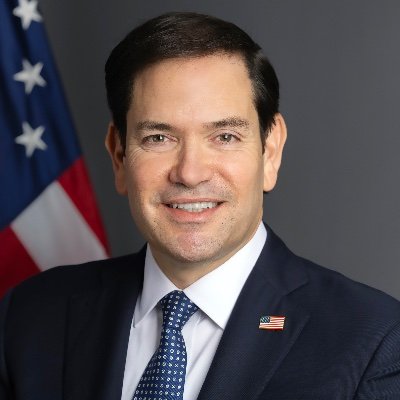
I am closely monitoring reports of the earthquake in southern Panama. The United States stands with the people of Panama.
At the request of the Panamanian government, the State Department is rapidly mobilizing resources and personnel to assist.
Our consular affairs hotline is available 24/7 for affected Americans in need of support at +1-202-501-4444 from abroad and +1-888-407-4747 from the U.S. and Canada.
Bubba Day retweeted
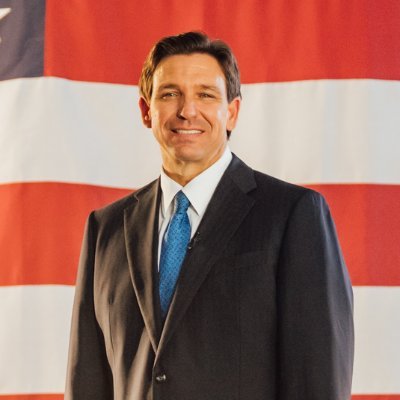
Almost every candidate this cycle is trying to address the issue of rising costs that have battered families in the post-Covid era, yet how many are addressing the reason why things have become more expensive in the first place?
The institutionalization of massive borrowing and spending is a formula for persistent inflation and declining purchasing power.

Bubba Day retweeted

Welcome to my theory on traveling with children.
~1-3 is the hardest time to travel with kids for a variety of developmental reasons, and the windows before and after that are actually much easier than the general population would assume.


Bubba Day retweeted

Two starkly different stories explain USAID’s collapse in 2025. To its defenders, USAID was a $40 billion engine of mercy supplying food, medicine, and refugee aid to the global poor. To its critics, it had degenerated into an ideological machine exporting progressive culture wars and bankrolling anti-American regimes.
The reality is far dirtier. USAID did deliver vital aid, and the Trump administration’s abrupt freeze and cancellation of its programs caused immediate fallout—stalling HIV treatments, malaria prevention, maternal healthcare, and food relief, particularly in Africa. Yet billions undeniably filtered through progressive NGOs and activist groups, funding climate campaigns, gender identity programs, abortion access, social justice initiatives, and political lobbying under the guise of foreign aid.
Evaluating the agency's final years requires an empirical, scholarly examination of how USAID allocated its $40 billion budget—specifically distinguishing genuine humanitarian relief from progressive ideological initiatives. This inquiry is separate from the widely acknowledged issue of the agency's bureaucratic inefficiency. An additional task is establishing a clear, factual account of USAID’s true footprint in its final years.
Bubba Day retweeted

Life has changed dramatically in the last 30 years.
We all use the internet far more, and are far less likely to read books, host friends, attend parties, play cards, attend classes, join clubs, go to picnics, and stay late to work.
I'm hosting a party this week and had a board game night a few weeks ago. I'm trying to do my own small part in bringing back social activities :)
derekthompson.org/p/the-deat…


Bubba Day retweeted

I think there is a place for bivocational pastors (such as for very small churches, church plants, and assisting pastors).
But I do think full-time pastors should be the norm. My primary reason is that the ministry is a calling, and the regular preparation of sermons (and other forms of teaching) should take substantial time and focus.
But also consider the many duties of the pastor—preaching sermons, teaching, setting the order of worship, administration (including emails), praying for the congregation, showing hospitality (including having others to his home), visiting families in their home, visiting the sick, providing counsel, doing funerals and weddings, communicating with other elders and staff, catechizing the children, training ruling elders and deacons, seeking outreach opportunities.
Presbyterians also hold there is a duty to serve the regional presbytery and the church at large, which involves lots of emails, phone calls, travel, and drafting documents.
This is to say nothing of the pastor cultivating his mind through books, reading the Bible, and keeping up his Hebrew and Greek. The pastor is also uniquely suited to speak in other venues, write books and articles to build up the church, and teach in various school settings.
And he must leave time for his wife and children, and take care of his health.
As a pastor, I can firmly say that I don’t have time for another job. The ministry is enjoyable and fulfilling work. But it is definitely a vocation.
Bubba Day retweeted

My latest article is about how a rogue Wikipedia editor confabulated and misattributed thousands of inventions and concepts to Muslims
This trolling made its way into blogs, articles, books, and TV programs. You might even believe some of his lies!
Link: cremieux.xyz/p/the-invention…

Bubba Day retweeted

Pew asked Americans what's essential to a fulfilling life:
Career: 71%
Friends: 61%
Kids: 26%
Marriage: 23%
Fifty years of data say that marriage is the biggest happiness differentiator ever measured. Americans have this backwards.
You know something bad is about to happen after this verse, "Then they brought in the golden vessels that had been taken out of the temple...They drank wine and praised the gods of gold and silver, bronze, iron, wood, and stone."
Bubba Day retweeted

Nice article at @Logos about Presbyterian & Reformed Colleges and Seminaries logos.com/grow/hall-presbyte…


Bubba Day retweeted

I Would Not Say the Shahada
When I came to Christ, I hid it. Only a handful of people I trusted knew.
Then a cousin I trusted sold me.
They went to my mother first. She cried from shame. She thought they were lying, jealous, she said, because I was doing well at school. She wanted to prove them wrong.
They gathered at my aunt’s house. Family gatherings were normal. I walked in thinking it was just another day.
The air was wrong. Every face in the room was on me.
“Are you still a Muslim or did you become a Nasrani?”
I laughed. Tried to turn it into a joke. It died in the room.
My mother was holding back tears. “Just say the Shahada. Prove them wrong.”
A few seconds. They felt like a year. On one side: my mother’s face. On the other: the truth.
I chose the truth.
“Mom, I can’t.”
Then the room broke.
See? We told you.
Yelling. Spitting.
Go to those Christians. Let them feed you.
You are a shame to your father.
My mother sobbing.
I went numb. The noise fell behind me like a film I was no longer in. I walked out with nowhere to go. The world I knew had collapsed, not because I had become a criminal, but because I had left Islam.
That is what apostasy is in that world. Not a change of mind. A public execution of your name. In some places a physical execution as well, thankfully mine was not the case.
Leaving Islam is a rebirth. You get your lungs back. You get your mind back. You get your humanity back.
If I had said the Shahada that day, I would have bought peace with a lie. I would have stayed a slave to the crowd, safe, loved, and dead inside.
I remembered the words of Jesus:
“What will it profit a man if he gains the whole world and loses his soul?”
I lost the room.
I kept myself.