许方园 | 👩🏻💻@OpenAI | prev phd @NYU_Courant
🌎
Joined August 2019
- Tweets202
- Following756
- Followers591
- Likes2.6K
Pinned Tweet
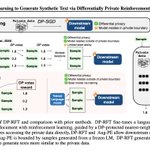
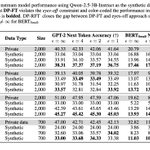
A lot of useful training data can't be shared due to privacy. How do we create synthetic training data without data owners ever sharing their content?
🚀 Introducing 𝐃𝐏-𝐑𝐅𝐓: using RL to train LLMs to generate high-fidelity domain data without seeing a single private sample.
Fangyuan Xu retweeted
data auditing w/ language model + representation learning w/ co-folding model. it's happening!
Meet Ruby 🔴, our new potency prediction model and the newest member of the GEMS family.
Ruby answers every drug hunter’s first question: R U Binding Yet? 🎯
With our partners at @Incyte , Ruby showed a step-change improvement on real-world drug programs. It runs 40x to over 1,000x faster per compound at its fastest setting, and leads every published model we could find on public benchmarks, free-energy methods included.
📂 We’re also open-sourcing GenesisPotency-2026, part of the audited public training data behind it.
🖥️ Thanks @nvidia for keeping us snappy!
Report: cdn.prod.website-files.com/6…
Dataset: github.com/genesistherapeuti…
Blog: genesis.ml/news/introducing-…
Fangyuan Xu retweeted
I know many PhD students are questioning what their paths mean as AI accelerates scientific discovery. That anxiety deserves to be taken seriously.
I wrote some reflections in a recent blog post. My students found them helpful, so I’m sharing them more widely.
I hope it offers a little light as we navigate this strange time. Please share it with someone who might need it.
pages.cs.wisc.edu/~sharonli/…
Fangyuan Xu retweeted
Introducing ><former
Most transformers are rectangles◻️: every layer has the same width
But is that optimal?🤔
We propose variable-width transformers that have different widths across layers, improving loss while cutting compute & KV cache size 🧵
Fangyuan Xu retweeted
MOSS@COLM2026 is calling for submissions! 💡
Please help spread the words, and hope to see you in SF!
📢 CfP for the 2nd version of MOSS at @COLM_conf!
sites.google.com/view/moss-c…
(Deadline: 6/30)
We welcome submissions on small-scale research for algorithmic innovation and scientific understanding across training, architecture, data, evaluation, interpretability, safety, and more!
Fangyuan Xu retweeted
People are increasingly worried that AI tools make us overreliant.
But how do we actually measure this? We introduce Offloading Score, a measure of reliance based on the fraction of cognitive effort offloaded to AI while completing a task.
In a controlled user study, Offloading Score detects increased reliance under time pressure, while several common alternatives do not.
(1/9)
Fangyuan Xu retweeted
Most assume unlearnable examples never get positive reward. They do.
In our ICML paper, We reveal that a hard problem can receive positive reward during RLVR but remain unlearned.
We show the phenomenon is more likely a representation issue rather than RL optimization artifact.
Fangyuan Xu retweeted
New paper! 🏁 My final one from my PhD at UT Austin.
🦜LLMs sound empathic, but they keep saying the same thing over and over.
Not just the same words, the same discourse moves, turn after turn.
We found that LLMs repeat the same discourse moves at nearly 2x the rate of human supporters across a multi-turn conversation, and existing metrics don’t catch this.
So we built MINT 🌿 (Multi-turn Inter-tactic Novelty Training), the first RL framework to optimize discourse move diversity in multi-turn empathic dialogue. +25% empathy, −26% repetition.
w/ @jessyjli @_desmond_ong et al.
📄 arxiv.org/abs/2604.11742
Fangyuan Xu retweeted
Can LLMs generate diverse outputs for open-ended questions? Is it helpful if we ensemble outputs from multiple models? We study 18 LLMs on 4 datasets and find that no single model is best at generating diverse outputs 👇/ 🧵
Fangyuan Xu retweeted
Our first demo debuted on Jensen Huang's GTC keynote, and today we’re launching @SanchoRobotics 🚀
GTC keynote demo with @MultiplyLabs. Extended cut below.
Fangyuan Xu retweeted
Really excited to have this dataset released to the community! There's a gap in our understanding of how users interact with coding agents at scale. SWE-chat fills that need to help shape the next generation of human-centered evals and training objectives for coding agents! 🤖🚀
We present SWE-chat: the first large-scale dataset of coding agent interactions from real users in the wild.
In 40% of real coding sessions, the agent writes ~all the code. Users push back 39% of the time – agents almost never stop to check.
Data, paper, & findings in the 🧵👇

ALT Overview of SWE-chat. Left: a data collection pipeline diagram. Open-source developers install the Entire.io CLI tool, which logs their coding agent sessions and pushes the logs to a dedicated branch on their public GitHub repository. We discover and aggregate these logs into the SWE-chat dataset, with line-level attribution of which lines of code were written by the human versus the agent. Right: a growth chart showing cumulative logged events over time, rising steeply through early 2026. As of April 2026, the dataset contains 2.7 million logged events from over 200 repositories, including 63,000+ user prompts and 355,000+ agent tool calls across nearly 6,000 sessions.
Fangyuan Xu retweeted
🧵 1/8
What should an LLM assistant remember across conversations?
Existing memory work studies this one task at a time. But real-world assistants see all kinds of conversations, and that changes the problem.
Introducing BEHEMOTH 🦣 + CluE 🌱: a benchmark & self-evolving method for heterogeneous memory extraction.
📄 Paper: arxiv.org/abs/2604.11610
Fangyuan Xu retweeted
Excited to share our new work from Meta MSL 🔥
LLMs write great Python/C++ but struggle with uncommon languages. Data scarcity is the bottleneck ⌛ Can we leverage cross-PL transfer to overcome this? Yes ✅
A new method to unlock cross-PL transfer 🧵 arxiv.org/abs/2604.20835
Fangyuan Xu retweeted
New work @AIatMeta: We enable test-time scaling for long-horizon coding agents by using better representations, selection and reuse of agentic trajectories, with Claude 4.5 Opus improving by +6.7% on SWE-Bench Verified and +12.1% on Terminal-Bench 2.0.
📄: arxiv.org/abs/2604.16529
Fangyuan Xu retweeted
How should we effectively aggregate long-horizon agent trajectories? 🧐
Unlike CoT reasoning, agentic tasks pose unique challenges: they are long, multi-turn, and tool-augmented.
Introducing 👉🏻 AggAgent 👈🏻 — which treats parallel trajectories as an environment to interact with.
Fangyuan Xu retweeted
Would you realize if the book you were reading was AI? What if it was humanized to remove AI-speak?
We find that even without using stylistic cues (e.g., word choice or sentence structure) narrative choices alone give AI fiction away!
Fangyuan Xu retweeted
PhD defended at UT Austin today.🤘
The best thing was having an advisor who believed in me before I believed in myself.
Jessy taught me how to write, how to think, and how to chase research ideas. Then the rest followed.
Thank you, @jessyjli
Fangyuan Xu retweeted
👀 Can AI produce a novel worth reading? We built a platform to find out.
📚 Introducing AutoFiction: a web platform that hosts AI-generated novels by Claude Code & Codex, rated and reviewed by real readers.
We have 33 books so far, spanning dark fantasy, murder mysteries, Harry Potter fanfics, and more. All free to read.
(1/n)
Fangyuan Xu retweeted
Auto research is on 🔥
We give algorithmic problems (like circle packing) to general coding agents, let it run overnight. 🌙
Agents reach SoTA. But more importantly: we analyze 100+ hours of trajectories to understand how it gets there 🧵
Fangyuan Xu retweeted
Proud to share our CHI 2026 Honorable Mention paper, Evalet! 🏅
LLM-as-a-Judge is everywhere, but a single score hides so much. Evalet fragments outputs into functional units so you can see exactly what's working and what's not—across hundreds of outputs, from reasoning traces to red-teaming conversations to computer-use agents. I had a great time working on this project led by the amazing @tae_skim and @heechanleekr, with @josephseering and @imjuhokim !
Check out the full breakdown below ⬇️