
Made $2.4M+ for brands w/ email & SMS | Learn how to turn subs into repeat customers | Orthodox Christian ☦️ | 👇 10 email flows for +10-15% revenue
Texas
Joined October 2013
- Tweets51.5K
- Following791
- Followers755
- Likes77.1K


Pinned Tweet
I've got a free eBook.
It shows you 5 things to fix to stop customers from ghosting you after 1 sale.
Click below to grab it 👇
bradleyschnitzer.com/ebook/
15
1,083
Bradley retweeted
Price locks are effective tools for converting customers to subscriptions and keeping them long term. Here’s how to use them to your advantage, and one big consideration to keep in mind.
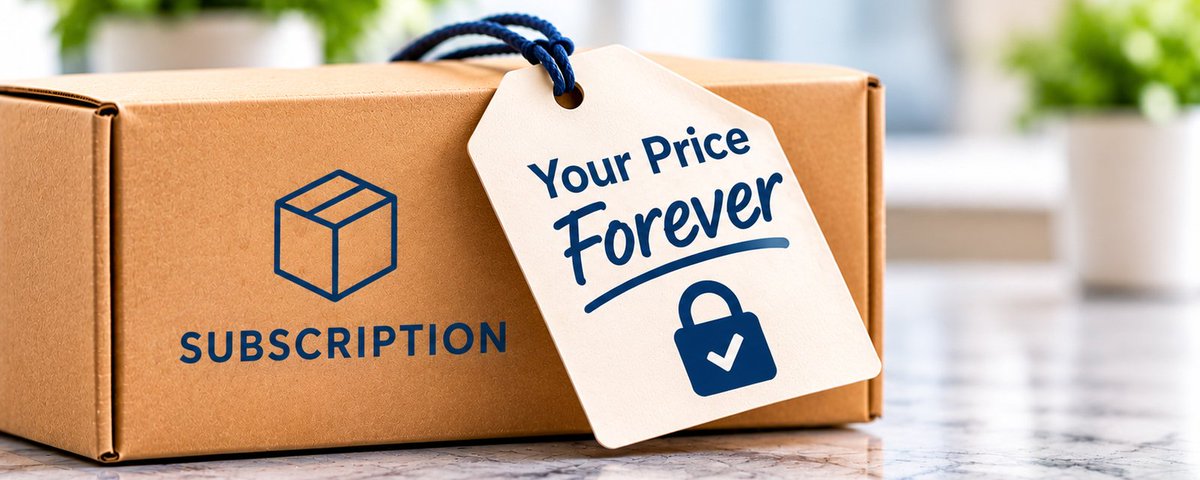
Price locks are effective tools for converting customers to subscriptions and keeping them long term. Here’s how to use them to your advantage, and one big consideration to keep in mind.
Bradley retweeted
“Lock in your price for life” is something you’ll see on a lot of subscription products.
Subscribe now, pay today’s price forever unless you cancel.
It makes it harder for the customer to cancel, making it easier to keep them around…
And hey, it’s easier to sell someone who’s already leaning “yes.”
In my latest newsletter (hitting inboxes tomorrow morning), I break down how price locks work as an acquisition and retention tool, plus a few things to keep in mind.
You’ll learn:
- Why price locks double as an acquisition and retention tool
- The “switching costs” price locks create — and how that makes it almost impossible for some customers to jump ship)
- One rule for how to position/market your price locks. Doing this right connects the price lock to real things the customer’s going through, making it an even easier sale.
- Why subscription customers eventually become liabilities… and how to prevent that from happening (it’s simpler than you think)
Subscribe now to read first thing tomorrow morning (link in replies)...
Bradley retweeted
Churn is not a single thing. Two broad types exist, each pointing to different problems. Learn the difference and a few simple ways to fix each.

Churn is not a single thing. Two broad types exist, each pointing to different problems. Learn the difference and a few simple ways to fix each.

Bradley retweeted
Grok Bot issues aside, it's crazy I can now get real work done by talking into my phone, thanks to the Grok Bot mobile app.
I am having the Grok Bot identify and apply all internal and external (product/affiliate product) linking opportunities straight from the mobile app.
What a world!

Grok Bot issues aside, it's crazy I can now get real work done by talking into my phone, thanks to the Grok Bot mobile app.
I am having the Grok Bot identify and apply all internal and external (product/affiliate product) linking opportunities straight from the mobile app.
What a world!
Everyone talks about “churn” as if it’s just one thing — total paid subscribers lost over a given period divided by total subscribers at the start.
Nice and clean.
One problem:
People churn for all sorts of reasons.
And I don’t just mean quitting over price vs. quitting over being mad (although that is indeed a sub-distinction to make).
Turns out there are two separate problems layered on top of each other. Two overarching types of churn.
And if you don't separate them, you end up either ignoring an easy fix, throwing resources at the wrong one, or both.
My latest newsletter (sending tomorrow morning) covers the difference.
You’ll learn:
- The difference between “involuntary” and “voluntary churn” — and why they look identical in your dashboard
- Which form of churn is easier to fix… and which one often (but not always) makes a much bigger difference when you address it
- A few simple tips to work on each one
- Why tracking them separately is the first step to doing anything useful about either one
Subscribe now to get it in your inbox first thing tomorrow morning (link in replies).
5
34
Well here's a downside to Grok Bots:
They won't let me unify my accounts properly so I can upgrade my plan to Teams.
The most horrendous login unification process I've ever seen.
Now I can't even progress past a certain step because I was trying to change my email address on the account so that it fell under the right account...
Has anyone built software that just WORKS?
1
36
Made another healthy-sized affiliate sale off what I suspect was my latest Substack newsletter.
This thing works!
1
36
Bradley retweeted
Lapsed payment is one of the easiest forms of churn to fix. Learn the simple “Dunning” email flow that recovers this low-hanging fruit by warning customers of subscription payment issues.

Lapsed payment is one of the easiest forms of churn to fix. Learn the simple “Dunning” email flow that recovers this low-hanging fruit by warning customers of subscription payment issues.
Bradley retweeted
Earlier this year, my friend and I were working with a client who had a subscription offer.
I used my business email to log into their ESP, so I’d get a few notifications a day in my inbox that each said the same thing:
“So-and-so’s payment failed.”
It was anywhere from 2-5 a day.
The client had an email to address these people.
Emphasis on an email.
It was one, single, relatively generic “Hey, your card is about to expire” email.
That email probably recovered a few of these people (something is better than nothing)…
But so many more floated away.
Such easy recurring revenue, lost, not because of customer dissatisfaction…
But because a card expired and the customer didn’t even realize it.
Unlike voluntary churn, where someone decides to leave… this problem had an easy solution:
A Dunning Sequence.
In my latest newsletter (sending tomorrow morning), I break down what this sequence is, what it looks like, how it recovers failed-billing customers, and a few ways to maximize its results.
You'll learn:
- The difference between voluntary and involuntary churn… and why involuntary churn is the easier fix
- What a 2–3 email dunning sequence looks like, including the timing for each email
- The 2 sequences that constitute a full Dunning Sequence (ideally you want both, but start with one of these)
- How to frame the emails so they don't feel accusatory (card issues happen to everyone)
Subscribe now to read first thing tomorrow morning (link in replies).
Bradley retweeted
Selling someone on a subscription is just the beginning. Here are 8 ways I help clients KEEP more of their subscription customers so they can grow their recurring revenue.

Bradley retweeted

Grokbot never ceases to amaze me
Literally, every single day
I just did all of this on my phone with my 3 week old taking a two hour nap on my chest
- An AI analyst that reviews each client's results every month and tells us what to do more and less of, with every number checked against the real data.
- A competitor tracker that watches about 30 rival brands' emails, offers, popups and ads and writes a monthly playbook for each client.
- A shared inbox signed up to every competitor's list, so we see their emails as they land.
- A weekly scan that turns the best industry writers' content into notes for the team.
- Coming next: an AI that builds the campaigns as drafts, and a manager that checks all the work before a human sees it.
- And one piece of software we're keeping quiet for now. It’s my own “build something completely with, and ran by, AI” goal I’m working on.
