

@bpsandpieces
🇺🇸Account based in!
About this account
- Account based in
- United States
- Connected via
- United States App Store
X says this location may be affected by a proxy or VPN.
Account-level information from X, not a live location or the device used for a specific post.
Head of Portfolio Solutions at Cliffwater 🌊 | RIA Intel's 2023 CIO of the Year 🏆| The Allocator's Edge 📗 | Bps & Pieces 👨🏻💻 | Pro Wrestling Aficionado 🤼
Chicago, IL
Joined April 2009
- Tweets9.2K
- Following934
- Followers13.7K
- Likes19K







Phil Huber retweeted
The Paper Trail: First Principles 🧭
September was a busy month.
Fall conference season kicked off with a trip to Huntington Beach for @FutureProof_HQ, where I took part in a panel centered on a deceptively simple question: which alternatives actually deserve a place in a client portfolio?
Then came a much more personal milestone: celebrating my dad's retirement after 40+ years as a financial advisor. I had the unique privilege of working alongside him for ~16 of those years, and I wouldn’t be in this business without him.
Somewhere in between, I found some time to read. And even write a little.
Here's what made the cut in September:
🏗️ Building diversified real asset portfolios
📏 Measuring private debt defaults
🐟 Finding opportunity in small buyouts
🔐 Defining the asset-backed finance opportunity
⏳ The rise of continuation vehicles
🧰 Rethinking the role of hedge funds
🫧 AI and the coming wave of equity issuance
🔭 How investors interpret a changing world
🦄 The migration from public to private equity
🌡️ Preparing portfolios for inflation uncertainty
♾️ Investing with a 100-year horizon
🏆 The economics of trophy assets
⚖️ Setting expectations for long-short equity
🌱 Fulfilling the potential of evergreen private market funds
I read hundreds of pages of investment research each month so you don’t have to.
🔗 in replies

Phil Huber retweeted
The Paper Trail: Academic Alpha🎓
With back-to-school season upon us, a little academic inspiration for August's research roundup felt especially timely.
Investing has always had a complicated relationship with academia. Ideas born in academic research are debated, refined, challenged and, at times, discarded as they collide with the real world.
That tension between theory and practice is part of what makes investing so fascinating in the first place.
This month’s syllabus covered plenty of ground between the two.
A few things I took away:
🧪 Well-documented sources of return can persist even after becoming widely known
🧵 Hybrid capital can be tailored to balance downside protection with equity-like upside
🔮 Prediction markets can be remarkably smart even when most participants lose money
🌳 The right tail helps explain why markets become concentrated
🧟 Private equity is working through a growing inventory of aging investments
🤖 No single financing market is big enough to fund the AI buildout
⚡ Data centers may account for less of the coming electricity boom than you think
🏄 Sometimes the best thing an investor can do is...nothing
Plus: direct lending’s next leg of growth, single-asset secondaries, the real estate reset, a framework for integrating public and private markets, and the economics of the space economy.
(🔗 in replies)

The Paper Trail: Worth the Wait ⌛️
Welcome to The Paper Trail, a monthly curation of the best investment research I can find.
July’s edition features:
🧂 Seasoned primaries in private real estate
♻️ Private real estate's growing secondary market
🛡️ AI defensibility of software companies
🏷️ The impact of discounts on secondary returns
🗺️ Private credit's varied landscape
🦋 Mega-cap tech's metamorphosis
🔀 Index membership flip-flops
🚦 Regulatory complexity in merger arbitrage
☔️ Building a better portfolio hedge
🤝 Independent sponsors in PE
🔌 The next phase of AI investing
🌱 Venture capital's role in a portfolio
⛏️ Demand drivers for commodities
🏟️ The business of sports
(🔗 in replies)


The Paper Trail: Stepping Into the Spotlight 🔦
Welcome to The Paper Trail, a monthly curation of the best investment research I can find.
June’s edition features:
🤝 Public and private credit convergence
🍷 Direct lending across vintage years
➕ Core plus real estate
🪤 Avoiding value traps in emerging markets
🌀 Catastrophe bonds as a diversifier
💳 An overview of specialty credit
👰 Lifting the veil on tail risk strategies
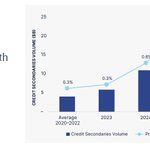
🥈 Credit secondaries at an inflection point
🔮 The present value of growth opportunities
🎢 Volatility as a structural feature of markets
💸 Uncle Sam's cut of U.S. equity returns
🙃 Reflections on cross-asset drawdowns
♻️ PE's challenging distribution environment
🚿 Liquidity terms across evergreen fund types
🏗️ Private capital's role in infrastructure investing
(🔗 in replies)


The Paper Trail: Wag the Dog 🐶
Welcome to The Paper Trail, a monthly curation of the best investment research I can find.
May’s edition features:
🗺️ Global diversification in a deglobalizing world
🏜️ Private equity's distribution drought
🔋 The economic life of AI hardware
🏃 Redemption activity in semi-liquid PC funds
⛏️ AI picks-and-shovels in emerging markets
🏆 Looking for quality in GP-led secondaries
🪖 Geopolitical risk and managed futures
⚖️ Alpha and tax-aware long-short strategies
🏰 Moats and value traps in software stocks
🌡️ Inflation and stock-bond correlation
🥧 TPA and diversifying beyond the pie chart
🍀 Luck and skill in direct lending
🥈 The road to a trillion dollar secondary market
🏭 Real assets and the physical economy
🪞 Investing in the rearview mirror
(🔗 in replies)


The Paper Trail: Simple Arithmetic 🧮
Welcome to The Paper Trail, a monthly curation of the best investment research I can find.
April’s edition features:
⚓ Direct lending return drivers
➖ Private credit loss math (frequency vs. severity)
🎓 Rethinking the endowment model
⚖️ The case for municipal bonds
🥷 Hidden costs of passive investing
🎯 True alpha in macro strategies
⚡ Infrastructure as a core allocation
🛡️ Private credit and financial stability
🚧 Quant crowding concerns
📰 Market reactions to geopolitical shocks
🚀 Equity portfolio construction in a changing world
⌛ The duration of competitive advantages
☔ Private assets and liquidity constraints
🏟️ Sports franchises as an asset class
🔓 Realizations in GP stakes
(🔗 in replies)


Welcome to The Paper Trail, a monthly curation of the best investment research I can find.
March’s edition features:
💪 Emerging market strength
🧰 Hedge fund portfolio utility
🎰 The price of having fun with growth stocks
🏗️ Private real estate consolidation
🏘️ Investing in U.S. affordable housing
🧩 LP financing solutions
🏭 Changes in industry composition
😇 The HALO framework
🏷️ Incentive fees in evergreen funds
🧟 Zombie funds in PE
💯 A century of stock market wealth creation
📡 Integrating value, quality, and momentum signals
🧮 Pre-tax alpha in tax-aware long-short strategies
🥞 Layering diversification on top of equities
🏹 Opportunistic credit and the efficient frontier
(🔗 in replies)


“There are decades where nothing happens; and there are weeks where decades happen.”

Travis and Jason Kelce’s mom, Donna Kelce, is in the middle of a home renovation ... TMZ has learned.
Read more: buff.ly/0YLsQbX

Ok, I’ll bite.
1. Not sure why it's necessary to impugn those with “letters behind their name” – who actually bear the great responsibility of managing other people’s money – as if disagreement with your points below somehow violates their duty as charterholders.
2. Allocations to private credit in the wealth channel typically range between 5-10% of the overall portfolio. Not sure it’s the best and highest use of an advisor’s time attempting to arb BDC discounts for a relatively modest portion of their clients’ assets.
3. To that point, many will avoid the trade you describe now for the same reason they avoided listed BDCs in the first place (when discounts were narrower) – they have independently reached the conclusion they prefer other structures for obtaining their desired exposure to the asset class that can provide lower fees, less leverage, and more diversification.
4. I would argue the primary portfolio objective for private credit investors is high current income, not capital appreciation. For long-term strategic allocators, why introduce the brain damage of continuously rotating between listed BDC and evergreen vehicles based on sentiment-driven discount dynamics? Successful outcomes can be achieved w/o playing that game.
5. Lastly, “defaults existing” ≠ problems in private credit. Defaults have averaged ~2% over the last 20+ years. With ~10k middle market borrowers and another 1.4k BSL credits, one should expect more than 200 defaults a year. Not every failed borrower is a harbinger of the next GFC, no matter how much the anti-PC crowd desperately wants it to be.
