

We advocate, campaign & adopt suitable strategies to ensure accessible, just & safe digital space for marginalized groups Newsletter 📰https://xitter.cf/t.co/8D1Iek04Jn
- Tweets6.5K
- Following779
- Followers2.3K
- Likes2.8K











ALT Infographic titled “For September, Body & Data’s Media Monitoring looks into,” with two topics. The first, beside an illustration of tangled black server towers with looping cables, asks “Who is responsible when our personal sensitive data is exposed online?” It notes that recent exposures of government and banking data signal threats of identity theft, fraud, and harassment. The second, beside a collage of a suited figure with several shouting mouths in place of a head, standing before a cluster of microphones, asks “Can cyber laws be used as a weapon to restrict freedom of expression?” It explains that vague laws, such as Section 47 of the Electronic Transactions Act, have been used against journalists, commentators, and ordinary users.

ALT Infographic titled “For September, Body & Data’s Media Monitoring looks into,” with two topics. The first, beside an illustration of people and debris tumbling through the air, asks “How do we secure the flow of verified information when misinformation spreads during a disaster?” It says newsrooms and fact-checkers need to flag false claims quickly so misinformation does not become a disaster in itself. The second, beside an illustration of a laptop with two hands reaching out of the screen to exchange a credit card, asks “Why are online scams becoming harder to recognise?” It lists fake donation campaigns, phishing websites, fraudulent investment schemes, and AI-generated content as making scams more convincing.

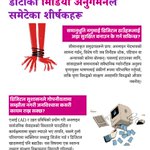
ALT Infographic titled “For September, Body & Data’s Media Monitoring looks into,” with two topics. The first, beside a red illustration of bound wrists and hands, asks “What can be done to make digital spaces safer without losing empathy?” It says marginalized communities face online discrimination and that lawmakers should define hate speech narrowly, in line with constitutional equality guarantees, so protection against hate does not become a tool against dissent. The second, beside an illustration of an old computer with a padlock on its screen and a hand pulling out folders, asks “How can digital governance maintain public trust without compromising privacy?” It says AI-driven public services generate large amounts of personal data and widen the digital divide, so they should be overseen by an independent data protection authority.

ALT Infographic titled “For September, Body & Data’s Media Monitoring looks into,” with one topic. Beside an illustration of a teal multi-legged surveillance robot with camera eyes looming over a small running figure in a spotlight, the question reads “As technology becomes a tool for abuse, how can survivors be protected?” The text says survivors should be able to report without fear of blame, have abusive content removed quickly, and receive legal and psychosocial support. It adds that police and platforms should have clear procedures for urgent takedown and evidence preservation.

ALT Cover graphic for Body & Data’s September 2026 Media Monitoring. Large purple hand-drawn text reads “Media Monitoring,” with “September ‘26” circled in green below it. An illustration of a blue retro television shows a face on the screen peering through a magnifying glass. Text at the top reads “SEP’26” and “www.bodyanddata.com,” and the caption at the bottom reads “An assessment of media landscape in Nepal.” The Body & Data logo sits in the bottom left corner.

ALT Infographic titled “For September, Body & Data’s Media Monitoring looks into,” with two topics. The first, beside an illustration of tangled black server towers with looping cables, asks “Who is responsible when our personal sensitive data is exposed online?” It notes that recent exposures of government and banking data signal threats of identity theft, fraud, and harassment. The second, beside a collage of a suited figure with several shouting mouths in place of a head, standing before a cluster of microphones, asks “Can cyber laws be used as a weapon to restrict freedom of expression?” It explains that vague laws, such as Section 47 of the Electronic Transactions Act, have been used against journalists, commentators, and ordinary users.

ALT Infographic titled “For September, Body & Data’s Media Monitoring looks into,” with two topics. The first, beside an illustration of people and debris tumbling through the air, asks “How do we secure the flow of verified information when misinformation spreads during a disaster?” It says newsrooms and fact-checkers need to flag false claims quickly so misinformation does not become a disaster in itself. The second, beside an illustration of a laptop with two hands reaching out of the screen to exchange a credit card, asks “Why are online scams becoming harder to recognise?” It lists fake donation campaigns, phishing websites, fraudulent investment schemes, and AI-generated content as making scams more convincing.

ALT Infographic titled “For September, Body & Data’s Media Monitoring looks into,” with two topics. The first, beside a red illustration of bound wrists and hands, asks “What can be done to make digital spaces safer without losing empathy?” It says marginalized communities face online discrimination and that lawmakers should define hate speech narrowly, in line with constitutional equality guarantees, so protection against hate does not become a tool against dissent. The second, beside an illustration of an old computer with a padlock on its screen and a hand pulling out folders, asks “How can digital governance maintain public trust without compromising privacy?” It says AI-driven public services generate large amounts of personal data and widen the digital divide, so they should be overseen by an independent data protection authority.

ALT Infographic titled “For September, Body & Data’s Media Monitoring looks into,” with one topic. Beside an illustration of a teal multi-legged surveillance robot with camera eyes looming over a small running figure in a spotlight, the question reads “As technology becomes a tool for abuse, how can survivors be protected?” The text says survivors should be able to report without fear of blame, have abusive content removed quickly, and receive legal and psychosocial support. It adds that police and platforms should have clear procedures for urgent takedown and evidence preservation.


ALT Purple Tana Bana event graphic with the title “event schedule,” dates “Oct 8–9,” and venue “Yala Maya Kendra.”

ALT Purple Tana Bana schedule graphic for Day 1. It lists: “10:00 welcome”; “10:10 research dissemination — Nepal’s Biometric Present — Body & Data”; “10:20 TanaBana conversations” with two discussions, “Is Good Tech Possible? Collective Resistance, Governance, and Reimagination” by Body & Data with Software Freedom Law Center (India), and “Online Surveillance and Harms: Experiences and Learnings from Myanmar” by Body & Data with Myanmar Internet Project (Myanmar); and “12:00 exhibition opens.”

ALT Purple Tana Bana schedule graphic for Day 2. It lists: “10:00 welcome”; “10:10 panel discussion” with “The Digital Battlefield: Gendered Violence and Its Impact in Women’s Political Life” by Purple Foundation, and “Age Assurance in Digital Age: Children, Their Privacy and Protection of Digital Rights” by Digital Rights Nepal; and “12:00 exhibition opens.”

ALT official logo of Tana Bana. The text reads 'Tana bana: Weaving Through Technology, Power and Justice'. The background is purple and there are weaving patterns behind the text. There is logo of Body & Data on the top center

ALT A collage of two groups participating in discussions around tables with laptops, notebooks, and printed materials.

ALT A collage of two groups participating in discussions around tables with laptops, notebooks, and printed materials. These groups are different from the first image's people.

ALT A collage of two groups participating in discussions around tables with laptops, notebooks, and printed materials. These groups are different from the first & second image's people.

ALT Sage green graphic titled "Navigating the Intersection of Disability Rights and Online Political Participation in Nepal" in purple bold text. An illustration shows a person using a wheelchair reaching toward a glowing, colorful digital portal or screen with abstract shapes, from which a stream of blue light flows down into a pedestal below. Sparkle accents surround the illustration. The Body & Data logo appears in the bottom left corner.

ALT Sage green graphic titled "Navigating the Intersection of Disability Rights and Political Participation in Nepal" in purple bold text, with a QR code on the right. Body text explains that the Gen-Z movement's methods — including digital activism, posters, reels, internet polls, and Discord negotiations — largely excluded accessibility needs of persons with disabilities, such as sign language, captioned posts, and screen-reader-friendly formats. It states the research examines inclusion and representation as a framework to assess whether the movement's processes reflected the aspirations of the entire Gen-Z population, noting that marginalized youth and persons with disabilities were specifically excluded from this digital "revolution." The website www.bodyanddata.org is listed below, with the Body & Data logo at the bottom.

ALT Promo graphic titled "Movements in Online Spaces," Tech and Society Discussion Series-4, jointly organized by Body & Data and Martin Chautari, over a faded collage of protest and news imagery. Below the title, four women panelists sit at a table with a laptop and microphone. Martin Chautari and Body & Data logos appear at the bottom.

ALT Two photos of four women panelists seated at a table with microphones and a laptop, speaking at a panel event. A screen behind them displays "Movements in Online Spaces" with photos of speakers Sarishma Thapa, Smita Acharya, Saru Singak, and moderator Kailash Rai, plus event date and venue details.

ALT Two photos from a panel discussion. Top: audience seated around a table watching a screen showing "Movements in Online Spaces" event details. Bottom: closer shot of three women panelists at a table with a laptop and phone, screen behind them showing panelist photos and event info.