

Resuscitate, learn CPR , Learn EKG , life is precious Dream big! Giving up isn't an option First generation MD.
Sudan
Joined May 2016
- Tweets649
- Following1.6K
- Followers292
- Likes852





Abubaker Mohamed, M.D. retweeted

Anaphylaxis Teaching Points/Pearls:
1. Anaphylaxis often presents with nonspecific signs (hypotension, tachycardia, bronchospasm); always consider it in cases of sudden, unexplained hemodynamic instability
2. Absence of rash does not exclude anaphylaxis. Skin symptoms may be absent, especially in severe or fatal cases. Do not delay treatment waiting for a rash to appear!
3. During an anaphylactic crisis, cardiac dysfunction may also arise, particularly in patients with underlying coronary disease, which may be unmasked by severe hypotension or an increase in myocardial demand. But you should keep the eyes on the ball...
4. Timing is key: Most reactions occur within 10 minutes of exposure to a triggering agent (e.g., antibiotics, NMBAs). Early onset after exposure should heighten suspicion
5. Epinephrine is first-line: Immediate administration of epinephrine is critical. It is not uncommon (like in this case) to escalate norepinephrine drip to high doses without any favorable BP response... If the patient presents w refractory hypotension not responding to standard vasopressors (ephedrine, phenylephrine, norepinephrine), quickly escalate to epinephrine and consider distributive shock from anaphylaxis. Anesthesiologists know!
5a. Epinephrine stimulation of b2-receptors
stabilizes mast cells and basophils and reduces the release of inflammatory mediators. IM epinephrine is the recommended first-line treatment in outpatients or those without established or reliable intravenous access or hemodynamic monitoring. Intravenous epinephrine is the preferred route in the perioperative setting. Epinephrine dosing, if initially ineffective, should be escalated rapidly as required
6. Hypotension may be more pronounced in patients on b-blockers or angiotensin-converting enzyme inhibitors
7. Aggressive fluid resuscitation: Profound vasodilation and capillary leak can cause severe hypovolemia. Use balanced crystalloids and repeat boluses as needed. Spoiler alert: you don't need albumin!
8. Remove the trigger: If possible, remove the inciting agent (stop the infusion) promptly to halt ongoing exposure
9. Airway vigilance: Be prepared for rapid airway compromise due to angioedema. Early intubation may be necessary
10. Isolated administration of bronchodilators for anaphylaxis-associated bronchospasm does not address the systemic reaction and may be harmful if it delays epinephrine administration
11. Common triggers: The most frequent causes are antibiotics (especially cephalosporins and penicillins). Always review recent exposures
12. Chlorhexidine remains an unrecognized and underappreciated trigger of IgE-mediated anaphylaxis. Chlorhexidine is commonly used for surgical skin
preparation (and line placement). It is also present in toothpastes, mouthwashes, contact lens solutions, and cosmetic products
13. Don't forget latex allergy!
14. Diagnostic clues: Acute hemoconcentration and a hyperdynamic, underfilled left ventricle on echocardiography suggest distributive shock from anaphylaxis
15. Bradycardia is rare but serious: paradoxical bradycardia (through activation of the Bezold-Jarisch reflex) may indicate severe hypovolemia and is associated with a high risk of cardiac arrest if treated with anticholinergics alone. Did you notice the heart rate in our patient? If the patient is dying on you with a heart rate in the 50s, this should make you think...
16. Testing for confirmation: you can obtain serum tryptase within 1-2 hours (up to 4 hours) after the event and again at baseline (>24 hours later) to support the diagnosis
17. Secondary medications: Antihistamines and corticosteroids are adjuncts and should only be given AFTER stabilization with epinephrine and fluids
18. Special populations: Patients on beta-blockers may require glucagon in addition to epinephrine for effective resuscitation
19. Follow-up is essential: Refer all patients to an allergy specialist for further testing, counseling, and documentation of triggers to prevent recurrence
20. Under the new classification, the term anaphylaxis encompasses all severe hypersensitivity reactions. Based on pathophysiology, these reactions may then be further categorized as either allergic or nonallergic. The term anaphylactoid is no longer used
Abubaker Mohamed, M.D. retweeted

Here’s a message that was sent to me by an ER resident physician in training who saved a patient’s life half way across the country from me.
When people ask “why teach on social media?”
This is why.

Abubaker Mohamed, M.D. retweeted
I recently had a patient who presented in profound acute renal failure with a BUN of >200, creatinine of 13.5, and critical pH of 6.7, on the brink of death...
[thread]
Abubaker Mohamed, M.D. retweeted

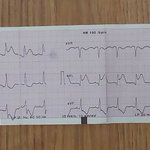
The triage ECG does not need immediate physician review if the machine calls it normal....RIGHT??? 😱 Cath showed 100% LAD. This life saved because Dr. Arjun J.V. doesn't rely on machine interpretations! #FOAMed @UMEmergencyMed @UMEMresidency

Abubaker Mohamed, M.D. retweeted

I prefer ILMA for airway rescue. In this real airway rescue (with consent), Cannot intubate can ventilate with iGel: collaegues call4help, surgery cannot be postponed: eFONA impossible 🎥 vimeopro.com/airwaymanagemen…

Abubaker Mohamed, M.D. retweeted

Our pleasure to have the one and only Scott Weingart addressing residents of the Sudanese EM board..
#EM_Sudan

Abubaker Mohamed, M.D. retweeted

Facebook is stopping me from putting ECGs on my FB page.
So I started putting them on the "ECG and Cardiology" FB page.
Now look what happened today!
Twitter is bonkers and now Facebook is bonkers!
The world is ruled by stupid bots.

Abubaker Mohamed, M.D. retweeted
Here’s a case of a young man who presented in respiratory distress with trouble handling his secretions. He’s nonverbal and no other history is available.
SPO2 is 92%
What’s the diagnosis?

Abubaker Mohamed, M.D. retweeted

Here we goooooooo💪🏻💪🏻💪🏻💪🏻🔥🔥🔥🔥🔥
شباب مجتهد ….ملتزم …معطاء …ومازال مازال مازاااااال ….شكرررررراً لكل من ساهم بهذا العمل الجميل ….بدييييييينااااااا 😍😍❤️❤️…اسرة طوارئ ابراهيم مالك …👏🏻👏🏻👏🏻👏🏻👏🏻👏🏻👏🏻👏🏻👏🏻👏🏻👏🏻
Abubaker Mohamed, M.D. retweeted
Patient: “I think it’s just reflux”
Narrator: It was not just reflux

Abubaker Mohamed, M.D. retweeted

Last night we had a case that demonstrates an extremely important cause of shock that many ED clinicians know little or nothing about
1/
Abubaker Mohamed, M.D. retweeted

Every provider should follow this account- the ECG teaching is sublime and efficient

Here’s a video I made breaking down this rare and fascinating case of a 60 year old man with chest pain and shortness of breath
#FOAMed
Abubaker Mohamed, M.D. retweeted
Here’s a video I made breaking down an incredible case that highlights the dynamic process of ACS
#FOAMed
Abubaker Mohamed, M.D. retweeted
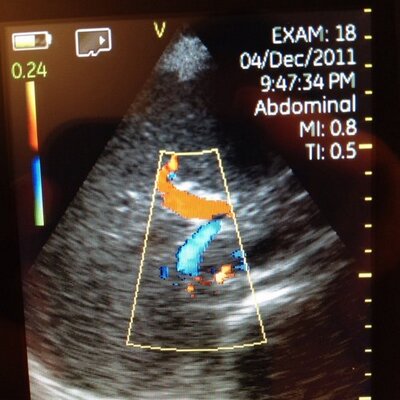
🔪 pearl for emergent surgical cricothyrotomy: extend the neck!
🔪 ask an assistant to extend the neck for you (there’s no time for fancy positioning)
🔪 neck extension brings the airway closer to the skin. if there is excess soft tissue, it gets pulled to the side – at Burlington, VT

ALT image credit: from https://www.nh.gov/safety/divisions/fstems/ems/advlifesup/documents/cricoadministration.pdf
Abubaker Mohamed, M.D. retweeted
When the emergency department becomes the final common dumping ground for the consequences of health and social system failures and lack of alternative services…
… emergency medicine neither contains much emergency nor much medicine
Abubaker Mohamed, M.D. retweeted
See what happens when the consultant is "Not convinced of STEMI" @PendellM
hqmeded-ecg.blogspot.com/202…

Abubaker Mohamed, M.D. retweeted

Important lessons 📜 from ICU case:
🚨Not everything is septic shock
🚨A limited echo has limitations
Older patient in shock on 3 vasopressors, who initially presented with dyspnea and a CXR like 👇
What the diagnosis?
#FOAMed #FOAMcc
Image credit: ahajournals.org/doi/10.1161/…

Abubaker Mohamed, M.D. retweeted
Here’s a video I made breaking down this very impressive and important Chest X-Ray
#FOAMed