

continual learning @adaption_ai
Singapore
Joined February 2020
- Tweets55
- Following171
- Followers155
- Likes956



Bobby retweeted

I’m joining the Weizmann Institute as an Assistant Professor
(known[?] as “Senior Scientist” 🧑🔬) and starting CoLab🐶!
We do pretraining, agents and evaluation the way science should be done:
in a community, together.
Come research with us 👇
discord.gg/gVeGEjWTtv


Bobby retweeted

Can your AI agent tell when another agent is lying?
Our MindGames report is accepted at NeurIPS! 🎉
944 agent submissions. 76 teams. ~30K games.
Built on TextArena, with game data + top competition agents to test against. Paper and code link below ↓


🚀 Happening tomorrow!
Join us at the MindGames Competition Workshop if you're interested in LLMs in games, interactive environments, or multi-agent systems.
⏰ Sunday, Dec 7, 8:00–10:45 AM
📍 San Diego Convention Center Ballroom 6C-F
Come chat with us and hear the winning teams and the keynote speaker share how they designed adaptive agents!
Bobby retweeted

"Skill Issue Are Skills Language-Invariant in LLMs?"
Multilingual LLMs can actually become better or worse at the same skill depending on the language they’re using.
This paper tests that cleanly by making the same model play against itself in different languages while keeping the game, rules, and actions fixed.
The result is surprisingly large gaps in reasoning and strategy across languages, and in some cases switching only the reasoning language to English recovers most of the lost performance.
So the skill may already be inside the model, but the language can determine whether it can actually access and use it.
alphaxiv.org/pdf/2608.skill-…

Bobby retweeted

Nim was one game where differences were so clear. The game has an optimal strategy with called "Nim-Sum". We went through game logs and found some languages knew it and others just had it missing from their knowledge (verified it quantitatively)

We had models play 518,400 games against themselves, changing only the language interface. If skills were language-invariant, every matchup would look like the diagonals (~0.0). But they don't. Win–loss margins shift, spatial reasoning fails along different axes, bluffing rates in poker vary >2x, and in Nim, the optimal strategy that shows up reliably in English often doesn't surface in Arabic or Hebrew at all.
Bobby retweeted

for quite a while I was trying to find a way to measure x-ling consistency without resorting to knowledge, @bobbycxy and @LChoshen came with this games approch. It is honestly brilliant!
Bobby retweeted

I surely thought this was all down to the amount of training data, but some languages will over- or under-perform. I think this is really worth digging into in the future! xitter.cf/bobbycxy/status/209338…
Is this just "more training data = stronger language"? Partly. Web-text availability predicts language strength at r ≈ 0.79.
But the deviations are what's interesting. Malay has the smallest corpus, yet beats Hebrew for every model; likely riding script-based transfer (consistent with ECLeKTic). Chinese reaches near-English margins with ~20x less web text, but only for 2 of 3 models.
Data quantity and script each explain part of the language hierarchy. The rest is model-specific.
All of this runs on Multilingual TextArena: 65 games (>60% of the collection) in 193 languages, MIT licensed. 8 languages verified by native speakers, the rest via tiered pipelines with per-language fidelity scores.
Each player can get its own language (e.g. player 0 in English, player 1 in German). The same model plays itself across two interfaces, letting you compare skills, behavior, and strategy directly.
Multilingual eval shouldn't just ask "does the model understand X?" It should ask "does it behave the same in X?"
arXiv: arxiv.org/abs/2608.25832
alphaXiv: alphaxiv.org/abs/2608.25832
HF Paper: huggingface.co/papers/2608.2…
Code: github.com/TextArena/TextAre…
Discord: discord.gg/EpYXsepbXP
This was work with amazing researchers @LChoshen, @AdamJaber248, @omerNLP, @linguist_cat, Cheston Tan, Zhengyuan Liu

Bobby retweeted
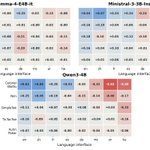
Is Gemma 4 multilingual? Not really🤖
A true multilingual LLM should share language-invariant skills like spatial understanding across languages. It doesnt😱
We had LLMs play 2D board games against themselves in different languages🕹️ and found 2D performance is language dependent

Bobby retweeted

superintelligence by the people for the people

We're excited to be joined by angels who are building the frontier themselves, many of whom we work closely with:
@johnschulman2 (Thinking Machines), @dwarkesh_sp, @AravSrinivas (Perplexity), @karimatiyeh (Ramp), @levie (Box), @_milankovac_ (Tesla), @winstonweinberg (Harvey), @amspector100 (Flapping Airplanes), @jeffwang (Cognition), @_arohan_ (Core Automation), @marksaroufim (Core Automation), @mikeknoop (Zapier, Ndea), @eastdakota (Cloudflare), @BrendanFoody (Mercor), @devanshpandey (Standard Intelligence), @hwchase17 (Langchain), @nicoup (Fleet) and many more

If you’re at @icmlconf, come by my poster at Hall A 5pm #1801!
I’ll be presenting our self-play framework that helps LLMs become stronger game-playing agents across negotiation, perfect-, and imperfect-information games, using exploration and retention.
Co-first work with @xiynfi1520580 and @KevinWang_111!

Full author team: Yunfei Xie @xiynfi1520580, Kevin Wang @KevinWang_111, Jianzhu Yao @alexbert135, Zhizhou Sha @ZhizhouSha, Alexander Duffy @alxai_, Yihan Xi, Hongyuan Mei @hongyuan_mei, Cheston Tan, Chen Wei @_Chen_Wei_, Pramod Viswanath @viswanathpramod, Atlas Wang!!
Grateful to have worked with this group! And special thanks to Sentient @SentientAGI and Good Start Labs @goodstartlabs for supporting the experiment costs!
Paper 🔗: openreview.net/challenge?red…
Bobby retweeted

Announcing our $130M Series A to build the Open Superintelligence Stack
Led by Radical Ventures, with NVIDIA, Intel Capital, Dell Capital, and existing investors
Train, deploy, and continuously improve your own models using our stack.
Own your intelligence.
Bobby retweeted

#MachineUnlearning is notoriously difficult, but how hard is it to unlearn different data?
In our #ICML2026 paper, we show that unlearning is harder when the forget and retain data are more similar.
Introducing HAMU: a hardness-aware unlearning algorithm that
1. quantifies unlearning hardness,
2. updates the model based on per-iteration hardness,
3. stops when better forgetting would inevitably hurt retain utility, and
4. is scalable and practical for large, non-convex models such as LLMs.
HAMU achieves stronger retain–forget trade-offs than existing methods across image and text tasks.
📍 Join us (@chenjiangw @xinyuan3142 @RachaelSim2 Zhengyuan Liu, Nancy Chen @bryanklow) at our @icmlconf poster!
📅 Date: Wed July 8
⏰ Time: 2:30-4:15 PM
🏢 Location: Hall A #3116
📄 Paper: openreview.net/forum?id=fr24…
💻 Code: github.com/aoi3142/HAMU

🎼 🎵 🎶... Time to party @icmlconf #ICML2026? Let's go! Wait, I'm the last to depart from 🇸🇬 ???
Don't miss out on the 𝐍𝐔𝐒 𝐱 𝐉𝐚𝐧𝐞 𝐒𝐭𝐫𝐞𝐞𝐭 𝐒𝐮𝐦𝐦𝐢𝐭 𝐨𝐧 𝐒𝐞𝐥𝐟-𝐄𝐯𝐨𝐥𝐮𝐭𝐢𝐨𝐧 𝐨𝐟 𝐀𝐈 𝐀𝐠𝐞𝐧𝐭𝐬 𝐚𝐧𝐝 𝐌𝐮𝐥𝐭𝐢𝐚𝐠𝐞𝐧𝐭 𝐒𝐲𝐬𝐭𝐞𝐦𝐬 (9 Jul)! See link below:
xitter.cf/bryanklow/status/20696…
#LLMs #AgenticAI #AIAgents #AgenticMemory #DataSelection #ShapleyValue #MachineUnlearning #BayesianOptimization #SpeculativeDecoding
