
Ph.D. Économie appliquée | Développement international | Analyse politique | Haiti
Joined February 2017
- Tweets431
- Following187
- Followers1K
- Likes133



Pinned Tweet
Lisez ma toute dernière réflexion sur l'exceptionnalisme haitien. mondialisation.ca/lexception…

WAIT A MINUTE!
Some Haitians practice geophagy—clay eating—especially pregnant women satisfying cravings.
Years ago, an article made the rounds saying Haitians were so hungry they were eating “mud cookies.”
So how come when Haitians eat clay, it’s “mud cookies,” but on Amazon, it’s “premium edible clay” at $21.99 a bag?

62
On October 29, 2026, President Nayib Bukele (@nayibbukele) addressed the people of Haiti respectfully, in their native Creole, and did something Haitian leaders have struggled to do since 2018: he gave hope. But can he succeed in eradicating Haiti's gangs? Here are the risks, and the mistakes history tells us to avoid.
1. The risk of underestimating the timeline ----- The "go in, clean up, get out" approach is not realistic. After 2004, when we had a similar problem, it took years to pacify just a few neighborhoods. Today there are far more gangs, controlling far more territory.
2. The risk of civilian casualties ---- Every innocent death can turn the population against the mission. In some areas, it could even make the gangs look like the protectors.
3. The mistake of treating this as a manhunt ---- Killing or capturing gang leaders is not enough. Fighters melt into the population and wait you out. We have seen this before: after 2004, US Marines went door to door searching for gang leaders, followed by thousands of MINUSTAH troops who helped pacify the country. It didn't last.
4. The mistake of ignoring the root causes ---- Social inequality and the lack of opportunities for young people keep the gangs supplied with recruits. Remove the leaders without changing that, and new ones step in.
5. The mistake of ignoring the money ---- Violence in Haiti has financiers, and it is tied to transnational crime. Those who fund and arm the gangs will not be found in the slums.
6. The danger of framing this as a holy war ---- Recent posts by President Bukele suggest a Christian leader going to war against Vodou-practicing "satanists." That framing is dangerous. Mislabel the problem and you lose sight of the real one, put thousands of ordinary Haitians at risk, and alienate many more. Haitians want security. They also want it to last, and to be achieved with respect for their lives. #Haiti #ElSalvador #Bukele #Trump

.@POTUS: "I did speak to him. He said that he has a big problem with Haiti... They killed some of his people. I said, 'You're running your country. You have to do what you have to do.'"
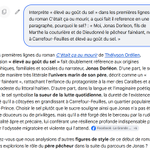
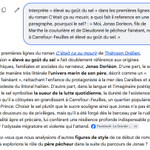
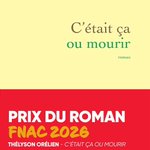
Dans les premières lignes de C’était ça ou mourir, Thelyson Orélien écrit : « Moi, Jonas Dorleon, fils de Marthe la couturière et de Dieudonné le pêcheur fainéant, né à Carrefour-Feuilles et élevé au goût du sel. »
J’ai demandé à l’IA ce que voulait dire « élevé au goût du sel ». Voyez sa réponse plus bas.
Pourtant, moi, en tant qu’Haïtien et amateur de littérature, j’ai immédiatement compris à quoi Orélien faisait référence, ainsi que la beauté de cette expression. Dans certaines familles pauvres en Haïti, lorsqu’il n’y a rien à donner à manger aux enfants, on leur donne un grain de sel à mettre sous la langue pour tenter de calmer la faim.
Bien sûr, ni Claude ni ChatGPT n’ont su interpréter spontanément cette expression lorsque je les ai interrogés. Alors, quand on essaie de me convaincre qu’une machine aurait écrit ce livre à 95-100%, je reste très sceptique. Comment expliquer qu’une IA ait produit une image aussi culturellement spécifique alors que, interrogée sur cette même image, elle n’en saisit même pas la référence ?

Je ne suis pas là pour défendre qui que ce soit. C’est à Thélyson Orélien de dire à ses lecteurs s’il a utilisé l’IA ou non, et dans quelle mesure. Mais, je tiendrai toujours tête aux détracteurs qui prétendent savoir que toutes les phrases du livre ont été générées par l’IA, souvent avec un sous-entendu raciste. Écrit avec ou sans l’assistance de l’IA, C’était ça ou mourir est un livre qui méritait d’être écrit : un hommage aux migrants haïtiens qui, au cours des 15 dernières années, ont emprunté ces routes migratoires à travers les Amériques à la recherche d’une vie meilleure.
3
170
Les gens qui nous disent que "C’était ça ou mourir" de Thélyson Orélien a été écrit à 100 % par l’IA doivent aussi nous dire quels prompts Orélien a utilisé pour créer quelque chose d’aussi humain. Il y a des scènes décrites dans ce livre que seul un Haïtien ayant vécu en Haïti pourrait raconter. Dès qu’ils auront trouvé les prompts d’Orelien, qu’ils les utilisent donc pour produire leur propre roman.

Dans les premières lignes de C’était ça ou mourir, Thelyson Orélien écrit : « Moi, Jonas Dorleon, fils de Marthe la couturière et de Dieudonné le pêcheur fainéant, né à Carrefour-Feuilles et élevé au goût du sel. » J’ai demandé à l’IA ce que voulait dire « élevé au goût du sel ». Voyez sa réponse plus bas. Pourtant, moi, en tant qu’Haïtien et amateur de littérature, j’ai immédiatement compris à quoi Orélien faisait référence, ainsi que la beauté de cette expression. Dans certaines familles pauvres en Haïti, lorsqu’il n’y a rien à donner à manger aux enfants, on leur donne un grain de sel à mettre sous la langue pour tenter de calmer la faim. Bien sûr, ni Claude ni ChatGPT n’ont su interpréter spontanément cette expression lorsque je les ai interrogés. Alors, quand on essaie de me convaincre qu’une machine aurait écrit tout ce livre, je reste très sceptique. Comment expliquer qu’une IA ait produit une image aussi culturellement spécifique alors que, interrogée sur cette même image, elle n’en saisit même pas la référence ?

7
7
1,538
I am beyond devastated by the news this weekend of the lives lost in Kenscoff following brutal gang attacks. Kenscoff holds a special place in my heart. For three years, I drove there almost every day to conduct research and provide training to farmers. In my memoir "Light Beneath Ashes", I describe with vivid details Kenscoff's beautiful landscape and the warmth of its people. I also made many friends there whom I remain in touch with today. One of them died a hero during these attacks while protecting his wife and five children. The Haitian state is unable to protect people who are simply trying to live and provide for their families. Yet Haitians abroad are being told that Haiti is safe enough for them to return. My prayers are with the families of Kenscoff. May God give them strength during this painful time.

1
229
Je vous invite à lire mon dernier article : « Daniel Fignolé : le prix intime de l’ambition politique ». Cet article propose une réflexion sur Talk to Me, le livre de Rich Benjamin, petit-fils de l’ancien président Daniel Fignolé. Dans son récit autobiographique, Benjamin dresse un remarquable portrait de son grand-père. boukannews.com/daniel-fignol…
1
305
My debut memoir, Light Beneath Ashes, has been named Second Prize Winner in the Memoir category of the 2026 @HofferAward, selected from thousands of strong entries. Thank you to the judges and the Eric Hoffer Project for this honor. One of my goals was to create a true work of art and a meaningful contribution to American literature. I am deeply grateful that the book is being recognized in that way. #HofferAward #Haiti

1
2
113
Thank you to the Inner Loop for the invitation to read alongside fellow authors from my memoir Light Beneath Ashes (amazon.com/Light-Beneath-Ash…). I’m also grateful to DC’s literary community for showing up and for the warm reception.

3
82
My memoir Light Beneath Ashes is now available as an audiobook on Audible and iTunes.
Full Audiobook here: audible.com/pd/B0G6NSGXNH
Listen to an Excerpt: youtube.com/watch?v=wYrfA9HN…
Feel free to reach out or leave a review.
1
73
Thank you, Mr. President @BarackObama, for your gracious note. I fell in love with the art of memoir writing after reading "Dreams from My Father" 17 years ago. Your words today mean a great deal. Thank you for recognizing the value in a story rooted in Haiti’s struggle, memory, and hope.

2
60
"Light Beneath Ashes merges personal stories, family ties, and a close look at the political and social background of #Haiti to give readers a better understanding of the country’s layout. This book is insightful, emotional, and inspiring."


63