

Biomedical Image Computing Group @ ETH Zürich
Joined November 2017
- Tweets62
- Following32
- Followers492
- Likes7
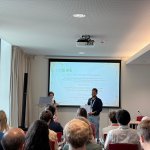
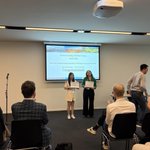


#MICCAI26 in Strasbourg has come to an end! BMIC presented 6 accepted papers across the main conference and workshops:

“Teeth2Point: A Two-Stage Dental CBCT ROI-to-Point Segmentation Framework”
papers.miccai.org/miccai-202…
“Semi-Supervised Few-Shot Adaptation of Vision-Language Models”
papers.miccai.org/miccai-202…
"bmic" team secured the 🥉 3rd place on Open Track of the @fomochallenge at MICCAI this year! Congrats to Cedric, Qi and Ertunc!
How does one detect anomalies and reach scores close to state of the art methods, while reducing runtime use by more than half? By fitting a Dirichlet process mixture model to DINOv2 patch embeddings of images from healthy patients!
Check out the paper and try out the code here:
Paper: arxiv.org/pdf/2509.19997
Github: github.com/NicoSchulthess/an…
In this paper published in Nature Communications, Erdil et al. proposed a method for predicting active brown adipose tissue from CT scans. Read more here: nature.com/articles/s41467-0…
We have two papers accepted to #MICCAI2025! "Anomaly Detection by Clustering DINO Embeddings using a Dirichlet Process Mixture” by Nico Schulthess and "Conformal forecasting for surgical instrument trajectory” by Sara Sangalli & Gary Sarwin. Excited to see you in Daejeon!
That's a wrap on #MICCAI2025! It was great to present our work and connect with everyone around the world! 감사합니다 :)

We are happy to announce that the article "Learning to segment anatomy and lesions from disparately labeled sources in brain MRI” from Meva Himmetoglu et al. is accepted to Medical Image Analysis journal!
arxiv.org/abs/2503.18840
We have 2 papers accepted to #ICLR2025! 🎉
"Uncertainty modeling for fine-tuned implicit functions" by Anna Susmelj et al. and "Multimodality Helps Few-Shot 3D Point Cloud Semantic Segmentation" by Zhaochong An et al. !
arxiv.org/abs/2406.12082
arxiv.org/abs/2410.22489
Congrats!
BMIC Group ETH Zurich retweeted

Thanks again @d_zimmerer for the chance to address the MOOD community at #MICCAI2024! Our call for papers and accompanying dataset with @FrontMedTech are in the works. forms.gle/7gjF6R5YJ1rjNa9Q8 Until then, we’d love everyone’s input on how best to advance anomaly detection.

When the model confidence on predictions is low, we rely on experts for inspection. But the time experts have is limited and very expensive! In her paper, @salusanga proposes to maximize the "area under confidence operating characteristic curve" to address this trade-off.
Check out the video where she explains the method more in detail:
youtu.be/v0NONmH5M1Y
Paper link: proceedings.neurips.cc/paper…
Paper code:
github.com/salusanga/aucoc_l…