

Assistant Professor of History @K_University. Fellow @CH_MENAP & @GulfStatesInst. PhD @Georgetown. EdM & MTS @Harvard. MA @SOAS.
Kuwait / DC
Joined May 2013
- Tweets4.4K
- Following764
- Followers19K
- Likes5.5K




Pinned Tweet
الحمدلله الذي بنعمه تتم الصالحات. نلت درجة دكتوراة الفلسفة في التاريخ بامتياز مع مرتبة الشرف من جامعة جورجتاون في مايو ٢٠١٩. عنوان الأطروحة "إسلام إصلاحي؟ تجديد الفكر الإسلامي وممارساته في الجزيرة العربية في العصر الحديث والمعاصر."
إنا لله وإنا إليه راجعون. اللهم اغفر لعبدك عبدالعزيز الغشيان وصبر أهله ومحبيه.
You left too soon, my friend. Till we meet again
@AzizAlghashian

The Gulf-EU Summit in Riyadh may have been postponed, but the relationship between the two regions continues to grow as new initiatives come to the fore.
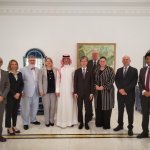
I was honored to participate in the special launch of the inaugural Gulf-Med Dialogue this past summer in Rome.
The forum brought together officials, diplomats, mediators, business leaders, academics, and influencers to discuss innovative content and processes aimed at unblocking chronic deadlocks facing our two regions.
The event was supported by the Italian Ministry of Foreign Affairs @ItalyMFA and the Istituto Affari Internazionali @IAIonline. I am grateful for the leadership of my good friend and colleague, Dr. @MariaFantappie, in bringing us together. @EUCouncil @GCCSG @EUintheGCC

How about we talk about those who matter most? Everyday people continue to bear the brunt of conflicts across the larger Middle East — from occupied Palestine and Sudan to Yemen and Somalia.
The war with Iran has only exacerbated matters, likely going down in history as one of the United States' greatest strategic failures. Compounding this is the real prospect of the conflict dragging on until the end of the Trump administration without any meaningful diplomacy or breakthroughs.
Part of my intervention at the jointly convened webinar by the Arab Reform Initiative, Folke Bernadotte Academy, and Rift Valley Institute: "A Region in Flux: War, Realignment, and the Limits of Power." @ArabReform_ARI @RVInews @FBAFolke
لقد كان من دواعي سروري أن ألتقي بسعادة ماري ياماشيتا، الممثلة العليا للأمين العام للأمم المتحدة المعنية بتنفيذ قرار مجلس الأمن رقم 2792 (2025). وتمتد ولايتها حتى ديسمبر 2030، وتشمل متابعة ملفات مهمة بين العراق والكويت، أبرزها مصير المفقودين الكويتيين ورعايا البلدان الثالثة، فضلاً عن إعادة الممتلكات الكويتية والأرشيف الوطني.
It was a pleasure meeting Her Excellency Ms. Mari Yamashita, the United Nations Secretary-General Senior Representative for the implementation of Security Council Resolution 2792 (2025). Her mandate extends to December 2030 and covers critical Iraq-Kuwait files: the return of missing Kuwaitis and third-country nationals as well as Kuwaiti property and the national archives

“Everyone has a breaking point, and Iran is no exception,” Bader Al-Saif said by phone.
He cited Iran’s recent proposal of a seven-day truce and a Bloomberg report that Foreign Minister Abbas Araghchi has suggested restoring access to nuclear inspectors as evidence of the increasing burden.
“The irony is that such pressure can yield opposing responses: concessions or a preemptive strike,” Al-Saif added.
“The US is mirroring Iran’s approach, willing to strike a deal or go back to active combat,” said Bader Al-Saif.
“But if both sides don’t give in and agree on sequencing and clear concessions, a return to war is inevitable.”
bloomberg.com/news/articles/…

Bader Mousa Al-Saif argued that the Houthi attacks on Saudi Arabia have deep implications for the global economy.
"Whatever is happening in Bab al-Mandab will have an impact on the Strait of Hormuz and vice versa," said Al-Saif.
"What the Trump administration is doing right now is disconnecting them. It doesn't work this way."
politico.com/newsletters/nat…

Bader Al-Saif بدر السيف retweeted

BREAKING: Without nuclear progress, U.S.-Iran hostilities could resume imminently - @bmalsaif cnb.cx/4yu8Daf

Delighted to be the guest of honor at the G7 + Australia & EU ambassadors luncheon in Kuwait.
My thanks to the Ambassador of Japan for the invitation and to all the ambassadors for an insightful discussion.

Bader Al-Saif بدر السيف retweeted

Gulf states-Iran: "The fear among Gulf states is the normalization of a stalemate, a frozen conflict or, equally damaging, an open ended conflict. Another concern is an Iran-US deal that doesn’t take into account Gulf Arab interests." - @bmalsaif

The way the US meeting unfolded with its regional partners in New York is a reminder that the US is not taking regional security into serious consideration.
The #US took the region into a war without thinking through the consequences, and they've been dealing with the Houthis in an unpredictable manner.
In January 2025, President Trump designated them as a Foreign Terrorist Organization, and went after them with an aerial campaign between March and May 2025.
Then, all of a sudden, he struck a deal with the Houthis, without taking into account the maritime interests of his partners, including the Saudis.
US-Houthi dynamics in the last few weeks have some parallels to 2025 (and it doesn’t preclude further unpredictability down the line).
As to the NYC meeting, the optics looked off. It was first marketed as a GCC-US meeting, and then it expanded to include six more states – five Arab and Turkey.
These are countries with different interests and assessments of what’s happening. Among the 12 countries in attendance, the Gulf states have been the hardest hit in this war.
If this meeting was meant to assuage the concerns of the Gulf, it didn’t look good. It sent a signal concerning the level of attention given to the Gulf and its needs and aspirations.
Obviously, the big ask in the region is to get on with the show and arrive at a peaceful resolution. There was nothing transformative coming out from this meeting, nor from the US-Iran meeting even with reports of ongoing #Iran-US talks.
The parties to the war are still playing with time.
The fear among Gulf states is the normalization of a stalemate, a frozen conflict or, equally damaging, an open ended conflict. Another concern is an Iran-US deal that doesn’t take into account Gulf Arab interests.
That’s why pursuing regional solutions should continue unabated. No denial of the US role in it all (war and peace), but we shouldn’t let external actors determine the trajectory of the region.
Bader Al-Saif بدر السيف retweeted

An important view from the front line:
The way the US meeting unfolded with its regional partners in New York is a reminder that the US is not taking regional security into serious consideration.
The #US took the region into a war without thinking through the consequences, and they've been dealing with the Houthis in an unpredictable manner.
In January 2025, President Trump designated them as a Foreign Terrorist Organization, and went after them with an aerial campaign between March and May 2025.
Then, all of a sudden, he struck a deal with the Houthis, without taking into account the maritime interests of his partners, including the Saudis.
US-Houthi dynamics in the last few weeks have some parallels to 2025 (and it doesn’t preclude further unpredictability down the line).
As to the NYC meeting, the optics looked off. It was first marketed as a GCC-US meeting, and then it expanded to include six more states – five Arab and Turkey.
These are countries with different interests and assessments of what’s happening. Among the 12 countries in attendance, the Gulf states have been the hardest hit in this war.
If this meeting was meant to assuage the concerns of the Gulf, it didn’t look good. It sent a signal concerning the level of attention given to the Gulf and its needs and aspirations.
Obviously, the big ask in the region is to get on with the show and arrive at a peaceful resolution. There was nothing transformative coming out from this meeting, nor from the US-Iran meeting even with reports of ongoing #Iran-US talks.
The parties to the war are still playing with time.
The fear among Gulf states is the normalization of a stalemate, a frozen conflict or, equally damaging, an open ended conflict. Another concern is an Iran-US deal that doesn’t take into account Gulf Arab interests.
That’s why pursuing regional solutions should continue unabated. No denial of the US role in it all (war and peace), but we shouldn’t let external actors determine the trajectory of the region.
Bader Al-Saif بدر السيف retweeted

هل تقتضي التحولات الإقليمية الراهنة حضورًا أوسع للأمن القومي في الرؤى الوطنية الخليجية؟
في مقاله "الأمن في الرؤى الوطنية الخليجية"، يناقش الدكتور بدر السيف كيفية تناول الرؤى الوطنية لدول الخليج لموضوع الأمن القومي، وكيف تحظى قضايا الأمن الاقتصادي والغذائي والمائي والسيبراني بحضور أكبر من قضايا الدفاع والأمن. ويتحدث الدكتور بدر عن أهمية تحديث هذه الرؤى في ظل التحولات الإقليمية الراهنة عبر تحديد المبادئ الأمنية لكل دولة خليجية قبل أن يتم دمج هذه المفاهيم الأمنية ضمن رؤية خليجية أوسع.
لقراءة المقال كاملًا:
rutba.net/%d8%a2%d8%b1%d8%a7…
@bmalsaif

The way the US meeting unfolded with its regional partners in New York is a reminder that the US is not taking regional security into serious consideration.
The #US took the region into a war without thinking through the consequences, and they've been dealing with the Houthis in an unpredictable manner.
In January 2025, President Trump designated them as a Foreign Terrorist Organization, and went after them with an aerial campaign between March and May 2025.
Then, all of a sudden, he struck a deal with the Houthis, without taking into account the maritime interests of his partners, including the Saudis.
US-Houthi dynamics in the last few weeks have some parallels to 2025 (and it doesn’t preclude further unpredictability down the line).
As to the NYC meeting, the optics looked off. It was first marketed as a GCC-US meeting, and then it expanded to include six more states – five Arab and Turkey.
These are countries with different interests and assessments of what’s happening. Among the 12 countries in attendance, the Gulf states have been the hardest hit in this war.
If this meeting was meant to assuage the concerns of the Gulf, it didn’t look good. It sent a signal concerning the level of attention given to the Gulf and its needs and aspirations.
Obviously, the big ask in the region is to get on with the show and arrive at a peaceful resolution. There was nothing transformative coming out from this meeting, nor from the US-Iran meeting even with reports of ongoing #Iran-US talks.
The parties to the war are still playing with time.
The fear among Gulf states is the normalization of a stalemate, a frozen conflict or, equally damaging, an open ended conflict. Another concern is an Iran-US deal that doesn’t take into account Gulf Arab interests.
That’s why pursuing regional solutions should continue unabated. No denial of the US role in it all (war and peace), but we shouldn’t let external actors determine the trajectory of the region.
Moving forward requires specific asks and actionable details, paired with a mutual willingness to drop maximalist positions. Regional actors are working hard to introduce innovative proposals to break the stalemate. #USIranWar
While Trump frames the US approach toward Iran as a binary choice between annihilation and a deal, reality points toward a frozen conflict. Yesterday’s high-level meetings (Iran-US, MENA-US) have not yielded breakthroughs, but they demonstrate that diplomatic avenues remain viable. Renewed Iran-US engagement and Trump's continued reference to it should serve as a signal to Gulf states to independently pursue their own national interests and negotiate directly with Tehran. With @BBCWorld
Timely and important piece by @allawati and @BeckyCNN that includes my thoughts.
edition.cnn.com/2026/09/22/m…

Bader Al-Saif بدر السيف retweeted

“We need to snap out of this external protector syndrome.”
“We’re stuck in this position of trying to build something new while maintaining some of the old,” said Bader Al-Saif.
“We need to snap out of this external protector syndrome.”
nytimes.com/2026/09/15/world…

“We’re stuck in this position of trying to build something new while maintaining some of the old,” said Bader Al-Saif.
“We need to snap out of this external protector syndrome.”
nytimes.com/2026/09/15/world…
The amendments are part of Kuwait’s financial and legal makeover, according to Bader Al-Saif.
“Kuwait needs to assess its standing, assets, tools and expand its range of possibilities amid this shaky geopolitical climate,” Al-Saif said.
“Facelifting the 50-year-old FGF law fits that mode and holistic legal reforms underway.”
bloomberg.com/news/articles/…

Pleasure joining Leila Fadel @NPR to discuss the Iran-US conflict, its impact on the Gulf, and the birth pangs of a new Middle East.
one.npr.org/?sharedMediaId=n…