

Founder @ https://xitter.cf/t.co/wdT0xyjgrh | Scaling Ecom Brands w/ Google & Meta Ads
Denver, CO
Joined June 2013
- Tweets1.5K
- Following563
- Followers118
- Likes1.9K






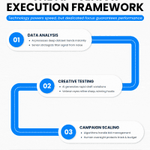

Creative is the bottleneck, not the platform.
When ad performance stalls out, pointing fingers at the platform feels like the easiest move.
Swapping bid strategies, changing interest groups, or blaming recent algorithm updates feels productive because it keeps everyone busy inside the ad manager.
Most of the time, the platform just reflects what it gets handed.
Algorithmic targeting has gotten sharp enough that the creative itself does the heavy lifting.
Feeding the system one static ad angle while tweaking background mechanics only produces faster failure.
The actual breakdown happens before the pitch even finishes:
-Stale hooks die fast: Identical opening angles get skipped before the message lands.
-Weak offers cap scale: Generic feature lists fail to convert cold traffic into buyers.
-Low volume starves algorithms: Running two ad variations forces bidding systems to burn budget.
Fixing performance rarely requires tearing down account structure.
Rotating fresh hooks, testing actual value propositions, and treating creative output as the primary growth lever unlocks scale without touching a single campaign setting.
Ever spent hours tweaking campaign settings only to realize the creative was the actual problem?

Brian Lasonde retweeted
I spend a lot of my week looking at creativity through a performance lens.
What gets attention? What can we test? What is actually driving action?
Then you come across something like this and remember that good creative usually does one thing before anything else:
It makes you stop.
I think there’s something worth remembering there when we’re building ads too.
Brian Lasonde retweeted
Running an agency can get pretty screen-heavy.
Calls, Slack, reports, Google Ads, Meta, Shopify… most days can get pretty digital pretty quickly.
That’s probably why I enjoy moments like this more than I used to.
Just getting out, talking to people, hearing what they’re working on, what’s frustrating them, and what they’re excited about.
No dashboard to pull up. No campaign to troubleshoot.
Just a good conversation.
I usually leave with a little more energy and something new to think about.
Brian Lasonde retweeted
$100K/month on Meta.
2–3 new ads a month.
That’s not a scaling problem. It’s a feeding problem.
A founder told me their account was “just flat.” When we dug in, the issue wasn’t budget, targeting, or the algorithm. Most of the spend was going to remarketing, showing the same 3 ads to people who already knew the brand.
Great ROAS on paper. Almost no new customers coming in.
So we didn’t add budget. We didn’t book a single new shoot.
We cleaned up the structure so every campaign had one clear job, then pulled creative they already had sitting in a folder and put it to work.
2–3 new creatives a month became ~16.
First year:
→ Purchases +116%
→ Conversion value +148%
→ ROAS +114%
→ Shopify revenue +18% YoY, beating a $13.5M target at ~$14M
Meta learns fast at this spend level. But it can only learn from what you give it.
If your account has plateaued, check your creative output before you touch the budget.
How many new ads did your team launch last month? 👇
#MetaAds #PaidSocial #Ecommerce
Brian Lasonde retweeted
+21.5% more $5M+ MQLs.
With just a 6% increase in ad spend.
The interesting part?
We didn’t get there by simply pushing more budget into the account.
The bigger opportunity was in what Google was being taught to optimize for.
The account was already generating conversions, but too many of those conversions were low-intent actions rather than people with real purchasing power.
So we changed the signal.
Instead of rewarding volume, we started giving Google better information about what a genuinely valuable prospect looked like.
That shifted where the algorithm looked, who it prioritized, and where the budget went.
And within the first 30 days, qualified $5M+ MQLs were up 21.5% MoM while spend grew only 6%. Case Study
There’s a big difference between generating more leads and generating more of the right leads.
Sometimes the best way to scale isn’t giving the algorithm more money.
It’s giving it a better definition of success.
This is about the only place where Slack notifications cannot reach me.
Taking her up here is my favorite way to hit the pause button on a chaotic week.
She sets the pace, I do my best not to get completely gassed, and campaign dashboards fade into the background for an hour.
Getting out into the fresh mountain air clears my head way better than another cup of coffee ever could. By the time we trek back down to the car, whatever
problem had me stressed at my desk doesn't feel like a big deal anymore.
What’s your go-to move when your four-legged coworker needs a break?

Brian Lasonde retweeted
I guess looking under the hood here explained everything.
While comparing monthly ad performance against actual bank deposits, I noticed that the numbers were not adding up behind the scenes.
That was when an off-grid camper battery brand brought us in to examine their account.
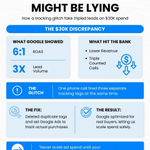
They were celebrating what looked like a stellar 6:1 return on ad spend at $30K a month.
Their dashboard showed three times the lead volume they had ever recorded, yet their sales team was wondering why that influx was not reflecting in actual closed revenue.
As soon as we started digging into the account, the root cause became obvious.
Their developer had accidentally installed duplicate call-tracking tags across the website, causing every single phone call to fire three times simultaneously.
Google received heavily distorted conversion signals, treating a single phone inquiry as three distinct buyers and feeding flawed data back into the algorithm.
Once we rebuilt their conversion setup from scratch to isolate true purchase intent, the client finally gained an accurate picture of their growth and we could scale their budget with genuine confidence.
Have you ever noticed a disconnect between platform conversion reports and actual bank deposits?

Brian Lasonde retweeted
What a night! 🙌
Huge thank you to everyone who came out Thursday for the Denver Marketers x Denver Tech Meetup event. The energy on the patio was incredible, and it was awesome to see our two communities come together, swap ideas, and make real connections.
Events like this don't happen without great people behind them. Special thanks to:
👏 Chris Beliveau (Denver Tech Meetup)
👏 Kaelan Donadio (Nina - trynina.co)
👏 Improper City
Thank you for helping make it happen and for bringing so much to the night.
If you made it out, thanks for being part of it. If you missed it, stay tuned, because we're already thinking about what's next. 👀
#DenverMarketers #DenverTech #DenverEvents #MarketingCommunity

I guess looking under the hood here explained everything.
While comparing monthly ad performance against actual bank deposits, I noticed that the numbers were not adding up behind the scenes.
That was when an off-grid camper battery brand brought us in to examine their account.
They were celebrating what looked like a stellar 6:1 return on ad spend at $30K a month.
Their dashboard showed three times the lead volume they had ever recorded, yet their sales team was wondering why that influx was not reflecting in actual closed revenue.
As soon as we started digging into the account, the root cause became obvious.
Their developer had accidentally installed duplicate call-tracking tags across the website, causing every single phone call to fire three times simultaneously.
Google received heavily distorted conversion signals, treating a single phone inquiry as three distinct buyers and feeding flawed data back into the algorithm.
Once we rebuilt their conversion setup from scratch to isolate true purchase intent, the client finally gained an accurate picture of their growth and we could scale their budget with genuine confidence.
Have you ever noticed a disconnect between platform conversion reports and actual bank deposits?
What a night! 🙌
Huge thank you to everyone who came out Thursday for the Denver Marketers x Denver Tech Meetup event. The energy on the patio was incredible, and it was awesome to see our two communities come together, swap ideas, and make real connections.
Events like this don't happen without great people behind them. Special thanks to:
👏 Chris Beliveau (Denver Tech Meetup)
👏 Kaelan Donadio (Nina - trynina.co)
👏 Improper City
Thank you for helping make it happen and for bringing so much to the night.
If you made it out, thanks for being part of it. If you missed it, stay tuned, because we're already thinking about what's next. 👀
#DenverMarketers #DenverTech #DenverEvents #MarketingCommunity
Brian Lasonde retweeted
Creative is the bottleneck, not the platform.
When ad performance stalls out, pointing fingers at the platform feels like the easiest move.
Swapping bid strategies, changing interest groups, or blaming recent algorithm updates feels productive because it keeps everyone busy inside the ad manager.
Most of the time, the platform just reflects what it gets handed.
Algorithmic targeting has gotten sharp enough that the creative itself does the heavy lifting.
Feeding the system one static ad angle while tweaking background mechanics only produces faster failure.
The actual breakdown happens before the pitch even finishes:
-Stale hooks die fast: Identical opening angles get skipped before the message lands.
-Weak offers cap scale: Generic feature lists fail to convert cold traffic into buyers.
-Low volume starves algorithms: Running two ad variations forces bidding systems to burn budget.
Fixing performance rarely requires tearing down account structure.
Rotating fresh hooks, testing actual value propositions, and treating creative output as the primary growth lever unlocks scale without touching a single
campaign setting.
Ever spent hours tweaking campaign settings only to realize the creative was the actual problem?
Brian Lasonde retweeted
I believe in AI-balanced, not AI-only
Algorithms handle the heavy lifting while veteran strategists make the calls that matter.
Pure AI tools can churn out endless ad variations, but they cannot spot a broken offer or fix misattributed conversion tracking.
Blindly trusting full automation usually burns through ad spend while chasing low-quality traffic.
We view AI as an amplifier for senior expertise, not a cheap replacement.
Machine learning handles deep data processing and rapid draft creation, freeing our team to focus on high-level strategy and creative angles.
Technology powers the speed, but dedicated veteran eyes guarantee the quality.
How is your team using AI without losing human strategic control?
Brian Lasonde retweeted
Scaling ad accounts takes patience.
Trying to force fast wins creates noise in your reporting and leads to bad decisions.
I focus on showing up daily, running clean tests, and letting small optimizations build on each other.
Pacing the work keeps strategy objective and calm.
After three months, those daily adjustments add up to serious growth.
How do you stay focused on long term results during a busy week?

Brian Lasonde retweeted
I guess looking under the hood here explained everything.
While comparing monthly ad performance against actual bank deposits, I noticed that the numbers were not adding up behind the scenes.
That was when an off-grid camper battery brand brought us in to examine their account.
They were celebrating what looked like a stellar 6:1 return on ad spend at $30K a month.
Their dashboard showed three times the lead volume they had ever recorded, yet their sales team was wondering why that influx was not reflecting in actual closed revenue.
As soon as we started digging into the account, the root cause became obvious.
Their developer had accidentally installed duplicate call-tracking tags across the website, causing every single phone call to fire three times simultaneously.
Google received heavily distorted conversion signals, treating a single phone inquiry as three distinct buyers and feeding flawed data back into the algorithm.
Once we rebuilt their conversion setup from scratch to isolate true purchase intent, the client finally gained an accurate picture of their growth and we could scale their budget with genuine confidence.
Have you ever noticed a disconnect between platform conversion reports and actual bank deposits?
