

I do stuff with computers. CTO & Co-founder @evalmeeHQ - @daily_ruby_tips
Paris
Joined November 2015
- Tweets2.1K
- Following689
- Followers555
- Likes2.8K








Pinned Tweet
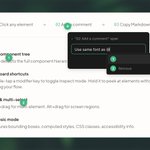
Porting @benjitaylor's agentation.dev to Vue.js 👀
Annotate your UI, get Vue component names + context, ready to paste to your AI agent.
No more screenshots eating your token budget.

Dorian Becker retweeted

À force de déconstruire la hustle culture, on a presque réussi à rendre honteuse l'idée qu'une ambition extraordinaire puisse demander un effort extraordinaire.
Et je trouve ça assez amusant.
Il y a quelques années, on glorifiait le travail jusqu'à l'absurde.
Dormir quatre heures.
Travailler tous les week-ends.
Répondre à ses mails à 2h du matin.
Faire du burn-out un signe extérieur d'ambition.
C'était débile.
Alors on a corrigé.
Et comme souvent, on a corrigé trop fort.
Aujourd'hui, on parle de leverage.
De systèmes.
De talent.
De réseau.
De chance.
D'IA.
Tout ça compte énormément.
Mais rien de tout ça ne change une réalité assez inconfortable : il n'existe probablement aucune version de votre vie où vous accomplirez quelque chose d'extraordinaire sans travailler extraordinairement dur.
Le problème, c'est qu'on confond travailler dur et travailler beaucoup.
Ce n'est pas la même chose.
Vous pouvez travailler 100 heures par semaine sur le mauvais problème.
Vous aurez énormément travaillé.
Vous n'aurez pas nécessairement travaillé dur.
Travailler dur, c'est rester sur un problème quand la réponse évidente ne fonctionne pas.
Recommencer quelque chose que vous pensiez avoir terminé parce que ce n'est pas assez bon.
Apprendre ce que vous ne savez pas faire.
Accepter que votre première idée était mauvaise.
Répéter.
Corriger.
Et rester assez longtemps pour devenir bon.
Je me suis toujours demandé si les gens exceptionnellement intelligents pouvaient accomplir de grandes choses sans vraiment travailler dur.
Et après avoir passé ma vie entouré de gens exceptionnellement intelligents, mon constat est assez simple : non.
Le talent aide.
L'intelligence aide.
Le réseau aide.
La chance aide énormément.
Le leverage multiplie votre travail.
L'IA aussi.
Mais pour multiplier quelque chose, il faut d'abord qu'il y ait quelque chose à multiplier.
Et ceci ne veut pas dire glorifier la souffrance.
Être épuisé n'est pas une preuve d'ambition.
Être occupé n'est pas une preuve de travail.
Et travailler énormément sur le mauvais problème reste une très mauvaise idée.
Mais l'excès inverse est tout aussi absurde.
Si vous voulez accomplir quelque chose que très peu de gens accomplissent, il faudra probablement accepter de faire des efforts que très peu de gens acceptent de faire.
Le travail ne garantit pas le succès.
Mais pour certaines ambitions, il reste le prix d'entrée.
Dorian Becker retweeted

The idea of "one shotting" an app using AI is a fugazi.
If you had to describe my app and all the edge cases I have solved over the years, it would be a prompt the size of a small book, and my app isn't even that complicated.
The people promoting creating a business overnight with AI are just selling a get rich quick pipedream. Those grifters are present in every cycle.
AI has completely transformed how I work, but you can't push a button and make money. Doesn't work like that.

Talking to smarter folks than me, I'm convinced many of the AI folks in my timeline are full of shit.
Nobody is "running 20 agents over night" and building stuff for actual users. Maybe some are building internal tools or disposable software. Maybe.
But building software people like using? That doesn't get hacked on day one or blow up after the 3rd user? Nope.
I don't even understand what that's supposed to look like. Do you work out a 57 pages document that perfectly describes what you want to build and then summon 14 agents and have them run wild for 6 hours? And what comes out on the other end isn't a broken pile of shit?
Nope. Not buying it.
PS: it may also be that I have an IQ of 82 and can't figure it out.




Claude Code just crushed a complex query I was building for a new feature:
I handed it a realistic dataset + the ability to run real queries itself.
Instructed it to loop, test multiple strategies, and build comparison tables.
It iterated until it found the winner.
50x performance gain.
I didn’t optimize the query. I just gave the AI the keys to the lab.
Here’s the dictation hack that removed the awkwardness for me:
I’ve never enjoyed using voice tools because speaking aloud to my computer in public felt strange.
@WisprFlow + a simple lavalier mic on my collar made it click. Whisper or speak normally, it just works incredibly well.


Dorian Becker retweeted

Every step has been predicted by ai-2027.com for more than a year
Now, there’s one more


Introducing Project Glasswing: an urgent initiative to help secure the world’s most critical software.
It’s powered by our newest frontier model, Claude Mythos Preview, which can find software vulnerabilities better than all but the most skilled humans.
anthropic.com/glasswing


Here’s what changed:
Refactoring, edge-case hunting, and migrating legacy code to the winning pattern used to cost a fortune in time.
Now?
A fraction of what it did.
The best builders are cashing in, not to ship faster, but to ship better:
cleaner, more reliable products that users trust and keep coming back to.
The era of ‘fast and fragile’ is over.
The era of affordable excellence for users just began.


Dorian Becker retweeted
I think we have lost some sense of judgment and moderation when it comes to product building currently.
The moment you turn something into a universally celebrated metric, whether that is token burn, prototype count, or percentage of agent-written code, you start losing sight of what actually matters.
I have felt the same way for a long time about overusing data and A/B testing to build products. The moment you reduce product quality or productivity to a metric, you stop shipping value and start shipping numbers.
A lot of what people are doing with AI makes directional sense. The missing piece is counterbalance:
1. AI should help engineers build better products. Leaderboards and adoption metrics can be useful as directional signals. They do not tell you what is being built, whether it is good, or whether it should exist at all.
2. Users do not care what percentage of your code was written by agents. They care about the outcome. Faster output is useful. Like usually, faster doesn't seem to add to quality, clarity, or stability of products. Power to build should not become an excuse to lower quality bars.
3. LLM-generated prototypes can feel like late-night whiteboarding sessions. They look exciting in the moment and feel productive very quickly. Then a few days later you realize the idea was shallow, distracting, or simply wrong. The same trap shows up in jumping straight to code and solutions more broadly. You may just be building the wrong thing more efficiently. Prototyping has its place. So do clear thinking, good design, and a real understanding of the user’s problem. In terms of activities or momentum, the main quest and the side quest can both feel productive but only one actually moves the mission forward.
4. Adding more to products is still dangerous as ever even if time or effort to add it has gone down. Every addition creates complexity, maintenance cost, and user confusion. New features should be pushed back unless they clearly show it should exist and how it improves the product.
5. Not everything needs to be an agent shaped. A simple scheduled task does not need a full LLM sandbox. Making something agentic because it feels current or impressive does not make it right-sized, correct, or effective.
The core ideas are:
- even if you can, maybe you should not.
- more power we have to build should not reduce our need to think, it should increase it.
This. I think we’re heading toward a world where prompt files replace the codebase as the canonical source. One prompt repo → regenerate the whole app from zero in Python, Rust, Go, whatever. The code is disposable; the prompts are forever.

Dorian Becker retweeted

What most people think happened: engineering got easier because AI agents can handle much of the coding.
What actually happened: we are shipping a lot more, a lot faster, and engineers need to build robust systems to ensure nothing breaks.
From what I'm seeing, engineering has become much more intense with AI, not less.

MULTI JOBBING
AI tools have made engineers (and other roles) so much more productive that I expect to see a tidal wave of people holding down two (or more) full time remote jobs in parallel, employers none the wiser. Already hearing the first few anecdotes of folks doing this.
The tell is someone not updating their LinkedIn months after leaving their last job :)
PS being a full time W2 employee at multiple companies is illegal in the US.
