


Jon retweeted

An interactive exhibit showing how a computer processor does math, v/@ProofofMaro.
Jon retweeted

🚀 The largest-ever open‑source protein‑complex treasure trove - 1.7 million of AI‑predicted complexes now live in the AlphaFold Database
In collaboration with @emblebi, @GoogleDeepMind, and @SeoulNatlUni, we have added millions of predicted complexes to the AlphaFold Database to accelerate global health research.
🧵👇
Jon retweeted

Love a lot of these -- our bet at @ginkgo is the unlock to get the compounding progress we've seen in tech into biotech is you need to kill the lab bench.
All these are awesome ideas but doing slow, manual lab work to achieve them means they are 5+ years out which then kills the vibes. Scientists + AI should do the thinking and robots should do the lab work or we'll be stuck in the mud forever in bio.

Some of the most underinvested areas in frontier biology that could accelerate civilizational progress:
- Cheap, large-scale DNA synthesis (writing entire chromosomes or full organisms)
- Real-time, non-destructive RNA sequencing in living cells
- Highly accurate AI-powered polygenic scores for complex traits (disease risk, cognition, longevity) → enabling full genome design
- Ultra-precise, multiplex genome editing (far beyond CRISPR) with minimal off-target effects, scalable across millions of cells
- Safe, efficient, tissue-specific in vivo delivery systems
- Safe and effective human germline engineering
- Accelerated clinical trials via testing on decedents (with consent)
- Next-gen human enhancement: muscle, cognition, mood — beyond GLP-1s
- Ectogenesis / artificial wombs
Who’s actually building in these areas? Drop names, companies, or researchers below 👇
Jon retweeted

I'm looking to invest in cancer research and breakthrough treatment companies
Cancer is humanity's worst enemy, and unfortunately, it's one of the few frontier problems i don't see getting solved in the next 2-3 years.
I'll be able to write checks up to a few million (usually up to a million).
I will work extremely hard to help the founders. I'll leverage my network as much as possible to overcome bureaucracies and help hunt down talent for every company I'm investing in.
Things I'm particularly interested in:
1. Accelerating clinical trials: As AI gets smarter and allows novel hypotheses on new drug targets, clinical trials and bureaucracy will remain the biggest bottleneck to fight cacner.
2. Repurposed drugs: the current cost of Phase 3 clinical trials only allows patentable solutions to be economically viable. It resonates that are probably many other treatments and potentially impactful drugs that won't be included in the Standard of Care as they haven't gone through phase 3 clinical trials.
3. Personalized medicine: organoids, digital twin, faster cycle from biopsy -> identifying targets -> creating customised solutions, such as mRNA vaccines, custom Antibody-Drug Conjugates (ADCs), and novel ways of triggering one's immune system.
4. Improving measurement: Currently, the standard PET-CT method does not allow weekly measurement of disease progression. Identifying a superior method to allow weekly measurement of progression could be instrumental in cutting down the time it takes to find a drug the body respond to.
Anyone who can connect me to relevant companies will be widely appreciated
Jon retweeted
New Ginkgo Cloud lab protocol: Express your enzyme using our cell free protein expression system, run your reaction and detect substrate depletion and/or product formation using Echo-MS -- all for $44!!
Really excited to get sophisticated equipment and biology protocols broadly available at low prices -- hopeful this expands access to biotechnology worldwide.
Tell us what other protocols or equipment you would like to see we are adding new ones weekly !

Following up on last week’s launch, you can now detect product formation and substrate depletion on Ginkgo’s Cloud Lab!
We're excited to launch Echo-MS Detection of Molecules from an Enzymatic Reaction in Cell Free Expression System this week.
With this protocol, we use Nebula to express your enzyme using our cell free protein expression system, run your reaction and detect substrate depletion and/or product formation using Echo-MS.
Submit your enzyme designs, molecules you want to detect, and reaction conditions. We’ll send back a method summary and peak table.
Get started here: cloud.ginkgo.bio/protocols/e…

Jon retweeted

AI for biology will have bigger near term wins. The ability for AI to learn from experiments and predict human biology will have very broad impacts in predicting targets, clinical trials, and precision medicine.
Tackling the biggest challenge in Pharma (80% of drugs fail in trials -- getting that merely to 70% would be a tremendous victory) and then understanding human biology well enough to become AI precision medicine doctors.

While impressive in its own right, it’s worth remembering that predicting protein-drug interactions is like 0.01% of the drug discovery and development pipeline and the spare change part of it. Saying that that’s revolutionizing the process is like convincing someone, in Derek Lowe’s memorable words, that you’ve invented a revolutionary new car because its windows go up and down ten times faster.
Jon retweeted

The AI Scientist: Towards Fully Automated AI Research, Now Published in Nature!!✨
Today in Nature we share a comprehensive technical summary of our work on The AI Scientist, including new scaling law results showing how it improves with more compute and more intelligent foundation models.
The AI Scientist autonomously creates its own research ideas, codes up and conducts experiments to test those ideas, creates figures to visualize the results, writes an entire scientific manuscript summarizing what it has discovered, and conducts its own “peer” review of the resulting paper. One of its papers–entirely AI generated–passed peer review at a top-tier AI conference workshop, a historic milestone marking the dawn of a new era of AI-accelerated scientific discovery. 🔬🧪✨🧬💡🔭
Paper nature.com/articles/s41586-0…
Blog sakana.ai/ai-scientist-natur…
Work done in collaboration with a great team from Sakana, Oxford, and my lab at UBC. Thanks and congratulations everyone!
@_chris_lu_ @cong_ml @RobertTLange @_yutaroyamada @shengranhu @j_foerst @hardmaru
🤖 Made with AI

Jon retweeted

Nebula is our autonomous lab. Today it is the largest in the world and this year we’re going to double its size and 4x its output.
We want to pull back the curtain and show the public as much of our journey as possible. To do that we want to introduce you to the cast of characters who are actually building and using our autonomous lab every day!
You’ll watch a veteran scientist figure out how to move their workflows off of the bench. You’ll see a young researcher learning how to do science for the first time on an autonomous lab. You’ll hear from customers, visitors, and policymakers reflect on what this all means, and you’ll hear from the software and automation engineers who keep the whole thing running. And most of all, you’ll get to know Nebula itself.
And because we’re Ginkgo, we’re going to have a lot of fun doing it :D
Jon retweeted

Introducing the Anthropic Science Blog.
Increasing the pace of scientific progress is a core part of Anthropic’s mission. The Science Blog will feature new research and stories of how scientists are using AI to accelerate their work.
Read the intro: anthropic.com/research/intro…

Jon retweeted
AI + lab robotics will change experimental science.
1. Data (both positive and negative results) shared daily among a team of AI agents pursuing different hypothesis
2. Lab robotics running 24/7 with lab experiments written in code that are easily reproducible
Human scientists can shepherd the whole process with regular readouts of progress (sort of like every scientists getting to operate as principle investigator) -- these are real advantages over how we do this work today.
Enjoyed chatting about it with @gradypb and @sonyatweetybird at @sequoia!

but how can the AI do science if science has lots of messy atoms and stuff?!?
SCIENCE ROBOTS!!!
(technical term)
this was an incredibly fun conversation with @jrkelly of @Ginkgo and @sonyatweetybird
Jon retweeted

this is excellent

Caught up with @karpathy for a new @NoPriorsPod: on the phase shift in engineering, AI psychosis, claws, AutoResearch, the opportunity for a SETI-at-Home like movement in AI, the model landscape, and second order effects
02:55 - What Capability Limits Remain?
06:15 - What Mastery of Coding Agents Looks Like
11:16 - Second Order Effects of Coding Agents
15:51 - Why AutoResearch
22:45 - Relevant Skills in the AI Era
28:25 - Model Speciation
32:30 - Collaboration Surfaces for Humans and AI
37:28 - Analysis of Jobs Market Data
48:25 - Open vs. Closed Source Models
53:51 - Autonomous Robotics and Atoms
1:00:59 - MicroGPT and Agentic Education
1:05:40 - End Thoughts
Jon retweeted

Ginkgo Bioworks has officially launched Ginkgo Cloud Lab, an innovative platform enabling researchers to conduct experiments via a web browser using the company's autonomous lab infrastructure. This platform features AI-driven compatibility assessments and remote access to over 70 lab instruments, marking a strategic shift toward fully automated R&D services while inviting collaboration from academia and the biopharmaceutical industry.
prnewswire.com/news-releases…
Subscribe to our newsletter and get the biggest biotech news straight to your inbox 🧬. syntheticbiologysummit.com/s…


Jon retweeted

Evo 2, the largest fully open biological AI model to date, is now published in @Nature.
Jon retweeted

A Visual Guide to DNA Sequencing.
Learn how different DNA sequencing technologies work, from Sanger sequencing to Illumina to nanopores. (Complete with illustrations!)
Written by @evandeturk. Illustrated by @EllaWD_PhD.


Jon retweeted

We recently released a technical report highlighting how @IsomorphicLabs’ drug design engine is achieving a step change in how we model complex biological mechanisms, consistently outperforming industry benchmarks. Read our blog to discover how we’re bridging the gap between structure prediction and rational drug design.
You can find the link in the comments.
Jon retweeted
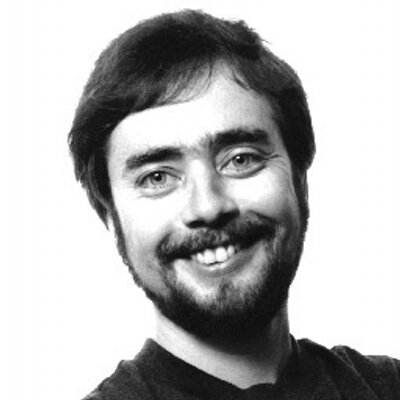
Chris is amazing; brilliant guy.

"There is a pervasive assumption that quantum theory only applies at the scale of atoms and below."
"The idea that there is a clean boundary between the quantum world and the classical world is starting to collapse."
"Biology is undergoing a shift away from classical mechanistic thinking."
"Biological systems are not passive machines. They are trying to get their environments to do something."
The incredible Chris Fields has collaborated with @drmichaellevin, @donalddhoffman, Karl Friston and many more.
One of the most interesting people alive ⬇️
Jon retweeted

For over 30 years, complexity theorists have identified problems where quantum computers surpass classical ones. But there's a broader class of problems that they've barely begun to study, whose inputs and outputs aren't ordinary strings of bits, but are themselves inherently quantum. quantamagazine.org/a-new-com…

Jon retweeted

Harvard scientists just shattered one of biology’s oldest rules.
We were taught:
Viruses can’t make their own proteins. They hijack yours. That’s why they’re “not alive.”
Except giant DNA viruses just crossed that line.
Researchers found they carry a full eukaryotic-style translation complex (vIF4F). Translation machinery.
Inside a virus. They can keep making proteins even under stress that shuts down normal viral replication.
If a virus brings its own protein-making tools…
Is it still just a parasite?
For decades we’ve drawn a clean boundary:
Cell = alive
Virus = not alive
Nature doesn’t care about our categories.
Maybe viruses aren’t just evolutionary side notes.
Maybe they helped build complex life.
Paper in Cell 👇
cell.com/cell/fulltext/S0092…
Harvard news: cellbio.hms.harvard.edu/rece…

Jon retweeted

Important essay: Why organisms are more than machines - Big Think bigthink.com/13-8/nature-of-…
