

A synergistic research environment for the integration and translation of research findings from a variety of disciplines to understand population health.
Los Angeles, California
Joined January 2020
- Tweets93
- Following64
- Followers91
- Likes17


At #GLAM2026, Michael A. Rosario presented research showing that greater variety in neighborhood amenities was associated with slower memory decline. His work used HRS data from 21,129 older adults across 666 U.S. counties.
Learn more about his research: michael-rosario.com

Harshanna Badhesha presented at #GLAM2026 on how immune cell composition may influence estimates of epigenetic aging.
Her work compared blood-based cell composition and epigenetic age acceleration across the United States and India.

Using harmonized data from 214,251 adults across 14 countries and regions, Nichols (@enichols94 ), and colleagues found differences in risk-factor prevalence, but common patterns in how multiple risks cluster together.
doi.org/10.1016/j.lanhl.2026…

13
Excess body weight plays a larger role in developing type 2 diabetes than genetics, education, or early-life conditions. Yiyue Huangfu, @HBeltranSanchez, and colleagues used longitudinal @hrsisr data to examine how these factors shape diabetes risk.
doi.org/10.1038/s43856-026-0…
🤖 Made with AI

24
Accelerated epigenetic aging was associated with higher blood-based markers of neurodegeneration in older Indian adults.
Using LASI-DAD data, Kim, Arpawong, Crimmins (@Crimmins_E) and colleagues found the strongest links with GFAP and NfL.
doi.org/10.1016/j.tjpad.2026…
🤖 Made with AI

1
45
Transcriptomic Aging Gene Scores (TAGS) complement epigenetic clocks—and generally better predict 6-year mortality in the Health and Retirement Study.
New publication by Em Arpawong, Eileen Crimmins (@Crimmins_E), and colleagues.
Full article:nature.com/articles/s41514-0…

2
63
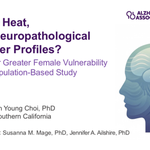
How does extreme heat affect aging, and does it affect men and women differently?
In a webinar by the Carolina Center for Population Aging and Health and @CBPH, @DrAilshire shared work with Dr. Choi on heat and multi-system biological aging.
Watch: youtube.com/watch?v=KxJh6kai…
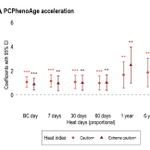
Men and women responded differently to heat. Women showed biological responses at lower temperatures, including greater inflammation and liver stress. Men showed stronger responses at the highest temperatures, with different metabolic and kidney-related changes.
1
25
If you are interested in research on biodemographic approaches to population health and aging visit us at
gero.usc.edu/cbph to learn more on related research, upcoming workshops, or CBPH activities. #Health #EpigeneticAging #Heat
26
Men and women responded differently to heat. Women showed biological responses at lower temperatures, including greater inflammation and liver stress. Men showed stronger responses at the highest temperatures, with different metabolic and kidney-related changes.
1
12
If you are interested in research on biodemographic approaches to population health and aging visit us at
gero.usc.edu/cbph to learn more on related research, upcoming workshops, or CBPH activities. #Health #EpigeneticAging #Heat
11
Men and women responded differently to heat. Women showed biological responses at lower temperatures, including greater inflammation and liver stress. Men showed stronger responses at the highest temperatures, with different metabolic and kidney-related changes.
1
13
If you are interested in research on biodemographic approaches to population health and aging visit us at gero.usc.edu/cbph to learn more on related research, upcoming workshops, or CBPH activities. #Health #EpigeneticAging #Heat
12