



Bilok C retweeted

Liftoff.
The Artemis II mission launched from @NASAKennedy at 6:35pm ET (2235 UTC), propelling four astronauts on a journey around the Moon.
Artemis II will pave the way for future Moon landings, as well as the next giant leap — astronauts on Mars.
Bilok C retweeted

“In engineering, you are peer reviewed by reality”. From Rory Sutherland, in this week’s Spectator.


Bilok C retweeted

Many of you haven’t been asking about the rumored Wolverine Documentary we didn’t spend much time making. @NatGeo @MaximumEffort #DeadpoolAndWolverine

Bilok C retweeted

You know the drill…it’s time for #SpaceToGround. 🛠
Come aboard the space station with NASA astronaut Matthew Dominick and take a tour of the toolbox crew members use while completing orbital tasks.

Bilok C retweeted

The most powerful tool of your mind is not its capacity to know, but its ability to question.


Bilok C retweeted

About a year ago, I started watching @libsoftiktok videos while on mute as I found that their body language and mannerisms would tell a deeper story than the rhetoric they were espousing and I was troubled by my revelations of these individuals.
*Thread / Article*


Bilok C retweeted

Researchers publicly call out theory that they say is not well supported by science, but that gets undue attention. go.nature.com/44X0wmR

Bilok C retweeted

With the 2023 NFL season kicking off this week, Onion Sports has in-depth analysis of every team in the NFC. bit.ly/3PFpu65
Bilok C retweeted

Why didnt the British have a their own version of the Fw190 aircraft like the Hawker Sea Fury (first flight 1944) and play a serious role in WW2?
The performance characteristics of the Fury are nearly all stunning, very heavy armament (4 x 20mm cannon), very high speed (460mph).
The story begins in the early 1930`s, at Bristol.
Bristol had developed a lineup of exceptional 4-valve per cylinder poppet-valve aero engines, and captured a raft of high altitude flight records with them, using turbochargers and had also made many of the eariest experiments with fuel injection, which had begun in 1920 in Britain, and were squandered needlessly (that is another story...)
Roy Fedden, the very cantankerous genius at the helm of Bristol aero engines, had developed a twin-row air cooled poppet valve radial engine in the early 1930`s, but had produced a total failure as it had only two, not three crankshaft bearings, meaning it bent like a skipping rope when it spun and destroyed itself.
Rather than revise the engine, with a centre bearing, Fedden gave up on the poppet valve (wrongly) and diverted Bristol`s efforts into sleeve valves. However, even Fedden admitted that he had in some ways done this almost to spite other designers who had tried the same and failed. Fedden wrote:
"I was urged on by a ferocity of effort, and the conviction that a good idea <the sleeve> must
ventually prevail. This standpoint, I believe, was inspired by those who said the single sleeve held out so much promise but was a Jonah, and always defeated those that wooed it."
Thus began a journey down the route of the sleeve valve to higher powers, Bristol (and Fedden) defeated the monstrous "Hydra" of the Sleeve, with the aid of the metallurgists at the FIRTH BROWN company, but, like all Greek myths, the victor paid a price to the gods. Fedden "won", but the debt for this victory was half a decade lost to time, as I write in THE SECRET HORSEPOWER RACE:
"Before it was over Firth-Brown would charge £2 million for the development (enough to make 160 complete Spitfires). It took over 1100 metallurgical trials to get the sleeve to work before the solution was found: high expansion alloy steel of nickel-manganese- chromium, centrifugally cast, and then nitrided for hardness."
This lost time, meant that Bristol was now five years behind in supercharger science, and general engine design (the sleeve aside). Time which could never be bought back.
Thus, when the British released a specification for a new 2000+ Hp aero engine, the only answers to the call were the Bristol Centaurus, and the Napier Sabre. Neither were ready for years after the hoped for production dates.
This was frustrating as Bristol had all they needed in the early 1930`s to take on Rolls-Royce and win, reliable poppet valve air-cooled radial engines, high levels of achievement in high-altitude flight and early experience of fuel injection.
Fedden squandered all this lead by choosing the wrong technical path, and grasping defeat from the jaws of victory, with his almost single-handed victory over the sleeve-valve problem.
By the time he had triumphed, the world had moved on, and the poppet valve metallurgy had been advanced to the stage where the valve was no longer the limit to supercharger boost levels, ultra high heat resistant alloys and coatings now rendered the limits of the poppet valve which had existed in the late 1920`s, defunct, and Bristol were the proud owners of engines which solved a problem which no longer existed (how to increase boost without the valves overheating and causing detonation or pre-ignition).
As a result, Bristol were relegated to suppliers of 2nd tier aero engines for most of the war, the Centaurus playing only a miniscule role. The astonishingly high levels of reliability and performance that the smaller Hercules exhibited were wasted, as it was years behind in supercharging, and all its attributes could have been gained years before, had a poppet valve version been designed.
So it was that Britains Bristol firm, failed to deliver the RAF their own version of the Fw190 fighter in time for seriously help the war effort.
Fedden was a genius, an outstanding engineer, but he was also stubborn, and drove his engineering team to the limits of human endurance, assuming all his employees would give the same effort he gave, which, given his near inhuman drive was never realistic.
Today the Sea-Fury shows its potential by always being a front-runner in the Reno-Unlimited Warbird Races, usually powered by American air-cooled poppet valve radial engines.
Some of the blame for this must of course be shared by Hawker, who came up with suitable designs too late, but one can sympathise, as reading the Air Ministry files, Camm never knew where to invest his efforts as the engines he was promised were always too late, and too fragile, meaning the efforts at Hawker were heavily diluted.
It was really only with the Typhoon Mk2 (renamed the Tempest) that Camm really got it right, and produced a stunning aircraft, just two years too late to really matter.
It is even possible, that had Bristol saved that five years, they would have been regarded more highly than Rolls-Royce by 1938, when Stanley Hooker joined Rolls-Royce, perhaps he would instead have worked on Fuel injected 4-valve head poppet radials at Bristol.
Fate eventually took a strange turn, and falling out with Hives at Rolls-Royce, in 1949, Hooker left for Bristol and completed the design of the Olympus engine which powered concorde. So perhaps, in a strange way, it all had to work out like that in the end...

Bilok C retweeted

Ernest Hemingway discusses his views on symbolism in his 1952 novel, "The Old Man and the Sea," in a letter to art historian Bernard Berenson.
Two years after he wrote this letter, Hemingway was involved in a plane crash while flying over the jungles of Uganda. The single-engine plane took a nose dive after the pilot attempted to avoid a flock of flying birds.
Hemingway later recalled that the plane had to "land either on a sandpit where six crocodiles lay basking in the sun or on an elephant track through thick scrub.” The pilot decided to take his chances with the scrub and managed to crash land without any fatalities. The pilot, Hemingway, and his wife (Mary Welsh) ended up spending the night in the jungle.
The next day, they were rescued and brought to a nearby city. Hemingway and his wife promptly boarded another flight with a new pilot. Soon after takeoff, the plane went down and crashed. Trapped inside a burning plane, Hemingway managed to head-butt the door open. While there were no casualties, Hemingway broke two vertebrae and received a concussion, which may have marked the beginning of his cognitive decline.
Hemingway was assumed to be dead for 24 hours, and many newspapers reported his death and even wrote obituaries.
Hemingway emerged from the jungle once again, but this time, he was "carrying a bunch of bananas and a bottle of gin," and was quoted saying: "My luck, she is running very good."

Bilok C retweeted

Society propagates deceitful messages like "everyone is smart" or "everyone is beautiful." A tell of how people have been trained to measure human worth. It doesn't even occur to them to say "You can have worth and dignity and value, regardless of how smart or beautiful you are."
Bilok C retweeted
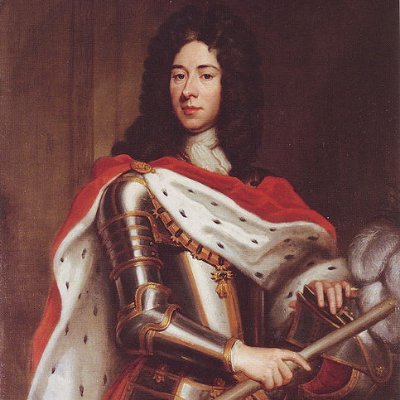
During Francis Drake's 1585-86 expedition to attack Spanish ports in the New World, his men began suffering from diseases.
In response Drake invented a cocktail drink to restore the health of his men.
He gave them the El Draque!
It is known as the world's first cocktail drink.