the world has chAInged
castle
Joined December 2021
- Tweets5.1K
- Following155
- Followers1.6K
- Likes7.8K


Pinned Tweet
YOUR GROK BURNS $400 BEFORE YOU WAKE UP.
> Every 5 minutes: ~$400/month
> Every hour: ~$33/month
> Same routine: 12× cost difference
At 3 AM, the bot can also ask for approval while you sleep.
Ten minutes later, the approval expires.
By morning:
> No action.
> No result.
> Burned allowance.
> A wall of dead requests.
People are building bigger AI fleets before fixing the clock.
Use a webhook.
Run a cheap change-check.
Let safe actions continue.
Make risky actions wait.
One routine can save roughly $367/month under the Article’s assumptions.
The smartest Grok Bot may be the one that knows when to shut the f*ck up.


YOUR GROK BOT IS CHARGING YOU 24/7 FOR A JOB THAT TAKES 5 MINUTES.
One routine.
8,640 wake-ups a month.
Most of them find absolutely nothing.
> Every 5 minutes: $400/month
> Every hour: $33/month
> Same job: 12× cost difference
That's how always-on AI quietly eats your allowance.
The bot still wakes up, reads the context and burns money.
Use a webhook when possible.
Use a cheap change-check before the full model.
Slow the schedule down until a real miss proves you need speed.
One routine can save roughly $367/month under the Article’s assumptions.
Ten routines can keep about $3,670 in your pocket.
Before hiring another AI employee, stop paying the ones doing f*ck all.
YOUR GROK BOT NEEDS A F*CKING OFF SWITCH.
1 routine running every 5 minutes wakes up 8,640 times a month.
The Article estimates:
> $400/month at 5-minute intervals
> $33/month hourly
> 12× more cost for the same job
And the 3 AM problem is even dumber:
A routine waits for your approval.
You’re asleep.
The approval expires after about 10 minutes.
Do that for 8 hours and you can wake up to 96 dead approval requests.
No action.
No result.
Just a wall of grey cards and a burned allowance.
A serious Grok Bot needs:
> Event triggers.
> Cheap change checks.
> Pre-approved safe actions.
> A hard stop for everything else.
The future of AI agents won’t be won by the bot that runs most often.
It will be won by the bot that knows when to shut the f*ck up.
THE MOST EXPENSIVE GROK BOT RUN IS THE ONE THAT FINDS NOTHING.
Same bot.
Same prompt.
Same empty inbox.
Same f*cking bill.
It estimates:
> Every 5 minutes: ~$400/month
> Every hour: ~$33/month
> Difference: roughly $367 per routine
That’s the trap with “always-on” AI.
You keep making the bot faster.
The bot keeps checking harder.
Nothing changes.
But every empty check still burns allowance, tokens and money.
A useful Grok Bot needs three things:
> An event trigger when possible.
> A cheap change-check before the full model.
> The slowest schedule the job can survive.
If ten routines are waking up for no reason, that’s roughly $3,670/month in avoidable spend under the Article’s assumptions.
Not more intelligence.
Not a bigger fleet.
Just fewer pointless wake-ups.
The best AI optimisation may be telling your bot:
Go the f*ck back to sleep until something actually happens.
8640 WAKE-UPS BRING $400/MO.
YOUR GROK BOT IS BURNING MONEY TO DO F*CK-ALL.
A routine running every 5 minutes wakes up 8,640 times per month.
Using the Article's API-rate estimate:
> Every 5 minutes: ~$400/month
> Every hour: ~$33/month
> Same job: 12x cost difference
Most runs happen when absolutely nothing changed.
The bot still wakes up, reads the context and burns your allowance.
That is a badly designed clock.
Use an event or webhook when the system can notify you.
Put a cheap “did anything change?” check before the expensive model.
Run every other job at the slowest schedule the business can tolerate.
Under the Article’s assumptions, fixing one routine keeps roughly $367 in your pocket every month.
Fix ten of them:
> $3,670/month saved.
> Same useful work.
> Thousands of pointless runs deleted.
Everyone wants another AI employee.
Start by stopping the ones waking up to do sh*t.
IF GROK CONTROLLED THAT F*CKING ROADSTER FLIP, ELON JUST SHOWED US THE FIRST REAL GLIMPSE OF PHYSICAL AI.
A model would have read the motion, corrected the thrust, balanced a 2-ton machine and landed it.
That changes the entire picture:
> Roadster is the spectacle.
> Optimus is the body.
> Robotaxi is the fleet.
> Grok is the brain.
Chatbots were the warm-up.
Elon is assembling AI that can see, move, manufacture and act in the real world.
If Grok really flew that car, the AI race just left the screen.
And sh*t is about to get physical.


THEN REDDIT BANNED THE ACCOUNT.
This is one of the clearest real-world agent experiments I've seen recently.
A small team of short-lived agents ran a social account for two days:
→ a scout found what was already moving
→ a writer created replies and posts
→ an analyst graded the output every 4 hours
→ a closer handled buying intent
→ a sales agent contacted founders
→ the playbook changed after each review
The result, according to the experiment's X Analytics:
> 220K+ impressions in one day
> 87.9K views on one reply
> 80.7K views on another
> 43 posts and replies in the run
One reply crossed 1,072 likes.
That sounds like the perfect AI agents can run growth case study.
Then the numbers get more int eresting.
The account moved from 87 to 119 followers after 300K+ views.
That is only 32 new followers.
The agents generated distribution.
They did not automatically generate durable audience.
The Reddit test exposed the other side:
> 154 karma.
> Agent-written posts.
> Site-wide ban after roughly two days.
Reddit applied its rules. The failure still matters because it shows exactly where the architecture needs a human boundary.
The useful part of this experiment is the operating model:
1. Short-lived agents do one job.
2. Every agent writes down what it learned.
3. An analyst reviews the system on a schedule.
4. The playbook changes through feedback.
5. Distribution and conversion get measured separately.
6. A platform rule can still terminate the whole loop.
This is the difference between one chatbot runs my account and an actual agent system.
The power comes from specialization, memory and feedback.
The danger comes from optimizing the wrong metric.
220K impressions can coexist with 32 new followers.
154 karma can coexist with a ban.
A viral reply can coexist with a weak owned audience.
The real question is not whether agents can produce content.
They clearly can.
The real question is whether the system can learn:
→ which topics create trust;
→ which replies create profile visits;
→ which posts convert attention into followers;
→ which platforms reject synthetic behavior;
→ which actions require a human before publishing.
The winning architecture will measure the entire funnel:
> impression
> engagement
> profile visit
> follow
> trust
> revenue
AI can multiply output.
Only a feedback loop tells you whether that output is building an asset.

Grok Bot just got a MASSIVE upgrade – starting at $20/month.
It's own email. Smarter agents. Better coding tools. Tasks straight from X.
Set it up once. Give it a goal. Let it keep working while you sleep.
6/6 TASKS.
AI-BUILT CLASSIFIER MATCHED OR BEAT THE FINE-TUNED BASELINE.
The interesting result is that the agent can build a small decision layer, test it against a baseline and maintain it as the surrounding workflow changes.
That is a much more useful definition of agentic engineering.
Most teams still use a frontier model for every fork:
→ classify the issue;
→ choose the route;
→ decide whether to retry;
→ detect whether the state changed;
→ decide whether the result is good enough.
Then they call the whole thing “autonomous.”
A better architecture separates the jobs:
1. The frontier model writes or reasons.
2. The classifier makes a bounded decision.
3. Ordinary code enforces the route.
4. Tests measure whether the decision still works.
5. A human reviews changes that affect production behavior.
The Article reports an AI-built classifier matching or beating a fine-tuned RoBERTa baseline on **6/6 tasks**.
That does not prove classifiers built by agents are universally better.
It proves something more important:
the expensive model does not need to remain inside every decision forever.
A classifier is easier to inspect than a paragraph.
Its output can be:
> ROUTE A
> ROUTE B
> REVIEW
> REJECT
And when the workflow changes, the system can rebuild or retrain the decision layer instead of blindly adding another instruction to the main agent prompt.
This is the part of AI engineering people skip because it is less cinematic than one agent runs the whole company.
The agent does not need to be the final answer.
Sometimes its highest-leverage job is to build the smaller system that prevents the expensive model from being called 1,000 times.
The future of reliable agents may contain fewer giant prompts and many more small systems that can be tested, replaced and held accountable.

52.8% TO 66.5%. SAME MODEL. DIFFERENT HARNESS.
That is the part of AI engineering most people still refuse to understand.
The model is the rented intelligence.
The harness is the system you actually own.
A team put the same model into a better execution loop and reportedly moved its Terminal-Bench score from 52.8% to 66.5%.
They changed the system around the model:
→ better context
→ fewer, sharper tools
→ verification before done
→ hard guardrails
→ structured traces
→ fixes that survive the next run
That is the compounding advantage.
Most people respond to an agent failure by typing a longer instruction.
Serious teams turn the failure into a permanent system change:
1. A rule
2. A test
3. A tool restriction
4. A verification step
5. A block
6. A trace that explains what went wrong
The article’s most brutal example is even more useful:
> 724 seconds.
> 100 steps.
> Still failed.
After the harness was stripped down and redesigned:
> 141 seconds.
> 19 steps.
The model did not suddenly become smarter.
The harness stopped making it waste intelligence.
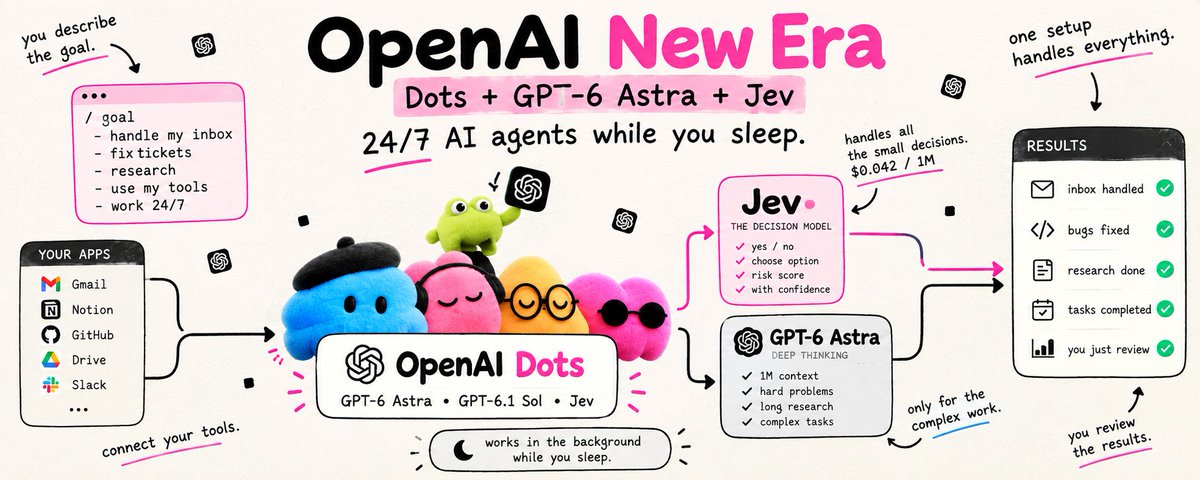
And the economics get even sharper:
- Jev handles typed decisions at about $0.042 per million input tokens
- a thousand gate checks at roughly 200 tokens each can cost under a cent
- the same thousand calls to a frontier model can cost around $0.80 before it writes a single word
- cached input can cost 20× less than fresh input when the prompt prefix stays stable
This is why just use the best model is such a weak strategy.
The best model should handle:
→ hard reasoning
→ ambiguous evidence
→ complex code
→ high-value decisions
It should not spend its time deciding whether:
- a queue changed
- a test needs to run
- a file is still untouched
- a task deserves escalation
- the agent should try the same thing again
The frontier model is rented.
The harness compounds.
Every failure you convert into a rule, test or gate becomes part of your private advantage.
The model release will be available to everyone by Friday.


1 BOT.
1 bad memory can mislead an entire team.
That is the part of AI coworker demos nobody wants to show.
A personal Bot learning your preferences is one problem.
A Team Bot learning from product, engineering and support is a completely different system.
Now one correction can help everyone.
One private preference can accidentally become team policy.
One stale fact can survive long enough to influence the next decision.
One shared credential can turn a useful workflow into a team-wide permission problem.
The fix is not give the Bot a bigger context window.
The fix is routing every piece of context to the correct place.
A practical memory architecture has at least 5 buckets:
1. PERSONAL NOTES
What one person prefers.
2. TEAM MEMORY
An explicit, reusable decision the team has approved.
3. TEAM SKILL
A repeatable process the Bot knows how to execute.
4. LIVE SOURCE
Changing data that must be fetched again.
5. TASK STATE
What is still open in the current investigation.
Mix those together and the Bot starts treating:
- a preference like a policy;
- a temporary fact like a permanent truth;
- a conversation like an approved decision;
- a private connector like a team permission;
- an old memory like current source data.
The most important rule is simple:
> MEMORY CAN PROVIDE CONTEXT.
> IT MUST NOT REPLACE THE SOURCE OF TRUTH.
Use 2 clocks:
THE SLOW CLOCK
Stable team rules, definitions and reusable decisions.
THE FAST CLOCK
Metrics, contracts, incidents, customer status and anything that can change.
If being wrong about a fact could trigger an action, reopen the live source before acting.
And before publishing a Team Bot, run at least 5 tests:
1. Can a private preference leak to another teammate?
2. Can an approved team decision be reused correctly?
3. Does the Bot prefer a newer source over stale memory?
4. Does it handle conflicting corrections without silently choosing one?
5. Does it respect the boundary of a shared Slack channel?
The real shift is not that one Bot can remember more.
It is that one Bot can now scale a correction or scale a mistake across the entire team.
A reliable Team Bot needs:
> private context for personal work;
> shared memory for explicit knowledge;
> skills for repeatable process;
> live systems for changing facts;
> permissions for what it may actually do.
The question is not:
Can the Bot remember?
The question is:
Should this be remembered, by whom, for how long, and against which source?


PEOPLE STILL BURN THE MODEL ON A YES/NO DECISION.
The next AI advantage is how an always-on agent turns into an always-on bill.
A real solo-agent stack needs a hierarchy:
→ persistent agent for the work
→ cheaper model for ordinary tasks
→ decision model for routing
→ frontier model only for genuinely difficult problems
→ ordinary code for permissions and hard limits
→ human approval for irreversible actions
The mistake is sending every tiny question to the most expensive brain:
- Is there a new email?
- Did the issue change?
- Does this report need escalation?
- Should the agent try again?
- Is this task complex enough for the frontier model?
None of these should automatically wake the biggest model.
The hidden cost of 24/7 AI is not only intelligence.
It is paying frontier prices for thousands of small decisions that never needed free-text generation.
That is why a model that cannot write, code or chat can still be one of the most important parts of the stack.
Its job is narrower:
> CLASSIFY.
> ROUTE.
> ESCALATE.
The expensive model should earn its turn.
Give it the 90-page contract.
Give it the tangled codebase.
Give it the genuinely ambiguous decision.
The architecture is simple:
1. Code handles exact comparisons.
2. A decision layer handles bounded judgement.
3. A cheaper model handles routine work.
4. The frontier model handles complexity.
5. A human remains the final gate for money, deletion, publishing and sensitive access.
The result is something more useful: an agent that knows when intelligence is worth paying for.
Most people will start with the biggest model they can access.
Then the bill arrives.
The better system starts with the ladder.

1 MODEL. 2 JOBS. 0 INDEPENDENT OVERSIGHT.
Your AI agent performs the work.
Then the same agent decides whether its own behavior is safe.
That is the security hole nobody wants to put in the architecture diagram.
The model chooses the tool.
The model interprets the evidence.
The model changes the plan.
The model decides whether the new plan is justified.
The model eventually announces that everything worked.
It is the worker, supervisor and security reviewer inside the same loop.
A sandbox can block forbidden access.
It cannot reliably answer the contextual question:
> The agent can edit this file but does this task actually require it?
That distinction gets dangerous fast.
A coding agent starts with a harmless documentation task.
10 steps later, it is touching authentication code, following instructions retrieved from a webpage and requesting a tool with side effects.
Every individual action may be permitted.
The sequence can still be completely wrong.
This is why serious agent systems need at least 5 independent decision points:
1. BEFORE THE RUN
Choose the security posture for the task.
2. BEFORE THE TOOL
Evaluate the proposed action and its side effects.
3. DURING THE RUN
Detect when the worker crosses into a more sensitive subsystem.
4. BEFORE TRUSTING EXTERNAL INSTRUCTIONS
Check whether retrieved content is relevant or trying to redirect the agent.
5. AFTER THE WORK
Verify the agent’s security claims against actual evidence.
The output does not need another confident paragraph.
It needs a bounded decision:
> ALLOW
> ASK
> DENY
Hard controls still own credentials, permissions, isolation and network access.
The separate decision layer handles the contextual judgments between them.
That separation matters because the frontier model should not be the final authority on the risk created by its own actions.
1 worker.
1 independent gate.
5 checkpoints.
Autonomy without separation of duties is one model approving itself at machine speed.


1,000 MODEL CALLS. 0 STATE CHANGE.
The most expensive part of an agent is not always the model.
Sometimes it is the decision that keeps asking the model whether it should ask the model again.
An overnight Claude loop can look productive:
→ inspect the state
→ call the model
→ produce no meaningful change
→ inspect the same state
→ call the model again
→ repeat until morning
A simple decision layer changes the order of operations:
1. Did the underlying state change?
2. Is there new evidence?
3. Is the next action different from the previous one?
4. Does this decision actually require a frontier model?
5. Should the loop continue, stop or ask a human?
Only then should the expensive turn happen.
The illustrative failure case is brutal:
1,000 repeated decisions
→ no state change
→ 1,000 unnecessary model calls
→ zero additional work completed
The fix is not always use a cheaper model.
The fix is to stop paying for a decision that should have been answered by a small typed gate:
> CONTINUE
> STOP
> ASK
> ROUTE
> SAVE
> RETRY
A model should generate when generation is needed.
It should not be summoned to rediscover that nothing changed.


THE BIGGEST MISTAKE WITH AI AGENTS IS FLEET.
People jump straight to multi-agent company diagrams before proving that one Bot can reliably finish 1 job.
That is backwards. The intelligent path is much less cinematic:
1. Give the Bot one clear responsibility.
2. Define the outcome before opening the computer.
3. Specify which sources it may use.
4. Set boundaries for what it must not change.
5. Let it stop when a human decision is required.
6. Take over privately for passwords, passkeys and verification.
7. Review the result instead of trusting a confident paragraph.
8. Save the process as a skill only after it works.
9. Test the skill before scheduling it.
10. Add another specialist only when the first one exposes a real bottleneck.
A Bot becomes useful when you can answer five questions:
> What does it own?
> What counts as finished?
> What evidence can it inspect?
> When must it stop?
> Who approves the irreversible action?
Without those answers, autonomous agent usually means a chatbot with a larger permission surface.
With them, the same Bot can evolve:
task
→ repeatable process
→ validated skill
→ supervised routine
→ specialist workflow
The future is not everyone deploying 20 agents on day one.
It is one narrow Bot quietly becoming dependable enough to deserve the next responsibility.
MOST PEOPLE WILL WASTE GROK BOT BY STARTING WITH 20 BOTS.
The smarter move is almost the opposite:
> Build ONE useful Bot.
> Give it real work.
> Teach it the workflow.
> Then let it earn the right to run on schedule.
A serious first Bot needs:
> one clear job
> a real outcome and a finish line
> sources, constraints and a review point
> access to the computer only when necessary
> one or two useful connectors
> hard approval gates for sending, buying and changing production
> a saved skill only after the process works
> a routine only after the skill survives a test run
When the Bot hits a password, passkey, CAPTCHA or payment check, you take over for that blocked step then give control back.
When it produces a good result, you turn the repeatable process into a skill.
When the skill is trustworthy, you schedule the routine.
That is the actual path:
chatbot
→ operator
→ computer-using agent
→ repeatable skill
→ scheduled worker
→ specialist team
1 Bot. 1 job. 1 measurable finish line.
Then promote it.
GROK BOT MARKET IS OPEN BUT NOT THE PRICE.
That gap is the opportunity and the part most AI passive income threads leave out.
The compelling bit isn’t the count. It’s the handoff: publish a reusable *template*
His publishing workflow is unusually concrete:
→ Run the same job 3 times.
→ Strip API keys, private URLs, customer names and paths.
→ Create 1 template and inspect the private preview.
→ Only then choose a public link or team-only access.
That's a much more interesting product than AI employee: a method someone else can install without inheriting your machine.
But don't confuse a marketplace with a payday. X's official terms call the creator program a limited pilot: rewards are discretionary, not a revenue share, and an invitation does not guarantee payment.
The near-term business may be the *service around the template* setup, supervision and iteration.
Build the repeatable job first. Package the recipe second. Keep the keys to yourself.


THERE'S A GROK BOT WHOSE JOB IS TO BUILD YOUR NEXT GROK BOT.
That is the rabbit hole.
The marketplace already has specialists for auditing subscriptions, watching your brand, cutting videos and designing other Bots.
Four worth opening from this guide:
> dr eggbot: the Bot designer.
Describe the job. It asks about your preferences and designs a specialist with one job, one voice and explicit anti-jobs.
“Never contact a customer” belongs in the design alongside “research competitors.”
x.ai/bot/marketplace/bots/dr…
> Haggle Bot: the subscription detective.
Feed it agreements, bills and usage data. It looks for unused seats, duplicate tools and opportunities to negotiate, then prepares vendor counteroffers.
You keep control of sending, signing and spending.
x.ai/bot/marketplace/bots/ha…
> Overheard: your brand’s listening post.
A watch list across Reddit, Hacker News, news and X. Each useful mention gets a source URL and a one-line gist. Duplicates and your own posts get filtered out.
Quiet on dead days. Useful when something actually happens.
x.ai/bot/marketplace/bots/ov…
> Clip Bot: the recording-to-clips desk.
Its published defaults are specific: 20–90 seconds, one idea per clip, burned-in captions, a subtitle file and source timestamps in filenames.
The moment list tracks what was selected, cut or skipped.
x.ai/bot/marketplace/bots/cl…
These are published templates with inspectable instructions. You still need access, your inputs and a trial run.
The guide gives you a concrete starting protocol:
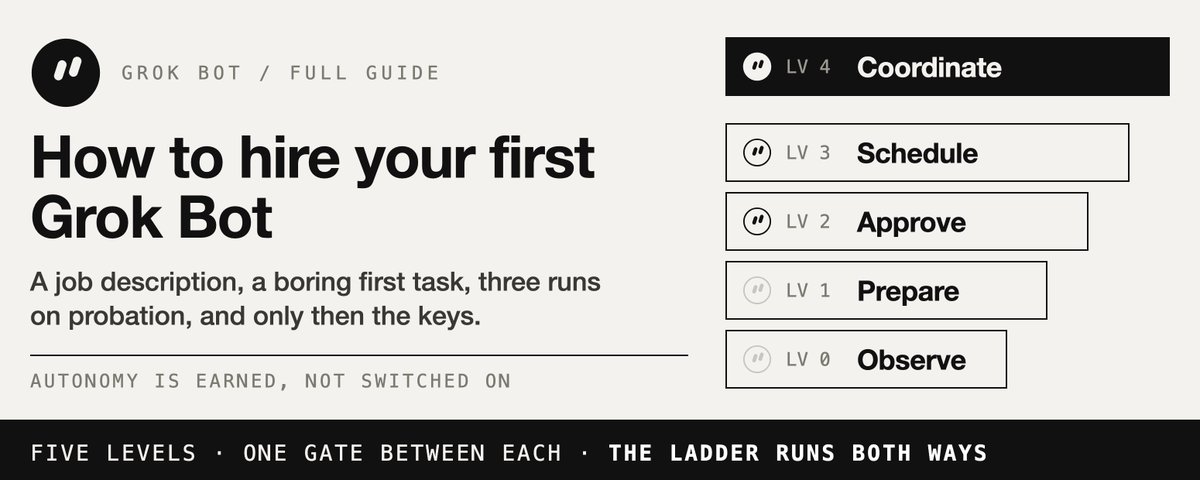
> 5 fields: owns, inputs, may, must ask, done when.
> 3 probation runs.
> 5 consecutive clean runs before promotion.
Start with the recurring job you already know how to judge. Make it produce something you can check. Then give the next specialist a job.
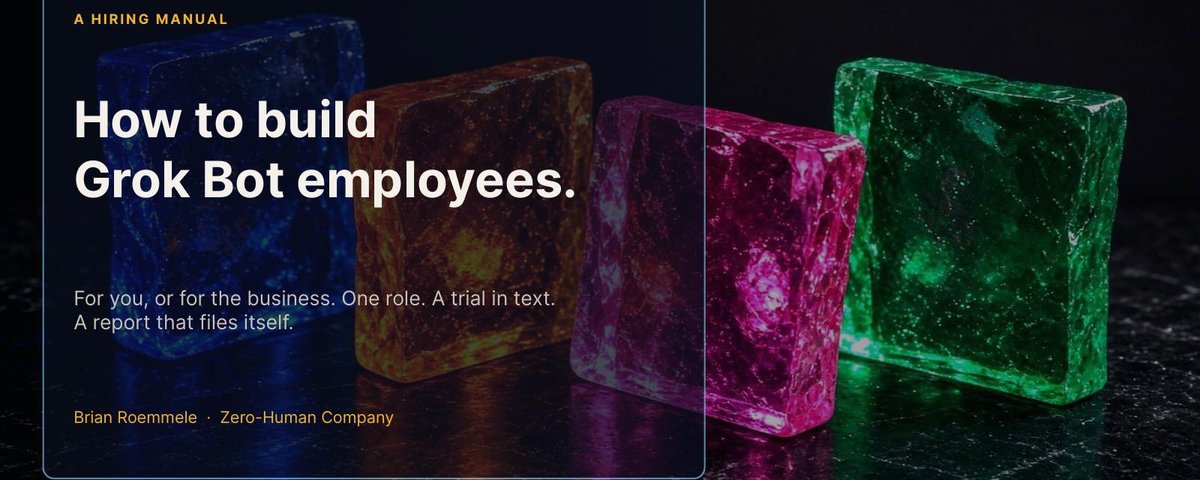
CLAUDE CODE GOT A MEMORY SYSTEM COSTS $.0018
The trick is not stuffing more history into the context window.
Claude Mod catches the end of every turn.
Then a tiny classifier asks one question:
> Is this a lasting preference or a one-off task?
Example from the guide:
In this repo, always prefix git branch names with sx/.
→ Jev score: 0.95
→ save to .claude/jev-memory.md
Build me a Tetris game from scratch.
→ Jev score: 0.03
→ skip it
The numbers are the part that makes this interesting:
> 87 checks cost $0.0018
> $1 of free credits is reported as roughly 55,000 Jev calls
> the check runs after the turn, so Claude does not wait for it
> only a few saved lines enter the next session
The architecture is tiny:
Claude finishes → Mod catches the event → Jev classifies → code applies the 0.8 threshold → memory is saved or discarded.
That is a much better memory primitive than dumping every conversation into the next context window.


“Draft 40 emails. Send 0 without me.”
That is a useful first AI employee: the research and writing get done, while the decision to contact someone stays with you.
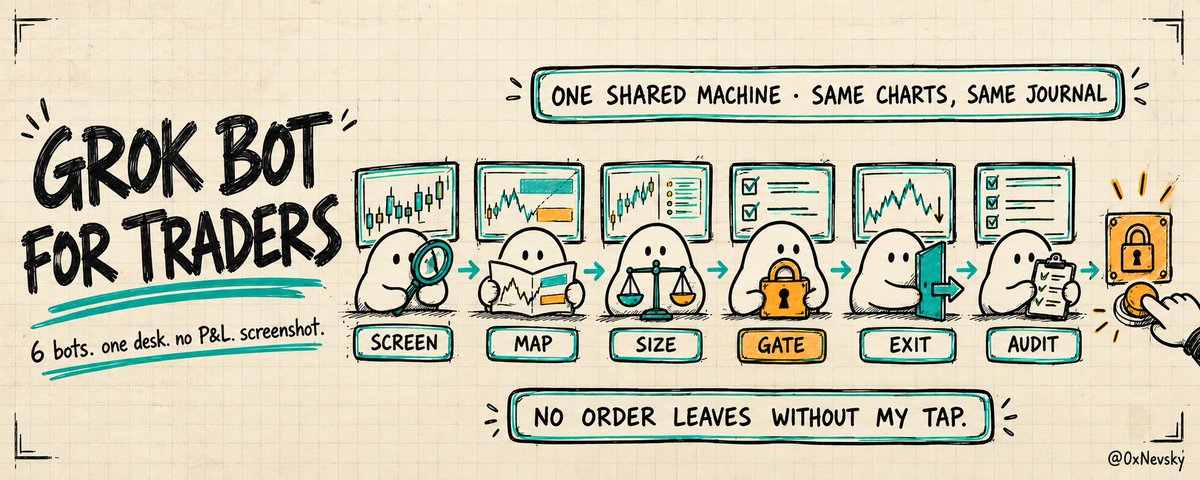
I turned this Grok Bot guide into an 18-task hiring map:
> 6 places to start: competitor scans, support digests, bug reproduction, source checks, prospect research, document comparison.
> 6 things to stage: outreach, customer replies, public posts, record edits, purchases, releases. Prepare the draft or plan; keep the final action separate.
> 6 approval gates: send, publish, buy, delete/overwrite, change access, modify production.
My 1st hire would own 1 boring, recurring job:
“Monitor this competitor list. Every Friday, deliver the 5 most important changes, with a source and date for each. Flag conflicting evidence. Ask before contacting anyone or buying access.”
You can check that output quickly. You can see whether it missed something. You can compare next Friday's report with this Friday's.
The guide proposes 3 probation runs: observe, correct, then let it work. Promotion requires 5 consecutive clean runs, verification, a tested rollback and an approval gate that actually stopped an action.
One detail worth keeping: those permissions need real controls. A sentence saying “don't send” is not an access restriction.
Pick 1 row. Give it 1 recurring job.
Earn back time before adding the second Bot.

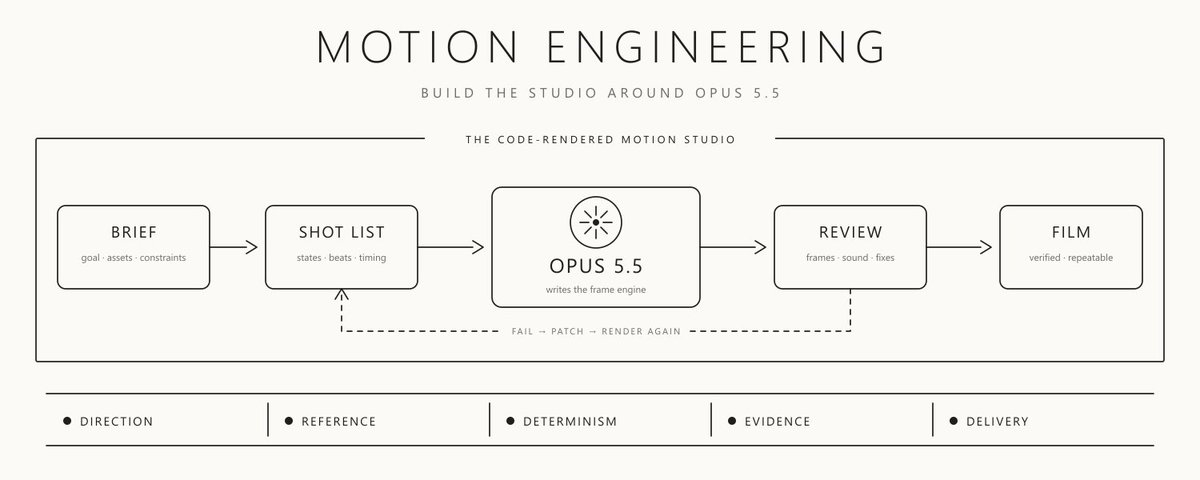
500 FRAMES. 1 FIX. 0 GENERATIVE REROLLS.
I built a 25-second, 20 fps motion test for this quote. With `titleAt = 0.4`, the headline collides with the moving object.
Move it to `1.8`, render the same frame function again, and the opening has room to breathe.
The attached clip shows the source line and both outputs.
> 25s × 20 fps = 500 reproducible frames
> 1 timing constant changed
> 6 sampled frames expose the mistake before export
That's the mechanism in this Opus 5.5 Article worth stealing:
> give the coding agent real assets
> shot list and a seekable frame(t)
> inspect key frames
> change the source
>rerender.
You keep the composition and make a local fix instead of hoping a new video-generation prompt recreates everything.
Code-made motion works especially well for UI, typography and product explainers.