
@bentudesign
Account based inUnited States!
About this account
- Account based in
- United States
- Connected via
- Hong Kong App Store
X says this location may be affected by a proxy or VPN.
Account-level information from X, not a live location or the device used for a specific post.
Local is Global, Creation Knows No Boundaries Curiosity · Listening · Practice
china
Joined August 2014
- Tweets81
- Following28
- Followers39
- Likes35






Designers Must Move Upstream
Designers should not enter only after materials are chosen. Circular design calls for collaboration across waste sourcing, R&D, manufacturing and market application.
#DesignLeadership #CircularEconomy #SustainableDesign #BENTUDesign
Beyond Green Labels
Sustainability is not a label. It means facing cost, performance and manufacturing constraints—and validating materials through real applications rather than visual claims.
#SustainableInnovation #CircularEconomy #MaterialPerformance #Design#BENTUDesign
Build Pathways Others Can Use
The goal is not more temporary exhibition pieces. It is repeatable material pathways that manufacturers and designers can adapt, test and use. Circularity grows through shared practice.
#CircularEconomy #MaterialInnovation #BENTUDesign


A Sample Is Not a Solution
An impressive laboratory sample is only the beginning. Industrial production demands consistency, controllability and repeatable results.
#MaterialResearch #IndustrialDesign #MaterialInnovation #CircularEconomy #BENTUDesign
The Market Has Its Own Barriers
Recycled materials face more than technical challenges. R&D, sorting and modification cost time and resources, while market expectations can undervalue their work.
#SustainableBusiness #CircularEconomy #MaterialInnovation #IndustrialDesign #BENTU
Validate in Real Spaces
The real test happens beyond the exhibition. Residential and public-space projects help evaluate how recycled materials perform under actual application requirements.
#BuiltEnvironment #SustainableArchitecture #CircularMaterials #MaterialInnovation


Start with the Waste
At BENTU Design, we see the waste before we design. Material properties—not a preset form—guide the process.
#MaterialFirst #SustainableDesign #CircularEconomy #MaterialInnovation #BENTUDesign
Correct What Matters
Our defect-grading approach separates technical risks from material character. Structural and safety issues require correction; natural textures can become part of the design language.
#MaterialEngineering #SustainableDesign #CircularMaterials #BENTUDesign
Show the Transformation
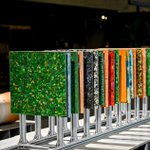
At Sustainable China, BENTU Design presented raw materials, test pieces and finished works together. The transformation matters as much as the final object.
#SustainableChina #DesignExhibition #MaterialResearch #CircularDesign #BENTUDesign


Building China’s Own Sustainable Path
Sustainability cannot be separated from local realities.
Every region has its own materials, industries, and challenges.
At BENTU Design, we believe sustainable design is not about copying existing models.


Open Material Infrastructure
A sustainable future cannot be built through isolated projects.
It requires shared knowledge.
Over the years, BENTU Design has explored material research, manufacturing processes, engineering data, and lessons from practice.


When composition, structure, and performance become readable information, matter can be understood and reorganized.
we explore:
Waste → Data → Parameters → Digital Fabrication → New Matter → Circular Applications
The future designer will not only design objects.


The Second Mine: Rediscovering Existing Resources
China’s manufacturing ecosystem has created another material landscape:
Industrial residues.
Urban waste.
Existing material stocks.


