

Warfare, past and present. Read 'Saladin the Strategist': https://xitter.cf/t.co/KT9cGzHRIj More writing: https://xitter.cf/t.co/47yApgaler
Joined October 2020
- Tweets7.2K
- Following196
- Followers24K
- Likes9.9K






Pinned Tweet
The capture of Chattanooga was the Union’s most important gain of 1863. Though overshadowed by Gettysburg and Vicksburg, and marred by a subsequent bloody defeat, it was a major strategic victory won through brilliant operational maneuver.
OTD the Chickamauga Campaign began.🧵


New Dispatch
Maneuver in the Mountains: Opening Moves of the Chickamauga Campaign
dispatch.bazaarofwar.com/p/m…

The Bazaar of War retweeted
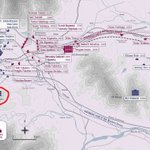
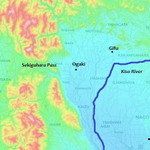
Trafalgar is not the only significant milhist anniversary today: OTD in 1600 was Sekigahara, the largest battle on mainland Japan that inaugurated the long peace of the Edo Period.

New Dispatch: A Field Tour of Sekigahara, based on a recent trip to the battlefield.
dispatch.bazaarofwar.com/p/a…

Trafalgar is not the only significant milhist anniversary today: OTD in 1600 was Sekigahara, the largest battle on mainland Japan that inaugurated the long peace of the Edo Period.
New Dispatch: A Field Tour of Sekigahara, based on a recent trip to the battlefield.
dispatch.bazaarofwar.com/p/a…
Meanwhile Ieyasu's triumph cut short these tactical developments as Japan enjoyed a long period of domestic tranquility without serious external threats - leading to the dynamics of military stagnation that Andrade describes so well in the Gunpowder Age.
xitter.cf/bazaarofwar/status/195…


The Bazaar of War retweeted
Imagine wading through water like this for 5 hours on a cold autumn night, knowing you might get spotted by enemy ships or shore posts at any moment, which would mean walking into a death trap.
And after reaching the point, still having the energy to assault the enemy troops.


In the Eighty Years' War, the elite Spanish tercio troops greatly distinguished themselves in wading actions, marching through chest-deep water for miles under the cover of the night, carrying their weapons, to ambush the enemy by complete surprise!
The two most notable of such actions were:
Relief of Goes (1572)
The night crossing to Duiveland/Sint-Philipsland (1575)
Both of these actions were led by Cristóbal de Mondragón, who was a veteran warrior and one of the most experienced and long-serving Spanish commanders in the Army of Flanders.
This was a man who performed many great deeds of arms!
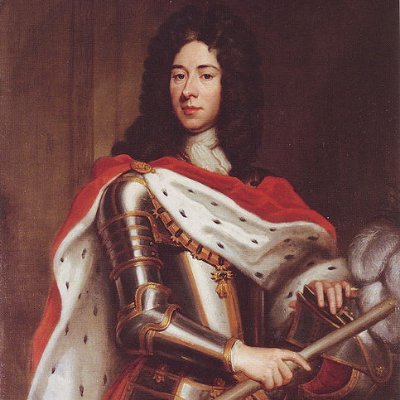
Born in 1514, Cristóbal de Mondragón was a veteran of the Battle of Mühlberg (1547) where he served Emperor Charles V fighting German Protestant forces. Before this battle, Protestant forces had destroyed bridges over the Elbe, and Mondragón was part of a small group of Spanish soldiers who swam over river under fire with swords in their mouths, seizing the enemy boats and allowing the Catholic Imperial army to advance.
It is no doubt that this brave action inspired and emboldened him to lead his men to similar deeds in the Eighty Years' War in the Low Countries.
Faced with Dutch rebels in this hostile land, Mondragón realized the importance of wading actions, since water represented the key obstacle in this war, with shallow channels and deliberately flooded polders. Mondragón understood quickly that water was not just a barrier but also a potential route for a surprise attack!
Wide, shallow waters that were impassable at high tide could become walkable mudflats at low tide. The wading actions he and his tercios performed were deliberate night crossings at low tide, where in some cases, the soldiers would have to march several miles through chest-deep water.
The story of relief of Goes is particularly astonishing. In autumn of 1572 a large Anglo-Dutch force was besieging a fortified town of Goes. In order to save this fortress and ambush the enemy by complete surprise, Cristóbal de Mondragón led roughly 3,000 tercios across the Scheldt estuary at low tide by night.
These tercios walked around 15 km (9-10 miles) overnight with water often up to their chest or neck, having to hold powder bags and weapons above their heads!
In this manner, they were able to reach Goes and forced the withdrawal of the Anglo-Dutch troops.
Such wading actions required immense bravery, physical and mental toughness, and discipline from the troops. These soldiers marched for hours in cold water, weighed down by equipment, and under constant threat of drowning or being discovered and ambushed by the enemy.
Experienced local guides were used and success depended on precise tidal timing. Any slight miscalculation could turn such military action into a death trap.
To illustrate what a brave man Cristóbal de Mondragón was, despite being at least 58 years old during the Relief of Goes in 1572, he went into the water first and personally led his men to perform this daring night attack!
At the night crossing to Duiveland/Sint-Philipsland (1575) where he was three years older, he also persisted to lead the troops. During this particular wading action, Spanish tercios were experiencing losses as the Dutch were firing on them, but they still managed to march across, with Cristóbal de Mondragón rallying his men to push forward.


The Bazaar of War retweeted

This is such a fantastic essay on attrition/maneuver and decision.
The breakdown of the forms of attrition and how they translate into decision at all levels of war succinctly described and issue military theorists have trapped with for decades.
New Dispatch, on the paradox of attritional vs. decisive victories.
dispatch.bazaarofwar.com/p/t…

The Bazaar of War retweeted
New Dispatch, on the paradox of attritional vs. decisive victories.
dispatch.bazaarofwar.com/p/t…
New Dispatch, on the paradox of attritional vs. decisive victories.
dispatch.bazaarofwar.com/p/t…
The Bazaar of War retweeted
As the countryside west of Shanghai turned into a WWI-style quagmire of artillery barrages, failed assaults on machine gun nests, and flooded trenches, fighting broke out in northern China between the warlord factions of Zhili and Fengtian OTD in 1924.


Basically the same thing that happened with Venice 400 years earlier. It was a short leap from patricians acquiring country houses on the mainland to adopting a policy of landward expansion that flew in the face of centuries of Venetian grand strategy.

Britain was actually -initially- quite selective in which colonies it went for - most of its empire clustered around straits, capes, and river mouths.
Its African policy - in which it eventually did engage in a giant land grab - was a case of mission creep stemming from its desire to control - of all things - Egypt and the Red Sea.
Book to read is Alice Denny, Ronald Robinson and John Gallagher, -Africa And The Victorians-. It’s actually a cautionary tale of how a sea hegemon can wash up on land.
On which: xitter.cf/bazaarofwar/status/178…
