

Tweets are only for Information | Building Investing Community: https://xitter.cf/t.co/DsfPf9qeWP
Surat, Gujarat
Joined March 2020
- Tweets4.4K
- Following169
- Followers19.1K
- Likes983




Pinned Tweet
The best investment opportunities don't always look like great companies.
Sometimes, they look like struggling businesses where something important is changing.
Most investors notice only after the numbers look perfect.
How do you spot change earlier?
1 Nov (Sunday), 11.30 AM
Book your Seat 👇

2
6
3,518
You did the research. The business is performing well. The earnings are growing.
Yet, the stock keeps falling.
What's going wrong?
Sometimes, the problem isn't the company. It's the broader market environment you're investing in.
And that's something we often overlook.
We spend countless hours understanding businesses, analysing financials and studying valuations.
But how much time do we spend understanding the market itself?
Are most stocks participating in the rally, or are just a handful driving the indices higher?
Are market conditions quietly deteriorating even as the Nifty looks strong?
Or is a recovery already taking shape while investors are still fearful?
These are important questions. And fortunately, we don't have to rely entirely on opinions to answer them.
This Sunday, we're hosting a webinar on:
📊 Mastering Market Cycles
We'll explore:
✅ Why markets move through different cycles and why recognising them matters.
✅ How to use market breadth, price trends and valuations to objectively assess market conditions.
✅ What these indicators revealed during previous bull markets, corrections and recoveries.
✅ And most importantly, where does the Indian stock market stand TODAY?
Our goal isn't to predict the next crash or identify the exact market bottom.
It's to build a repeatable, data-driven framework that helps us recognise when to be aggressive, when to be selective and when to exercise caution.
Because knowing what to buy matters.
But understanding the market environment you're buying into matters too.
📅 Sunday, 29 November 2026
⏰ 11:30 AM IST
🔗 Register here:
payments.cashfree.com/forms?…
🤖 Made with AI

1
2
1,392
A company with a net fixed asset base of just ~₹557 Cr is planning a massive ₹816 Cr capex over FY27–FY30!
That's ~1.5x its existing fixed asset base.
The company? Vadilal Industries. 🍦
An important nuance: Not all this capex is creating incremental capacity. A substantial portion is directed towards replacing existing infrastructure, automation and modernisation.
What's interesting is that such a significant investment plan, which could materially change the company's capacity, debt profile and future cash flows, is detailed in a credit rating report.
No recent earnings concall explaining the rationale.
And that's the learning here.
Sometimes, the most valuable information about a company isn't found in its investor presentations or earnings calls.
It's buried in credit rating rationales, where companies explain their capex plans, funding arrangements and execution risks.
A reminder to read beyond concalls & IPs.
Source: India Ratings.

ALT https://www.indiaratings.co.in/pressrelease/85885
2
63
4,461
An interesting lesson from Kaynes Technology's Q2 FY27 results.
Following the appointment of Walker Chandiok (Grant Thornton-linked) as its new auditor, Kaynes has undertaken extensive restatements of its historical financial statements.
Some notable changes:
• Borrowings: FY26 reported debt revised upwards by ~₹519 Cr (~59%), from ₹875 Cr to ₹1,394 Cr, including reclassification of bill discounting and supplier financing arrangements.
• Revenue recognition: Certain sales were previously recognised before control of goods had transferred to customers.
• Inventory & receivables: Corrections to inventory valuation, slow-moving inventory provisions and expected credit losses.
• Other adjustments: Changes in depreciation, acquisition accounting, goodwill, expenses and other classifications.
Interestingly, FY26 consolidated PAT was revised upwards by ~₹28 Cr (~7.6%), from ₹364 Cr to ₹392 Cr!
Good to see Kaynes cleaning up its books and bringing greater transparency.
But there is a much bigger investing lesson here.
The underlying business did not change overnight. Yet its reported debt, profitability and balance sheet changed materially.
And think about it. We value businesses using these very numbers -> earnings, margins, debt, return ratios, cash flows.
If the accounting underlying those numbers is fragile, how reliable are the valuations we build on top of them?
Perhaps understanding the quality of earnings is just as important as forecasting their growth.
1
15
3,134
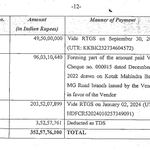
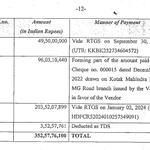
Two listed companies sold land to a private entity for ₹163 Cr.
Just 3 months later, that private entity sold nearly the same land for ₹353 Cr!
A difference of almost ₹190 Cr in just 3 months.
But that's not even the most surprising part.
The real story began over a year earlier. 🧵
Here are the questions I would want answered:
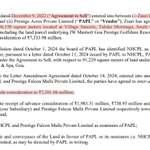
Were the Zuari boards aware of the 2022 Prestige agreement?
How was the ₹3,700/sq. metre price determined?
What value did Zuari Infinity actually add?
Could shareholders have received a better price?
The documents don't prove misconduct.
But they certainly warrant answers.
That's why reading beyond the headline numbers matters.
What if your next big investment opportunity is hiding in a company your stock screener would reject today? 👀
We studied an ordinary Indian manufacturing company whose annual profits eventually grew almost 15x!
But here's the fascinating part...
The clues were already there, years before the transformation became obvious.
Could you have spotted them? And more importantly, where should you look for similar opportunities today?
In our latest video, we uncover a powerful investing mental model that could change the way you discover stocks.
🎥 Watch here: youtu.be/P4bFoScweF0

5
2,260
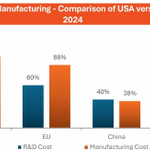
India has a significant cost advantage over global peers in CRAMS.
Compared to the US, R&D costs are just 25% and manufacturing costs 45%.
A structural advantage that could position India as a global R&D and manufacturing hub.

ALT Source: Bluejet healthcare presentation
1
9
1,828
