
Barney Pell is an entrepreneur and VC. Barney Pell's Syndicate, Ecoation, Moon Express, Singularity U. Prev: Bing, Powerset, Mayfield, NASA, AI games pioneer.
San Francisco
Joined November 2008
- Tweets17.2K
- Following3K
- Followers6.5K
- Likes55.3K






Pinned Tweet
My talk at Train AI 2017: Crucial Questions for Success of AI Applications. Video: goo.gl/iFdbdS, Slides: goo.gl/VNDMSE
Wow this is so exciting! A truly new window into the neural correlates of consciousness, and it makes so much more sense than prior theories.

1/ We discovered something totally unexpected about the neural structure of consciousness that overturns decades of thinking on its biological basis and brings us significantly closer to the recipe for generating conscious awareness.
New preprint: biorxiv.org/content/10.64898… (led by @HesseJanis, with @FrankLanfranchi, @_conor_mcgrory, @Yuelin_Shi, and @EngelTatiana)

Barney Pell retweeted

This paper is one of the coolest angles on Post-Training you will see.
Researchers have spent a lot of time thinking about why language models struggle so much with genuine spatial and geometric common sense.
The obvious culprit is that human web text is mostly cheap conversational shortcuts; it rarely forces a model to ground itself in strict, multi-dimensional physics.
The authors asked a really clever question here: what if you use solved protein structures as a reasoning teacher?
A single folded protein has thousands of mathematically rigid, verifiable topological facts baked in.
They built a framework called Fold2Reason that trains the model on both structural Q&A and continuous 3D coordinate decoding.
Naturally, it folds proteins way better than base Qwen3.5-9B, but what grabbed me was the transfer.
When they tested it out-of-domain on 10 standard reasoning benchmarks, accuracy jumped across the board on spatial visualization, graph puzzles, scientific logic & even BBH.
My immediate cynical reaction was "surely this is just generic post-training regularization noise," but their controls are what sold me.
When they ran the same setup on random, synthetic, or shuffled structures, the gains completely evaporated.
The model is actually feeding off the coherent physical logic of real biology.
This makes a strong case for looking beyond human language when we want to teach models how to think systematically.
Read the full paper here: arxiv.org/pdf/2609.38879

Barney Pell retweeted

By my count, China has cleared 160 novel drugs for first-in-human clinical trials this year — so far.
One of them is a potential treatment for sepsis, a condition associated with ~20% of all deaths globally.
The drug, made by Pyrotech Therapeutics, is the first to enter the clinic that blocks formation of the gasdermin D pore (that triggers pyroptosis - inflammatory cell death - in sepsis).
That’s just one of many — we looked at all of them here: breakingground.substack.com/…

Barney Pell retweeted
Here's a cool new drug that just dosed its first patient in China.
It targets the cancer antigen, B7-H3, and 'desialylates' - removes surface sialic acids that suppress immune responses. In experiments, this activates tumor killing, mainly by NK cells and macrophages.
The trial is in China, run by Shanghai Henlius - the tech itself originated from the US biotech, Palleon Pharma.
This desialylation mechanism is independent of PD1: in other words, a potentially new cancer immunotherapy.


By my count, China has cleared 160 novel drugs for first-in-human clinical trials this year — so far.
One of them is a potential treatment for sepsis, a condition associated with ~20% of all deaths globally.
The drug, made by Pyrotech Therapeutics, is the first to enter the clinic that blocks formation of the gasdermin D pore (that triggers pyroptosis - inflammatory cell death - in sepsis).
That’s just one of many — we looked at all of them here: breakingground.substack.com/…
Barney Pell retweeted

Scientists have sequenced the genomes of thousands of species. But for most of them, nobody knows *where the genes are*
Today we're releasing Carbon-A, an open model that finds genes directly in DNA. We used it to create a database of 566 million candidate genes across 22,617 species, from fungi to mammals (that we are sharing as well)
Why bother? A few reasons
1. Elephants rarely get cancer. Part of the explanation turned up in their genes: extra copies of a tumor-suppressor gene humans have only one of. You can't ask that kind of question about a species until someone, or some tool, has found its genes.
2. The first GLP-1 drug was based on a peptide from Gila monster venom. Nobody would have put the Gila monster on a priority list. Same for wild relatives of crops, which carry resistance to drought and disease. Many of these species have never been annotated.
3. Most of what we know about genes comes from about a dozen model species, like mice, flies and yeast. That focus worked remarkably well, but annotation pipelines still lean heavily on comparisons with them, which makes genes unique to other species easy to miss, and those can be the most interesting ones.
Carbon-A belongs to a newer family of tools that read DNA directly. It learned from known genomes, but it doesn't need a close relative to read a new one.
4. Even familiar genomes still have gaps. With our partners at Active Site and UCSD, we found RNA evidence for 239 genes missing from the reference annotations of species as common as cats, chickens, hamsters and a lab plant.
5. AlphaFold can predict the shape of a protein, but only once someone has found the gene that makes it. In a species with no annotated genes, it has nothing to work with.
Some notes on safety:
Carbon-A doesn't design DNA or predict what a gene does. It marks where genes are in DNA. This is one of the reasons we think releasing it openly is the right call.
More annotations also help health research: many species that carry or cause disease are among those covered, and work on controlling the diseases they spread often starts from their genes.
Model and database and more details in Georgia's thread 👇

Today, we're releasing the Carbon Annotation Database and the model behind it, Carbon-A.
We've used this model to discover 566.34 million new gene candidates across 22,617 species, thousands of which have never been studied like this before.
We wet-lab validated a number of these new genes in well-studied species, such as in cats, chicken, and arabidopsis (plant), with our partners at Active Site and @UCSD, with more extensive wet lab results on previously-unstudied genomes coming soon.
Barney Pell retweeted

T-Mobile spent five years trying to get rid of the exact spectrum Elon just called "the last critical piece" of complete phone coverage in America.
This 800 MHz block is Sprint's old Nextel spectrum, the stuff that powered push-to-talk walkie-talkie phones in 2004. The DOJ forced T-Mobile to divest it as a condition of the $26 billion Sprint merger. Dish had first rights at $3.59 billion and walked away because it couldn't raise the money. T-Mobile finally offloaded it to an investment firm called Grain Management last year for $2.9 billion plus a spectrum swap.
Grain's original plan was selling it to utilities for private networks.
Fourteen months later, SpaceX buys the whole portfolio, and shares of the carriers who passed on it fall as much as 8% in a single afternoon.
Here's why it matters so much. Starlink's satellite signal at 2 GHz can reach your phone outdoors, but it dies at the first wall. 800 MHz penetrates buildings. Most phones already have the band built in. So satellites handle the open sky, this low-band layer handles indoors, and suddenly Starlink Mobile covers everywhere a normal carrier does without the tower network.
Stack the moves. $17 billion for EchoStar's 50 MHz of 2 GHz spectrum. FCC approval for 15,000 Gen2 satellites this week. Now the low-band coverage layer.
Verizon, AT&T, and T-Mobile paid $81 billion in a single auction for C-band spectrum in 2021, then spent years and tens of billions more deploying it on towers. SpaceX assembled a nationwide carrier out of a distressed-asset sale, a forced divestiture castoff, and rockets it already owns.
The walkie-talkie spectrum from 2004 ended up being the piece that lets satellites replace cell towers. Nobody who touched it for twenty years saw that coming.

We announced an agreement to acquire a nationwide low-band spectrum license portfolio that will pave the way for @Starlink to become a major mobile carrier in the US.
With this new spectrum and our Gen2 constellation, Starlink Mobile can ensure Americans have access to high-speed mobile broadband no matter where they are → spacex.com/updates#starlink-…

Barney Pell retweeted

Mad cow disease spreads when one misfolded protein forces others to copy its shape. A new Nature study shows tau, the protein behind Alzheimer's, does the same thing, even inside a mouse brain.
Researchers at the MRC Laboratory of Molecular Biology in Cambridge, with collaborators in Japan, tested a central idea in neurodegeneration research: that different diseases are driven by different shapes of the same protein.
Some background first.
Tau is a protein that normally helps stabilize the internal scaffolding of neurons. In more than 20 brain diseases, including Alzheimer's disease and corticobasal degeneration (CBD, a rarer disorder affecting movement and thinking), tau misfolds and clumps into long fibers called filaments.
Using a technique called cryo-EM, which images molecules at near-atomic detail, scientists found that each disease has its own filament shape, or fold. Alzheimer's has one. CBD has another.
Prions, the cause of mad cow disease and Creutzfeldt-Jakob disease, work through templating. One misfolded protein acts as a mold, forcing normal copies of the protein to fold into the same shape. Different shapes are called strains, and each strain produces its own disease pattern.
The open question was whether tau strains do the same thing. Do they keep their shape when they spread? Nobody had shown it.
What the researchers did:
• Extracted tau filaments from the brains of people with Alzheimer's or CBD
• Injected them into the brains of normal, non-engineered mice
• Waited 9 months, then examined the mouse brains and imaged the filaments that formed
What they found:
• The filaments that formed were made of the mouse's own tau, not the injected human tau
• Their structures matched the human seeds. Alzheimer's seeds produced Alzheimer's-type filaments and CBD seeds produced CBD-type filaments
• Pathology spread from the injection site to the cortex and other brain regions
• Alzheimer's seeds caused tau pathology only in neurons
• CBD seeds caused pathology in neurons and in glial cells (support cells), including plaque-like clusters in astrocytes, the same pattern seen in human CBD
This matters because earlier mouse models, including genetically engineered ones, often produced filaments that didn't match human disease. Here, the shape was preserved from seed to copy, which is the defining feature of a prion strain.
There are limits. The seeds were injected directly into the brain, which is not how disease begins in people. The study shows tau can template its shape. It does not show that Alzheimer's spreads from person to person.
But it gives researchers a clean model for asking how a specific tau shape drives a specific disease, and for testing treatments aimed at stopping the copying.
For longevity, the implications are conceptual, since the study didn't test any intervention. If tau pathology starts from a small seed and amplifies by templating, the early years matter most. A few practical takeaways:
• Early detection: Blood biomarkers like p-tau217 and tau imaging that catch the process before it spreads become more valuable, especially if you have a family history
• Training: Regular aerobic and resistance exercise is linked to lower dementia risk in human cohorts, and cardiorespiratory fitness is one of the stronger predictors. This study doesn't test exercise, but if the goal is to slow how fast seeds get amplified, keeping your brain's vascular and metabolic environment healthy is a reasonable place to start
• Sleep: Poor sleep is associated with more tau accumulation in humans, so protecting sleep is part of the same strategy
• Cellular cleanup: Systems like autophagy may matter most for clearing seeds early, rather than reversing pathology once it's established
The exercise, sleep, and autophagy points are my inference, not something the study tested.
The seed-and-amplify model suggests brain aging is decided slowly and early. The fitness, sleep, and metabolic health you build in your 30s, 40s, and 50s shapes how much tau pathology your brain has to deal with in your 70s and 80s.

Barney Pell retweeted

Out today: a new DeepMind Institute essay from James Manyika and @AlexOlegImas that explores how scientists are using AI models to accelerate science. These findings are based on usage data from 15M Gemini interactions, 2,600 specialised models, and 600+ surveyed researchers.

New essay for the @GoogleDeepMind Institute with James Manyika on AI x Science, "Bending the Curve of Discovery".
While accelerating existing scientific practices is certainly useful, the real promise of AI is its potential to act as an invention of a method of invention (IMI) a la Griliches--e.g., the microscope or statistical inference--which would unlock questions and whole modes of discovery that were previously beyond human reach.
Today, LLMs and specialized models like AlphaFold act as economic complements. LLMs handle analysis, coding, and writing, while specialized tools handle domain-specific predictions. Most handoffs between them run through the scientist.
What may the future of science look like? LLMs orchestrating those handoffs automatically--prompting specialized models, auditing outputs, and looping until either the question is answered or a non-automated stage is reached (e.g., wet lab testing). The scientist's role shifts from running each step to designing this loop. We saw a glimpse of this workflow with Anthropic’s enzyme discovery a few weeks ago, and we're seeing this in our own work too.
This raises foundational epistemic questions:
1. What will scientific understanding look like when discoveries are made by black-box models whose output is increasingly difficult to interpret?
2. How do we extract underlying mechanisms, not just outputs, as science becomes more automated? What will theory look like?
3. If AI automates the writing and junior lab work, how do we train the next generation of scientists to push the frontier?
4. What will motivate scientists in this epistemic reality?
There's an economics angle too. Hypothesis generation gets cheap, so bottlenecks move downstream to verification and to choosing which questions are worth asking. Realizing AI’s full potential will take investment in infrastructure and institutional reform--making this as much an organizational challenge as a technical one
We don't have the answers yet, and I'd love to hear what others think.
Paper here: bit.ly/ai-in-science

Barney Pell retweeted

A swarm of AI agents just found a 27-year-old invention for next-generation computer memory in a major landmark discovery.
This is the story of old research will produce new discoveries.
readmultiplex.com/2026/10/08…

Barney Pell retweeted

Working with AI models, I've arrived at what I consider the most significant pure-theory breakthrough of my research (in theoretical neuroscience) so far:
arxiv.org/abs/2610.12426
Chaotic systems show what is colloquially called the butterfly effect, namely, a tiny nudge to the initial state grows exponentially in time. How fast the nudge grows depends on its direction. Each direction has its own growth rate, called a Lyapunov exponent, and the full set of rates is the Lyapunov spectrum.
The Lyapunov spectrum is a rich (and diffeomorphism-invariant) characterization of chaos, telling us how many directions are chaotic, how many dimensions the attractor occupies, and how fast the dynamics generate information.
In 1988, Sompolinsky, Crisanti, and Sommers (Physical Review Letters) introduced a nonlinear recurrent-network model of N randomly coupled neurons that becomes chaotic when the coupling strength exceeds a critical value. This network has since become a cornerstone of theoretical neuroscience, both as a model of the spontaneous activity of cortex and as the starting point for training recurrent networks on tasks. I have worked on this model for much of my research.
In the same paper, the authors obtained the largest Lyapunov exponent from the ground-state energy of a Schrödinger equation and named the full Lyapunov spectrum as an open problem. In 2023, beautiful work by Engelken et al. (Physical Review Research) computed the full Lyapunov spectrum numerically. However, an analytical calculation of the full Lyapunov spectrum has remained out of reach.
Four decades after the problem was posed, this paper derives the full Lyapunov spectrum at large N from a simple self-consistent single-site problem.
This calculation has three steps.
First, we lower every exponent by a constant s, which turns the question "how many exponents lie below s?" into the question "how many tangent directions decay?" We show that, if we drive the shifted tangent dynamics with a source and take the minimum-norm solution, the one-step response is the projector onto the decaying directions. Thus, the trace of this projector counts the decaying directions. This step is exact at finite N.
Second, to work with the minimum-norm solution, we cast it as the vanishing-regularization limit of the solution of a least-squares problem. This regularized solution in turn solves a dynamical system with one field running forward in time and another running backward.
Third, we apply the cavity method, that is, we add one neuron to the network, along with its forward and backward fields. The effect of the rest of the network on this neuron then reduces to the classical dynamical mean-field description of the activity of this neuron, plus two kernels that couple the forward and backward fields of this neuron to each other across time. Thus, the full Lyapunov spectrum follows from a single-site problem, which boils down to the self-consistent calculation of these kernels.
The resulting theory agrees closely with simulations for the Lyapunov spectrum, the attractor dimension, and the entropy rate, and recovers known results, including the Schrödinger equation of Sompolinsky, Crisanti, and Sommers for the largest Lyapunov exponent.
As a byproduct, the theory establishes analytically that the chaos is extensive, i.e., the attractor dimension and the entropy rate grow in proportion to N.
I had assumed that this problem was analytically intractable. After working independently for 100 minutes with Max thinking, GPT-6 Astra produced the initial derivation, yielding a self-consistent problem whose solution matched simulations of large networks.
I found this derivation intriguing, albeit complicated and somewhat mysterious (see AI Methodology in the paper). After investigating the structure of the proposed solution more deeply, together with AI models, I arrived at a physically transparent derivation.
I am excited to apply this approach to other network models, trained networks, and, more broadly, to high-dimensional systems to which Lyapunov analysis is relevant, including AI models themselves. Of course, as with any paper, I took care to write up the paper clearly.
A few broader thoughts...
Neural circuits are high-dimensional nonlinear dynamical systems, and such systems are notoriously hard to understand. I would frame the central problem of theoretical neuroscience as understanding how such systems function, process information, learn, and generate behavior.
Many people in the theoretical sciences are anxious about AI. However, in my field at least, we are nowhere close to fully understanding the high-dimensional computations unfolding in our brains. With AI, we could reach a level of understanding that so far we have only gestured toward. So, I am excited.

Barney Pell retweeted

Samsung open-sourced a method that shrinks 13B parameter LLM into less than 1 GB.
It's called "LittleBit"
Instead of storing AI weights as standard numbers, they used latent factorization to crush them down to extreme sub-1-bit levels.
In some configurations, they hit 0.1 bits per weight.
But here is where the architecture gets crazy.
When you compress an AI this much, you can stop doing math.
Instead of forcing the hardware to do heavy floating-point multiplication, LittleBit replaces the core computation with a bitwise XOR operation.
It swaps complex matrix math for basic sign flips.
The results rewrite the rules of model deployment:
• Unlocks a massive 11.6x inference speedup relative to standard FP16 models.
• Radically reduces memory footprint and loading bandwidth.
• Maintains robustness in extreme sub-0.5 bit regimes where previous compression methods catastrophically fail.
This is not a clever optimization.
It is the blueprint for running massive, state-of-the-art AI locally on cheap, resource-constrained devices.

Barney Pell retweeted

🚨 GOOGLE JUST GAVE NOTEBOOKLM A MAJOR UPGRADE.
And it’s way more than a simple rebrand.
Gemini Notebook is being integrated deeper into Google’s ecosystem, bringing a secure cloud computer and more powerful AI workflows.
Yet most people will still use it as nothing more than a PDF summarizer.
Here are 8 powerful prompts to turn it into a serious AI research assistant. 🧵

Barney Pell retweeted

JUST IN: SpaceX’s Transporter-18 mission quietly put several of the core technologies needed for orbital AI data centers into space at the same time.
The mission carried three separate experiments targeting the biggest bottlenecks:
1) $GOOGL Google’s Project Suncatcher is testing four custom TPUs in orbit to see how AI hardware handles radiation, heat and spaceflight.
2) Star Catcher’s Protostar (pictured) will attempt to wirelessly beam power between two free-flying spacecraft, potentially allowing future satellites to buy electricity in orbit instead of carrying all of their own generation capacity.
3) Cowboy Space’s Reason-1 will attempt to beam solar energy from orbit back to Earth using an infrared laser, technology the company also plans to use for high-speed links between future orbital data centers.
All three launched yesterday aboard $SPCX SpaceX’s Transporter-18 rideshare.
The orbital data center race is accelerating as companies test the power and connectivity needed to make large-scale computing in space viable.

Barney Pell retweeted

WOW! Gemini 4 Argon just reached #1 on Blueprint-Bench 2, a benchmark that measures AI’s understanding of the physical 3D world. It is now almost at human-level performance, which is absolutely astonishing considering that just a year ago, AI models were scoring close to zero!
In fact, I believe this is one of the most critically important benchmarks for advancing to superintelligence. Understanding the physical 3D world is foundational to interacting with it, making spatial intelligence essential for both robotics AND biology!
Most people probably don’t immediately recognize the implications for biology. Yet biological systems operate in 3D space and evolve over time, making them fundamentally 4D, with temporal dimension.
Everything in biology depends on spatial organization and dynamic interactions: proteins folding and interacting, cells communicating, immune cells navigating complex tissues, and entire organs functioning as highly coordinated, dynamic systems.
Imagine AI models with advanced spatial intelligence combined with a deep understanding of biological mechanisms. Such systems could dramatically accelerate the development of virtual cells, patient digital twins, autonomous scientific laboratories, and ultimately, simulations of entire human organisms. This brings us closer to the ultimate dream: curing all diseases and reversing aging!
What makes this so exciting is that AI is advancing toward superintelligence with the potential to understand, model, simulate, and eventually manipulate both the physical and biological worlds.
This may be one of the final bosses on the road to scientific superintelligence: AI that understands the world deeply enough to make groundbreaking scientific discoveries, design entirely new biological systems, and transform our ability to engineer life itself!

Is Google so back?
Their new Gemini 4 Argon understands the physical 3D world better than any other AI.
It ranks #1 on Blueprint-Bench 2, a benchmark where AI agents draw floorplans from photographs of apartment interiors.

Barney Pell retweeted
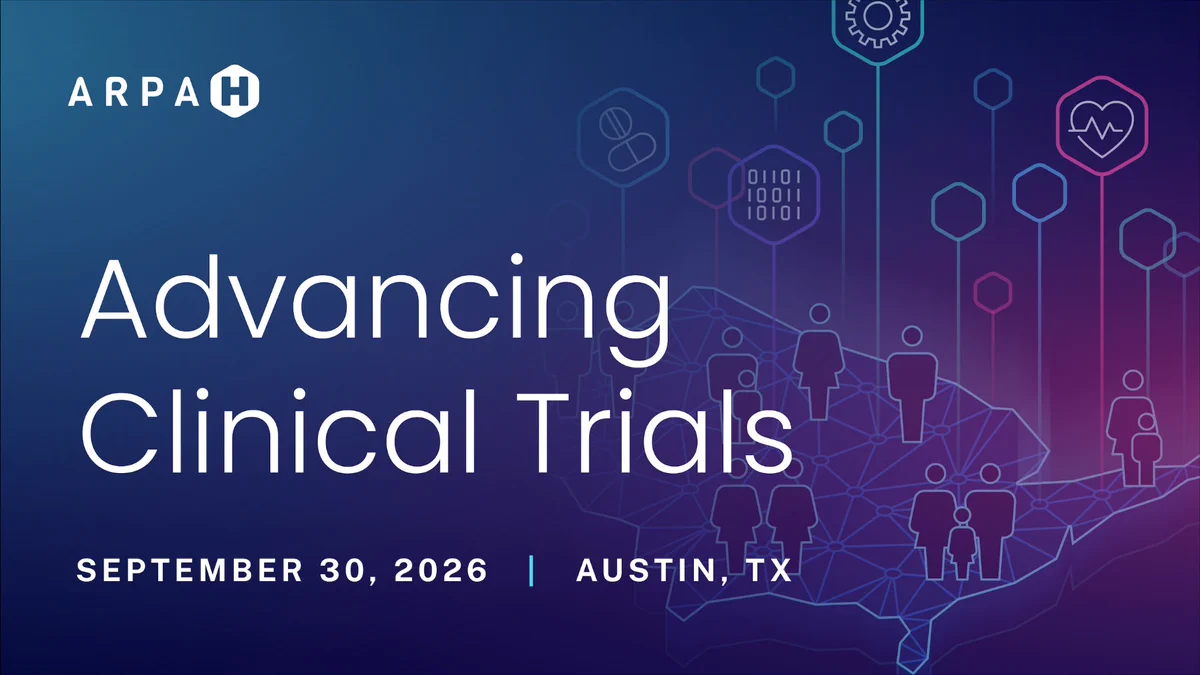
How ARPA-H is planning to cut clinical trial times from 10+ years to <4 years:
1. 'Phaseless' clinical trials - move towards replacing phase 1 → 2 → 3 with adaptive trials that can cut failed drugs (or advance good ones) faster.
2. Simulate trial outcomes before starting, with digital twins - to reduce reliance on large control groups.
3. AI agents for trial operations.
4. Turn ordinary hospitals into reusable clinical trial sites, and gets AIs to flag eligible trials to doctors and patients.


ARPA-H Advancing Clinical Trials Announcement xitter.cf/i/broadcasts/1vKpPNOwV…
Barney Pell retweeted

I literally can't think of a better risk/reward bet right now than building a ChatGPT plugin and getting in front of their 1.2 billion weekly users.
As of yesterday, ChatGPT recommends plugins in the middle of conversations. Millions of questions get asked every day with no plugin to recommend. Each one is an empty slot.
Facebook apps in 2007. iPhone apps in 2008. TikTok in 2019. Every big platform has a few months where distribution is free, and most people miss it.
I saw this firsthand when I lived in SF building venture backed companies. They are sacred times!
If I were starting this week:
1. Find a tool or workflow people already Google for or do by hand every week (PDF to Excel, invoice generator, weekly client reports)
2. Build it as a ChatGPT plugin
3. Write the description using the exact phrases people type into ChatGPT
4. Ship 5 of them and see which ones get picked up
5. Double down on the one with the most traction
In 12 months these slots will be crowded but right now they're pretty empty.
Most people will realize ChatGPT plugins were the biggest free distribution channel of 2026 sometime in 2027.


Barney Pell retweeted

Shockingly Simple Self-retrospection Improves Agentic Models Without RL
"Can a language-model agent improve its future actions by training only on explanations of its own experience? We investigate this question by studying Retrospection-Only Fine-Tuning (ROFT), a minimal online procedure designed to isolate the effect of explanation-only training on subsequent behavior. The agent attempts a task, observes available feedback, generates a retrospective explanation, and is fine-tuned with a next-token prediction loss on the explanation tokens alone."
link: arxiv.org/abs/2609.35741

Barney Pell retweeted

To put V3 Starlink significance into context for investors, here is a starlink bandwidth estimate based on our conservative launch forecasts out to 2028.
Our base case launch forecast suggests 8 Pbps of bandwidth (8,000 Terabits per second) in orbit by 2028, which only uses 151 Starship launches (1 launch every ~2 days, Elon and SpaceX are targeting 8k+ a year)
8 Pbps is enough bandwidth to more than 10x all of Starlink's bandwidth today, and put Starlink's global 2028 bandwidth supply about equal to ALL of the global internet traffic bandwith demand in 2025.

$SPCX Starship is about to cross a pretty big milestone with FAA approval now in hand for Flight 14 on Monday.
Flight 14 will carry 26 V3 Starlink satellites making it Starship’s first revenue generating mission.
I have been predicting this for a while. Great to see this controller experiment showing the value of AI for education.

Researchers proved AI has deleted every reason universities exist.
Harvard University ran a controlled experiment pitting a custom AI against their own top-tier classrooms.
And the results are going to collapse the higher education bubble.
They took 194 undergraduates and split them up.
One group learned physics in one of Harvard’s best hands-on, active-learning physical classrooms. Group work. Instructor support. The premium university experience.
The other group went home and learned the exact same material with an AI tutor.
The AI didn't just win. It embarrassed the institution.
Students using the AI learned more than twice as much as the students in the elite Harvard classroom.
They scored 30% higher on the final assessment.
And they did it in less time.
Let that sink in.
A piece of software sitting on a laptop outperformed a world-class faculty in one of the most elite learning environments on Earth.
Universities have always justified their exorbitant tuition with two things: access to elite knowledge and the physical classroom experience.
This study just proved both of those moats are gone.
When software can teach you complex physics twice as well as a $60,000-a-year institution, the math of higher education breaks permanently.
The AI didn't just give the students answers. It used strict pedagogical guardrails. It guided. It questioned. It forced the students to do the cognitive work.
It offered perfect, one-to-one tutoring, personalized to the exact moment a student misunderstood a concept.
That level of attention is mathematically impossible to scale in a physical lecture hall.
For a thousand years, the university was the only place to get a premium education.
Now, it’s the bottleneck.
If AI can double your learning speed for a fraction of the cost, what exactly are students taking on decades of debt to pay for?

Barney Pell retweeted

1/10 Can we build a world model of human health?
I'm thrilled to announce my first senior author paper: HealthFlux! Simulating how health evolves over a lifetime to find ways to prevent disease.
doi.org/10.64898/2026.09.19.…


