

Asst. Prof. @TUDelft | Biotechnology and Genomics| @MSCActions Postdoctoral Fellow | PhD @SCELSE_SG | @SG__Symposium
Delft, Nederland
Joined December 2009
- Tweets1.1K
- Following812
- Followers673
- Likes4.4K





Samarpita Roy retweeted

Happy #EngineersDay to all remarkable engineers, the people who build, innovate and provide solutions for a better tomorrow.
Tributes to Sir M. Visvesvaraya, whose engineering genius and nation-building vision continue to inspire.
Samarpita Roy retweeted

Troubleshooting common errors in assemblies of long-read metagenomes nature.com/articles/s41587-0…

Samarpita Roy retweeted

Work life balance is not a modern idea.
It has been part of my approach from the very beginning of my career.
Even as I was building Marico, I rarely stayed in office beyond six in the evening. The evenings were always for myself. Sometimes it was squash or golf, sometimes an hour in the gym, sometimes listening to Indian classical music while walking and often spending time with family.
That did not mean I ignored work. I often carried papers home and spent time on them before dinner. My commute became my office on the move, a time for reading or making calls. Once I left the office, I shifted the context but kept the discipline.
This rhythm helped me sustain energy over decades. Many assume that longer hours lead to greater output. In truth, what matters most is efficiency and focus.
Plan your day well, deligate and empower to good talent and identify what deserves attention and pursue it with intensity.
Samarpita Roy retweeted
Exploring the concept of bacterial memory nature.com/articles/s41564-0…

Samarpita Roy retweeted

One gene can code for proteoforms with:
◼️ different functions
◼️ different sequences
◼️ different regulation
◼️ different cell type expression
Such examples should inform the interpretation of gene deletion experiments seeking to infer "gene functions".

Samarpita Roy retweeted
GTDB release 10: a complete and systematic taxonomy for 715 230 bacterial and 17 245 archaeal genomes academic.oup.com/nar/advance…

Samarpita Roy retweeted
EcoFoldDB: Protein Structure‐Guided Functional Profiling of Ecologically Relevant Microbial Traits at the Metagenome Scale enviromicro-journals.onlinel…

Samarpita Roy retweeted

A friendly reminder that the Central Dogma is NOT "DNA -> RNA -> protein."
All that Francis Crick *actually* said was: “Once information has got into a protein it can’t get out again.”
This negative statement — namely, that some transfers of information seem to be impossible — was the entire synopsis of Crick’s idea.
The DNA -> RNA -> protein idea was popularized by James Watson in his 1965 textbook, "The Molecular Biology of the Gene," as a way of summarizing how protein synthesis takes place. But Watson’s explanation was misleading. And, as we now know, there are many exceptions to that "version" of the Central Dogma (including reverse transcriptase.)
In 1956, Crick was working on a lecture that would bring together what was then known about the “flow of information” between DNA, RNA, and protein in cells. Crick formalized his ideas in what he called the Central Dogma, and his original conception of information flow within cells was both richer and more complex than Watson’s reductive presentation.
Crick was aware of at least four kinds of information transfers, all of which had been observed in biochemical studies by researchers at that time. These were: DNA → DNA (DNA replication), DNA → RNA (called transcription), RNA → protein (called translation) and RNA → RNA (a mechanism by which some viruses copy themselves). To summarize his thinking, Crick sketched out these information flows in a little figure that was never published.
Crick’s diagram also included two types of information flow for which there was no experimental evidence, but which he surmised might be biochemically feasible; namely, DNA → protein and RNA → DNA.
The direct synthesis of proteins using only DNA might be possible, Crick thought, because the sequence of bases in DNA ultimately determines the order of amino acids in a protein chain. If this were true, however, it would mean that RNA was not always involved in protein synthesis, even though every study at that time suggested it was. Crick therefore concluded that this kind of information flow was highly unlikely, though not impossible.
Crick also theorized that RNA → DNA was chemically possible, simply because it was the reverse of transcription and both types of molecules were chemically similar to each other. Still, Crick could not imagine any biological function for this so-called “reverse transcription,” so he portrayed this information flow as a dotted line in his diagram.
The most significant part of Crick’s idea — and the part that Watson ignored in his oversimplification — was that there are three flows of information that cannot occur, due both to lack of experimental evidence and any plausible biochemical mechanisms. These were protein → protein, protein → RNA and, above all, protein → DNA.
(From the Archives) "Francis Crick Was Misunderstood."
Read & subscribe: press.asimov.com/articles/cr…

Samarpita Roy retweeted

Out Now! Carotenoids bind rhodopsins and act as photocycle-accelerating pigments in marine Bacteroidota bit.ly/4nivorK #Carotenoids #Rhodopsins #MarineBacteria

Samarpita Roy retweeted

Everybody able to get the Prime Minister of India on the phone but the President of the United States.

A good conversation with the Prime Minister of India @narendramodi.
We discussed the need for a just and lasting solution to Russia’s war in Ukraine. Ending the war is in all our interests, it’s a shared goal. India plays an important role. It is heard and respected in the South, West and East.
We also agreed on the need to further deepen the relations between India and the EU. Our cooperation grows and continues.
Samarpita Roy retweeted
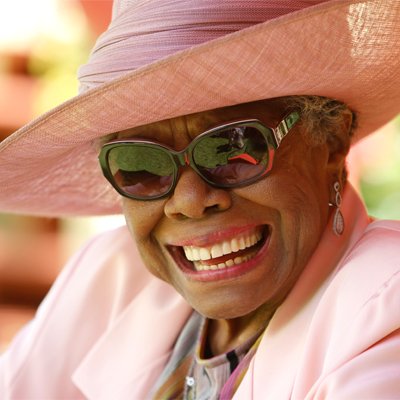
“I am grateful to be a woman.”
Here’s to courage, equality, and phenomenal women. 💪🏽 #WomensEqualityDay



Samarpita Roy retweeted
Co-substrate utilisation in “Candidatus Accumulibacter” enhances metabolic fittness.
Nice teamwork with @TimmyPaez @bacteRoy and Caper Jansens
www-sciencedirect-com.tudelf…


Samarpita Roy retweeted
Quantitative metagenomics for marine prokaryotes and photosynthetic eukaryotes @USC_MEB academic.oup.com/ismecommun/…

Samarpita Roy retweeted

Happy to introduce AlphaGenome, @GoogleDeepMind's new AI model for genomics.
AlphaGenome offers a comprehensive view of the human non-coding genome by predicting the impact of DNA variations. It will deepen our understanding of disease biology and open new avenues of research.

Samarpita Roy retweeted
Siem Eerden from @tudelft presenting his work #mewe11 on opening the blackbox of the EPS. Postulating that complexity of EPS might be related to diverging instead of converging evolutionary pressure @REThiNk_nnf


Samarpita Roy retweeted
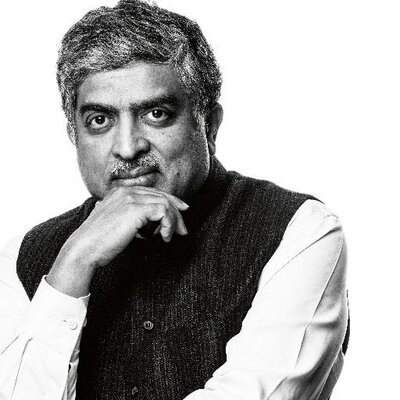
In 25 years, India will have 300mn elders. It’s time for a mental reset – from making second careers possible, to recognising hours of caregiving they provide, to finding ways to keep them socially active. Sharing Rohini's op-ed in @timesofindia on how silver can be the new black!
@RNP_Foundation has also commissioned a report on longevity which will come out next week.
drive.google.com/file/d/1oVB…