







Here are interactions with Emma-6, the "Italian" LLM, that make me think there might be a market for dumb LLMs


Thanks to Elisabetta Rocchetti and Carlo Martinucci (@melkon88) from AI Safety Italia for feedback and discussion
Here's my take on AI safety.
In short, forget about anthropomorphizing the models and training them to be moral agents. Just train them to do exactly what their operator asks. It will make our lives easier.

The combinatorics of the tip-of-the-tongue state
English lets you say “the…” while searching for the word.
Italian (and other gendered languages) forces you to choose "il" or "la" first, prematurely pruning the search space.

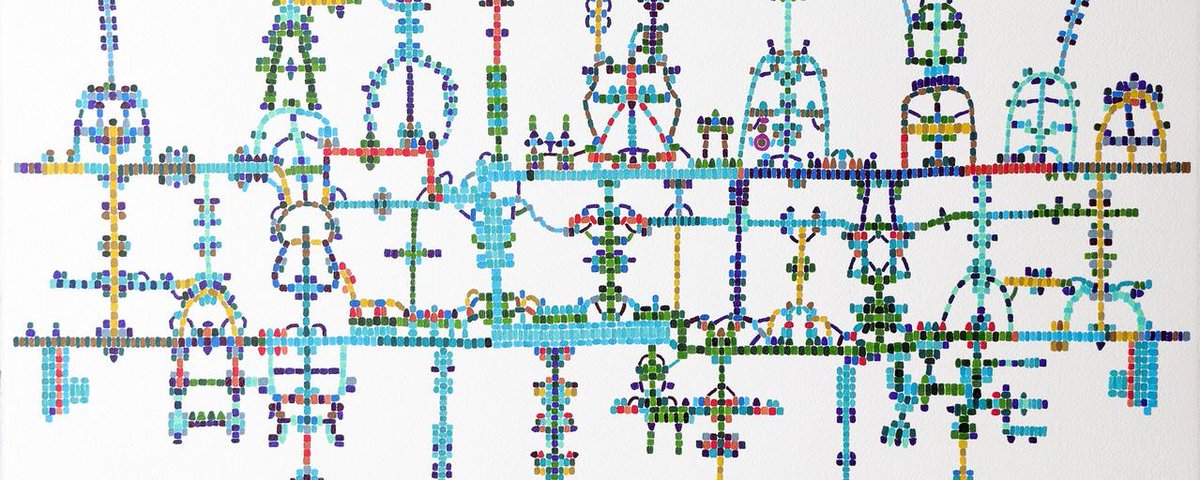
My original quest was to build Leibniz’s never-realized dream of a universal and formal language able to express natural language as if it were mathematics.
After reading a bit about on this and other attempts to develop “a priori perfect” languages, it seemed evident that this was an impossible task due to the presence of the human inventor’s bias into the chosen categories and primitives.
So I decided to replace the observer: the core categories are not chosen by any human but by looking into the internal representations that an LLM has developed in order to efficiently perform its task: next token prediction.
I don’t want to get too much into the technical details but more focus on the results that can be accessed using the interface (see below)
You can interpret it as follows
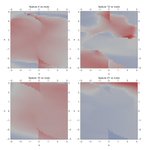
- Each pixel in the grid is a cluster: a region in the vast multidimensional space of LLM’s internal representations
- Whenever you click on a pixel, you see on the right the examples of text for which internal represention corresponds to that region
The cool thing is that you can see patterns resembling “human” language categories based on lexicon, syntax or semantics.
A few examples:
- cluster 0 is “adjective”, cluster 2 is "verbs", cluster 14 is "nouns", cluster 15 is "place names", cluster 30 is "biomedical stuff" and cluster 53 is "drug codes"
- cluster 14 further splits in “physical stuff” (14.0) vs “social/abstract things” (14.1) at level 7 and further into “objects” (cluster 14.01), “spaces” (14.00), “concepts” (14.11), and “groups” (14.10) at level 8
- cluster 28, match the preposition “in”. Cluster 28.01010 corresponds to “in after a verb”; cluster 28.00100 corresponds to “in within medical contexts”, while cluster 28.11100 corresponds to “in as the start of a sentence”.
You can play around with the interface and discover many other interesting patterns. The coolest thing to me is to observe which are the categories make the most sense to a system that is developed to operate efficiently, and which of those resemble human-like categories and which are more alien-like
The subtle limbo of research procrastination
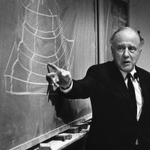
"Never make a calculation until you already know the answer" - John Archibald Wheeler

This quote has stuck in my head for a while, and I think it is the root of the subtle limbo of research procrastination.
In the context of empirical research, you can paraphrase it as “never run an experiment unless you already know the result”. It means that a thorough review of prior work is necessary and crucial for designing a proper experiment.
The limbo of research procrastination is the state in which researchers get stuck reading papers and building their knowledge of the state of the art in order to design the perfect experiment.
This limbo is subtle because it doesn't make you feel bad at all. If you were spending your time watching shorts on YouTube, you would feel guilty. Instead, floating in the limbo of research procrastination makes you feel productive.
Of course, you should not run an experiment blindly without even knowing how to establish whether the results are positive or negative.
But it's important to know when to escape the limbo. The limbo is addictive because in there any research idea retains its full potential: it can **potentially** be groundbreaking.
The longer you stay in the limbo, the harder any negative result will affect once you finally decide to run the experiment.
Spero che il progresso tecnologico faccia il suo corso e scateni la sua forza distruttrice contro SielteID


1.
The Einstein Test asks an LLM trained on human knowledge with a cutoff at 1914 to "rediscover" Einstein's general relativity (1915).
Data contamination makes it hard to implement: how do we ensure the LLM never encounters any data after 1914 during training and inference?
2.
But what if we repurpose the principle of testing retrospective scientific-discovery ability from eval to post-training? And move from 1914 to today's data?
leku.ink/posts/einstein.html
