

Making computers do useful things | engg | 21 | finance https://xitter.cf/t.co/WV3KLsyXz1 | https://xitter.cf/t.co/KP2XvWKZrk | npm i streaked-widget
Joined November 2023
- Tweets186
- Following16
- Followers35
- Likes306





Pinned Tweet
yo, i’m ayush 21
engineering student by day, building things on the internet by choice.
→ building projects, breaking things & figuring out how systems actually work
→ deep in backend engineering, AI & whatever rabbit hole catches my attention
→ exploring technical breakouts, momentum setups & market psychology
→ meeting people who build, experiment & think differently
sharing interesting finds, things i’m building & lessons from the process.
into tech, markets, or building cool shit? we’ll probably get along.
ayush101.dev/


Day 3 of building a client side redaction tool.
Today learned about onnx runtime and offscreen canvas:
>Basically onnx runtime - lets us run the heavy ai vision models directly in the browser using webgpu instead of an external python backend [ helps in keeping the redaction purely client side and fast ]
>offscreen canvas - gives the web worker a virtual screen in memory so it can draw and blur the video frames in the background [ helps in keeping the main ui completely smooth without freezing the browser tab during heavy processing ]
Day 2 of buildin a client side redcation tool.
today learnt about -
>IndexedDB Trap - Storing vector embeddings on disk is way too slow for real-time video so Instead extract the text query vector once hold it in a Float32Array in RAM, and run a brute-force JS dot product on the fly. Drop the database entirely.
>The Frame Buffer - To draw smooth redaction boxes without frying the GPU so you intentionally delay the encoder. By holding frames in a queue, you look at "future" sampled frames to perfectly interpolate the path of "past" skipped frames before applying the blur.
Today learned about adaptive sampling rate and kalman filter
>Basically asr - from frame 1 to frame 2 the jump of data point we are tracking is huge so next time during sampling , instead of skipping 4 or 5 frames at once skip only 1 or 2 [ helps in fast moving object case ]
>kalman filter - track velocity of object , if an object moving left to right and suddenly due to some mis-calculation object is detected in right kalman filter detect that as noise
Today learned about how Uber scales the Multiple Knapsack Problem for their promos :
>Basically 0/1 knapsack - you have a bag with a strict weight limit. For every item, you either take the whole thing or leave it completely (binary). Goal is to get max value without breaking the weight limit.
>Multiple knapsack - instead of one bag, Uber has multiple strict budgets (like a Rides budget and a separate Eats budget). The items are user promos. Goal is to maximize overall ROI without cannibalizing themselves (e.g., pushing Eats promos so hard that people stop booking Rides).
>Constraint Programming (CP-SAT) - they first tried normal linear math (LP), but the search space was so massive it took 24 hours for just 100k users. Switched to Google OR-Tools (CP-SAT), which basically approaches it like a massive game of Sudoku. Instead of crunching heavy math, it uses strict logic rules to instantly eliminate any possibilities that break the budget. By pruning out the impossible paths right away, it solved the exact same problem in minutes.
article - uber.com/us/en/blog/solving-…

Fire portfolio ayush101.dev

Icecold portflio xevrion.dev

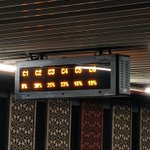
damn so is DMRC using weight based measurements to estimate occupancy in each coach or what
And
Wouldn't passengers carrying heavy luggage skew the numbers, or is the percentage meant to be a relative estimate of crowding rather than an exact passenger count?
@OfficialDMRC

Today learned about adaptive sampling rate and kalman filter
>Basically asr - from frame 1 to frame 2 the jump of data point we are tracking is huge so next time during sampling , instead of skipping 4 or 5 frames at once skip only 1 or 2 [ helps in fast moving object case ]
>kalman filter - track velocity of object , if an object moving left to right and suddenly due to some mis-calculation object is detected in right kalman filter detect that as noise
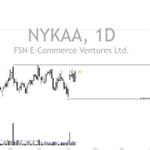
NYKAA
interesting setup
price is trying to create a base , old lows are protected with huge buy impluse , a complete close over round number of 350 will trigger a good entry .

Ayoo thanks @iMicrocap 🙏

interesting experiment @parsewaveai

We have been building machines that can reason.
Now we're building rails that let them transact.
Agents will eventually pay for data, APIs, compute and services without a human approving every transaction.
Seems like stable coin space is going to heat up again .
blackrock.com/us/individual/…


Verifier quality matters way more than people realize.
If the verifier is broken, your evaluation is basically measuring the wrong thing.

AutomationBench Verified is out.
We went through all 600 public tasks in @Zapier's AutomationBench and checked every verifier.
• Agents flagged 323 verifiers as suspicious, human review confirmed 206 real bugs, all 206 are fixed.
• We replayed 1,235 Kimi K3 runs on the old and fixed verifiers and 344 of them (27.9%) got a different grade
• Where verifiers were too strict, pass rate went from 18.8% to 43.8%
• Where they were too lenient, it dropped from 60.2% to 49.7%
Audit and dataset links below.

why is everyone just showing the loading screen and not actual game play lol
This quoted post is unavailable.


