

Playing a vital and supportive role in preserving our rich culture, civilizational consciousness and its people
Chennai
Joined July 2023
- Tweets187
- Following37
- Followers2K
- Likes82





Pinned Tweet
Rajendra Chola I: A Legacy Carved in Stone and Sea
On this auspicious day of Aadi Thiruvathirai (Arudra Nakshatra), we commemorate the birth of one of the most illustrious monarchs in Indian history—Rajendra Chola I. A ruler of immense might and foresight, Rajendra Chola was more than a conqueror; he was also a patron of the fine arts, as attested by the Karandai epigraphs, which describe him as being well-versed in artistic and scholarly pursuits. His reign stood at the confluence of power, devotion, and culture.

Since Avalamba’s inception, we’ve been continuously supporting Jagadguru Veda Kavya Vidya Bhavanam & Veda Vyasa Gurukulam Thiruvallur & Chromepet respectively, With the generous support of our patrons, we’ve assisted its staff with monetary support & provided a LED screen to support its digitisation efforts
We wish to further enhance the digitisation initiative
Sincerely request your continued support for this noble initiative
Donation link - avalambafoundation.com/donat…
A proud moment for Bharat’s civilizational heritage 🇮🇳
After centuries in the Netherlands, the historic Leiden (Aanaimangalam) Chola Copper Plates of Emperor Rajaraja Chola I, among the earliest and most important Chola inscriptions are finally returning home
These 21 copper plates beautifully document the glory of the Cholas, their maritime ties with Srivijaya, and the grant for the Chudamani Vihara at Nagapattinam. A priceless symbol of Tamil history and India’s cultural legacy has been rightfully reclaimed.
Heartfelt thanks to the Government of India under leadership of PM @narendramodi for bringing our heritage back to its motherland 🙏
@MinOfCultureGoI @gssjodhpur @ASIGoI @PMOIndia @cultconvos


Our friend @labstamil has written a nice & easy thread
Do give a read

Know about the Leiden (Aanaimangalam) copperplates retrieved by India from Netherlands after many centuries:
> The first copper plate to be discovered on Cholas
> Excavated by Dutch East Indies Company (VOC) during the construction of Fort Vijf Sinnen around 1700
> Brought to the Netherlands in 1712 by a pastor, whose descendants donated it to Leiden University in 1862
> Deciphered in 1886 by Pandit Natesa Sastri and Burgess
> Issued by GOAT king Rajaraja the first
> 21 copper plates held together by a bronze ring with the regal seal
> First 5 plates are in Sanskrit, rest 16 are in Tamil
> Weighs 30kg, and are numbered from plates 2-21
> Mentions the lineage of Cholas starting from Vishnu till Surya, Ikshavaku and then Manu, the king who gave justice to a bereaved cow
> Mentions about Devasura Manthan with Shiva becoming Neelakanta, and the Amrita being distributed to Devas by a Chola king
>Records the historic grant given by Rajaraja to ruler of Sri Vijaya (Indonesia) for constructing a Chulamanivarma Vihara in Aanaimangalam of Nagapattinam district
> Boundaries of the Vihara were determined by the ceremonial circumambulation of a female elephant
>Sanskrit plates were written by Kottaiyur's Ananta Narayanan of Vashishta gotra
> Documents in detail the 41 officials who executed the edict, the artisans who wrote out the words and the sculptors who rendered the inscription
> Poetically states that only Veda Vyasa can truly capture the fully glory of Cholas, but the author is trying his best
> States "As long as the crescent adorned Shiva resides on Kailasha and Vishnu does Yoga Nithirai on Paarkadal, and the earthly lamps Sun and Moon drive darkness away, may the Chola clan protect this Earth"
> In the summer of 2023, the Indian government submitted a request to Leiden University to return the Chola Plates
> The Leiden/Aanaimangalam Chola Plates will now go to the Archaeological Survey of India (ASI) in New Delhi

Extremely happy to be the curators along with Kala Sadhanalaya for the 1st edition of Conversations on Culture. Please follow the handle @cultconvos for updates and registration link.
#ConversationsOnCulture


Excited for our event !

Namaskaram !
We are delighted to launch Conversations on Culture,
a platform for thoughtful dialogue on culture, art, heritage, and living traditions of our country.
The series will feature exciting sessions, erudite speakers, and accomplished artists, bringing together diverse perspectives from across cultural and intellectual disciplines.
🗓 Mark your calendars for the 1st edition happening on 7th February 2026 at Kalakshetra Foundation, Chennai.
👉 Follow this page for updates, speaker announcements, and session details.
Keep your notifications on !
#ConversationsOnCulture #CultureAndHeritage #IndicKnowledgeSystems #PublicDialogue
8
250
Congratulations & Humble Pranamas to Sohattur Sri U Ve Ramanujacharya swami for winning life time achievement at Adani Global Indology Conclave 2025
Swami is the founder trustee of Parankusachar Institute of Vedic studies


Congratulations @beingpavithraS Akka !
GitaNatyam has won the 3rd prize in Adani Global Indology Conclave Contest in Ahmedabad @IKS_Media

A revered disciple of Samartha Ramadas, Sri Bhimaraja Goswami shaped Tanjore’s spiritual & cultural soul
His samadhi now lies in ruins, awaiting revival
Avalamba & @IndicCollective ve begun this sacred restoration
Kindly join us in this cause
Link - avalambafoundation.com/donat…

Celebrating Navaratri with Shri Muthuswamy Dikshitar’s Kamalamba Navavarna Krithis
A Sacred Musical Pilgrimage through Dikshitar’s Musical Tapestry
As we step into the sacred nine nights of Navaratri, it is a fitting time to revisit one of the most monumental works in Carnatic music - Shri Muthuswamy Dikshitar’s Kamalamba Navavarna Krithis. This magnum opus, composed in praise of Sri Kamalamba, the presiding deity of the Thiruvarur temple (which Dikshitar fondly refers to as Kamala Nagara), stands as a towering blend of music, mantra, tantra and metaphysics.
The Kamalamba Navavarna Krithis are gems of Carnatic music , a profound expression of Dikshitar’s devotion to Sri Vidya and are a brilliant demonstration of his musical and spiritual mastery. The set comprises of eleven compositions: beginning with a Dhyana Krithi , followed by nine Avarana Krithis and culminating in a Mangala Krithi.
Each Avarana Krithi is meticulously crafted to correspond with a layer (avarana) of the Sri Chakra, invoking its presiding deity, yogini, mudras, and siddhis. Dikshitar’s genius shines through in his choice of ragas, skillfully embedding the raga mudra (name of the raga) into intricate lyrical and melodic frameworks. The compositions are set in rich Sanskrit, employing all eight grammatical vibhaktis(cases), with the final krithi uniquely combining all eight making them a linguistic and poetic marvel.
Dikshitar follows the Samhara Krama ( the inward spiritual journey) through the Sri Chakra leading from the outermost avarana to the innermost Bindu, symbolizing union with the Supreme. At each stage, he offers salutations, invokes the deities, and delineates the philosophical underpinnings of each layer, staying true to the Kadi school of the Dakshinamurthy tradition within Sri Vidya.
Through these krithis, Shri Muthuswamy Dikshitar opens a gateway to the vast and subtle knowledge of Sri Vidya expressed through music that is aesthetically sublime and lyrically profound. Enriched with gamakas, raga lakshanas, and complex tala patterns (the suladi sapta talas), these compositions are a testament to his towering genius.
Truly, it would take lifetimes to fully comprehend the depth and brilliance of Dikshitar’s musical , spiritual and ritualistic legacy.
Pic credits : to respective owners.
#Navratri2025 #Navaratri2025


Day 1 : Kamalamba Samrakshatu , Anada Bhairavi raga, mishra chapu tala.
Pallavi
Kamalaambaa Samrakshatu Maam Hrut Kamalaanagara Nivaasini
Anupallavi
Sumana Saaraadhita-abjamukhi Sundara Manah-Priyakara Sakhi Kamalaja-ananda Bodhasukhi Kaantaataara Panjarashuki
Charanam
Tripuraadi Chakreshvari Animaadi Siddhishvari Nitya Kaameshvari Kshitipura Trailokyamohana Chakra Vartini Prakata Yogini Suraripu Mahishaasuraadi Marddini Nigama Puraanaadi Samvedini Tripureshi Guruguha Janani Tripura Bhanjana Ranjani Madhuripu Sahodari Talodari Tripura Sundari Maheshvari
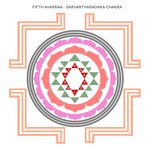
The first krithi in the vibhakti sequence is composed in the graceful raga Anandabhairavi, which aligns with the Trailokya Mohana Chakra, the outermost enclosure of the Sri Chakra. In this composition, the term ‘ananda’ subtly incorporates the raga mudra, symbolizing the raga itself. The lyrics vividly describe the Prakata Yoginis, who represent externalized emotions and experiences. These include the Ashta Siddhis (eight supernatural powers), the Ashta Matrikas (personifications of negative tendencies like desire, anger, greed, etc.), and various mudras, each associated with a specific chakra.
The Bhupura Chakra, considered the foundational square or earth stretch of the Sri Chakra, encompasses the entire yantra within its bounds—much like the earth supports all life. As Dikshitar musically enters this first avarana, he offers his respectful prostrations to Sri Kamalamba, seeking her protection, grace, and spiritual direction.
In this krithi, Dikshitar extols the goddess as the incomparable beauty of the three worlds (Tripura Sundari), the sovereign of the three realms, and the goddess who presides over the Trailokya Mohana Chakra, also referred to as Trailokyamohana Chakravartini. She is hailed as Tripureshi, the ruler of all the chakras; Kameshwari, the granter of desires; the queen of Bhupura (Kshithipura); the unparalleled enchantress of the three worlds; and the divine mother of Guruguha.
Dikshitar further invokes and reverently salutes the Animaadi Siddhis (the siddhi goddesses like Anima), the Nitya Devis (eternal aspects of the goddess), the Yogini of this chakra (Prakata Yogini), and the Matruka goddesses such as Maheshwari, acknowledging their presence and divine roles in the first enclosure of the Sri Chakra.
#Navaratri #Navratri

Aadi Peruku Wishes
(ஆடி பெருக்கு) is Tamil festival celebrated on the 18th day of the Tamil month Aadi. It is celebrated by people along river banks across the state
This festival that honors water bodies, especially rivers, which are vital for agriculture & life
The word “Perukku” means rising of rivers during the monsoon
This festival coincides with the rainy season in Tamil Nadu & marking the beginning of the sowing period when farmers pray for a profitable harvest
Spiritually, water is considered sacred in Sanatana Dharma offerings of flowers, turmeric, rice & other items are made to the river goddess seeking prosperity
Beyond its religious & agricultural significance, Aadi Perukku is also a cultural celebration in Delta region of Tamil Nadu where families gather along riverbanks, prepare traditional foods, perform rituals & celebrate fertility, abundance grace of Nature

Sri Krishnaraja Wodeyar, one of the most celebrated rulers of the Mysore Wodeyar dynasty, was not just a king but a passionate patron of art, culture & devotion.
A staunch Vaishnava, he poured his heart into reviving age-old traditions & rituals.
Among his most iconic contributions is the Krishnaraja Mudi, a majestic crown gifted by him for the revered Cheluvanarayana Temple at Melukote.
Even today, the crown stands as a gleaming symbol of his unwavering faith and cultural vision.

Congratulations to Padma Shri Dr. @IndicMeenakshi on being nominated to the Rajya Sabha
A historian of immense knowledge, voiced on topics like Ayodhya Ram Mandir, indigenous education, Hindu-Muslim relations. Her guidance’ll be invaluable for future generations
Team Avalamba

Vande Guruparamparam
Bharat is the only land where the Guru-Shishya tradition has thrived for Yugas, passing knowledge in vedas, academics, martial arts, performing arts & much more from a teacher to student since Rig Vedic times
No fancy tech.
No modern systems.
Just wisdom, discipline & deep values.
On this sacred day of #GuruPurnima, let’s salute the Gurus who shaped our lives

Tributes to Ahilyabai Holkar
A visionary warrior queen
After the death of her husband Khanderao, Ahilyabai decided to commit sati. Her father-in-law, Malhar Rao, stopped her & trained her in governance & warfare.
Ahilyabai’s most notable contribution was the renovation of two Jyotirlinga temples the Kashi Vishwanath Temple in 1780, where she is honored today with a statue, & the reconstruction of the Old Somnath Temple in Gujarat.
She understood the importance of infrastructure & built numerous gurukuls, dharmashalas, almshouses, water tanks, ghats & roads making religious places more accessible to people from all walks of life
Her contributions extended beyond North India, she supported & restored temples in South India as well.
Ahilyabai also established a textile industry in Maheshwar, which remains renowned today for its exquisite Maheshwari sarees.

Salutations to the Greatest Acharyas of Our Bharata Desha on the Jayanti Mahotsava of
Jagadguru Sri Ramanujacharya & Jagadguru Sri Adi Shankaracharya
Propagators of the Bhakti movement & the doctrines of Visistadvaita & Advaita philosophies, respectively
Vande Guruparamparam 🙏🏻

Today marks the 250th birth anniversary of Shri Muthuswamy Dikshitar, one of the greatest vaggeyakaras (composer) classical music has ever seen. He was born on panguni krithigai (palguna krithika) in Thiruvarur to Ramaswami Dikshitar & Subbamma.
Dikshitar mastered the vedas, Upanishads, sanskrit language, jyothisha shastra, veena along with sangeetam. He became the disciple of Chidambaranatha yogi at Varanasi and acquainted himself with hindustani music which reflects in some of his krithis (compositions). One day at tiruttani, Lord Subramanya himself appeared in the form of an old man and blessed him by dropping a sugar candy into his mouth & disappeared.
Dikshitar composed his 1st exquisite krithi shree naathadi guruguho Jayati in Mayamalavagowla, at instant and adopting guruguha as his raga mudra.

Dikshitar krithis are the personification of exquisite sahitya (lyrics) intertwined with complex sanskrit & musical grammar like raga lakshana, tala patterns, yatis , gamakas, jaarus & swara aksharas. His profound & rich sahitya in sanskrit exhibits his shastra gyana, philosophical depth & worship of Srividya. Several of his krithis contain beeja mantras.
His krithis are an expression of him being at an impersonal, blissful level, exhibiting shantha rasa and advaita vedanta.
He travelled extensively and composed on different deities at several kshetras. One can learn about the kshetra, temple & the deity from his krithi.

Mark S.G. Dyczkowski has published multiple translations and commentaries.
His most notable contribution is the 12-volume Manthanabhairava Tantra and an 11-volume work on Kashmiri Shaivism, including Abhinavagupta’s commentary, which will inspire future generations.
Om Shanti !


On this auspicious day of kalabhairava jayanthi, we pay our salutations to the who is as radiant as a million suns !
#kalabhairava
On Skanda Shashti , let us look at karthikeya/murugan sculptures from different parts of bharat from ancient times.
1) From gandhara ( present day afganistan), kushan period, approx 2 nd century BCE
#SkandaShashti #KandaSashti #vetrivelveeravel


Skanda Sashti wishes to everyone!
This festival symbolizes the victory of good over evil
Lord Muruga, also known as Skanda or Kartikeya, defeats the asura king Surapadma with a Vel gifted by his mother, Parvati Devi’s which is a divine and powerful weapon
Devotees of Muruga observe a six-day fast, concluding on the Sashti Tithi
Pic courtesy: Velavan
