







Pinned Tweet
🚨 New preprint alert 🚨
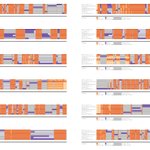
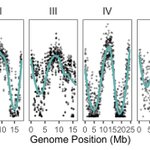
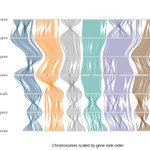
We've generated a new gapless genome of Caenorhabditis brenneri🪱, one of the most diverse metazoans! We compared its genome and gene organizations with other nematodes with smaller population sizes. Check it out!
biorxiv.org/content/10.1101/…

Anastasia Teterina retweeted

UMAP makes useful pictures, but what structure does it destroy?
Daan H. de Groot and coauthors introduce Bonsai, a Bayesian method that represents high-dimensional data as a tree rather than forcing it into a conventional two-dimensional embedding.
The motivation comes from single-cell biology. Methods such as UMAP and t-SNE are extraordinarily useful for visual exploration, but their geometry is not a faithful representation of the original high-dimensional space. Local and global relationships can be distorted, and changing visualization parameters can change the apparent biological story.
Bonsai takes a different approach. Each cell is treated as a noisy point in high-dimensional gene-expression space, complete with uncertainty estimates. The method then reconstructs the maximum-likelihood tree connecting those points under a probabilistic model of how expression states can change.
Because a tree can always be drawn in two dimensions, visualization no longer requires projecting the data onto two artificial coordinates.
On synthetic benchmarks, Bonsai almost perfectly reconstructs structures that PCA and UMAP largely fail to recover. It also preserves cell-to-cell distances much more faithfully.
And the biological payoff is not only prettier visualization.
Applied to cord-blood single-cell data, Bonsai recovers established differentiation relationships and identifies an apparently previously undescribed subset of natural-killer cells associated with the myeloid rather than lymphoid lineage. The method also scales through a backbone implementation to datasets exceeding one million cells.
There is a broader scientific lesson here.
Dimensionality reduction is not a neutral preprocessing step. When ML changes the representation of scientific data, it can also change which hypotheses become visually plausible.
Paper: de Groot et al., Nature Biotechnology (2026), CC BY 4.0 | DOI: 10.1038/s41587-026-03220-2

Anastasia Teterina retweeted

🧬Collinearity Analysis is here in #gbdraw v0.11.0! You can easily detect and visualize synteny and collinearity blocks using LOSATP. You can instantly align the entire diagram based on a shared ortholog!
Try it now: gbdraw.app/
#bioinformatics #genomics #microbiology

ALT Collinearity analysis of Hepatoplasmataceae, a group of mollicutes associated with isopod crustaceans. Inverted syntenic blocks are colored in dark red.

ALT Synteny of lividomycin-like aminoglycoside biosynthetic gene clusters. The diagrams are aligned based on livE gene (see next figure for the command)

ALT Dialog box for the livE gene in the record BGC0000708. Click "Align" to align the records based on the shared livE orthologs, as seen in the previous figure.
Anastasia Teterina retweeted

AlphaGenome: advancing regulatory variant effect prediction with a unified DNA sequence model storage.googleapis.com/deepm…

Anastasia Teterina retweeted
LoVis4u: Locus Visualisation tool for comparative genomics biorxiv.org/content/10.1101/…

Anastasia Teterina retweeted

The model of gene expression taught in school is highly misleading!
Transcription factors are proteins that bind to DNA and then help repress, or activate, the expression of genes. Cells have hundreds of different types of transcription factors, each tuned to regulate different genes based on short snippets of DNA located near those genes.
The basic model, taught in school, says that these transcription factor proteins float around the cell and, when they bump into a DNA sequence, either latch onto it strongly (CORRECT SITE!) or fall off quickly (WRONG SITE) and keep searching. All the other DNA in a cell is basically abstracted away as unimportant or irrelevant; mere background noise.
But again, this model is naive! And a new paper, published in Cell, beautifully shows how the sequences SURROUNDING a transcription factor's binding site also matter a great deal.
This won't be surprising to many biologists, as "cracks" in the standard two-state model began emerging decades(?) ago. Biologists have tagged transcription factors with fluorescent tags and then watched them move around living cells. And they have noticed that when transcription factors land in a "wrong" location in the genome, they skip or hop to a nearby location and repeat this until finally connecting with the "correct" sequence. So in other words, there are actually three states that a transcription factor can exist in: free-floating, "searching", or "bound."
(More technically, transcription factors first do a 3D search, then latch onto DNA and do a 1D search to find the correct location.)
For this new paper, though, scientists exhaustively quantified *how* the sequences flanking a transcription factor binding site influence the search of the protein.
They did a huge in vitro experiment, wherein they placed a specific transcription factor with a known binding site, called KLF1, in a huge library of 11,812 different DNA sequences. These sequences had mutated "core" binding sites and variations in the flanking sequences. They also prepared negative controls. Then, these researchers measured the binding kinetics of KLF1 with each sequence to understand which bases in the flanking sites impact the 1D search.
What they found is that KLF1 has a basically flat disocciation rate from its core sequence, but that the PROBABILITY that it finds this sequence depends a lot on the surrounding context. Even mutations located dozens of bases away from the core site matter a lot, either pushing KLF1 to "hop" faster to find the site, or "trapping" KLF1 and slowing down its search. These flanking sequences can cause up to a 40-fold variation in the affinity of a transcription factor for its target site!
This is just one small part of the paper, though, so I encourage anyone interested to read the whole thing. It is challenging throughout.


Anastasia Teterina retweeted

I spent months illustrating how Transformers actually work.
Not just what they do, but why they’re built this way. The history, design choices, and intuition behind every layer.
From RNNs → Attention → Multi-Head → FFNs → Positional Encoding.
Here's everything I wish I knew:
Anastasia Teterina retweeted

scooby: modeling multimodal genomic profiles from DNA sequence at single-cell resolution. #SingleCell #GeneExpression #Genomics #Transcriptomics #Epigenomics #Bioinformatics @naturemethods
nature.com/articles/s41592-0…

Anastasia Teterina retweeted
Pre-phasing long reads improves structural variant genotyping. #LongReads #Sequencing #ReadsPhasing #StructuralVariants #Genotyping #Genomics #Bioinformatics
academic.oup.com/bioinformat…

Anastasia Teterina retweeted
GRiNS: a python library for simulating gene regulatory network dynamics bmcbioinformatics.biomedcent…

Anastasia Teterina retweeted
OrthoBrowser: Gene Family Analysis and Visualization biorxiv.org/content/10.1101/…

Anastasia Teterina retweeted
G2PT: Genotype-to-Phenotype Transformer: Mechanistic genotype-phenotype translation using hierarchical transformers biorxiv.org/content/10.1101/…


Anastasia Teterina retweeted
DiSC: a Statistical Tool for Fast Differential Expression Analysis of Individual-level Single-cell RNA-seq Data.#SingleCell #RNAseq #scRNAseq #DifferentialExpression #Bioinformatics
academic.oup.com/bioinformat…

Anastasia Teterina retweeted

ntSynt-viz: Visualizing synteny patterns across multiple genomes biorxiv.org/cgi/content/shor… #biorxiv_genomic
Anastasia Teterina retweeted
sTELLeR: Detecting transposable elements in long read genomes academic.oup.com/bioinformat…


Anastasia Teterina retweeted

REPORTH: Determining orthologous locations of repetitive sequences between genomes biorxiv.org/cgi/content/shor… #biorxiv_bioinfo
Anastasia Teterina retweeted

🚨 Excited to share this #preprint from my postdoc in the Lippman lab @CSHL, in collab. with @mike_schatz & many others! Using pan-genomics & pan-genetics across the Solanum genus 🍅🥔🍆 we reveal gene duplications 🧬 as contingencies in crop engineering. doi.org/10.1101/2024.09.10.6…
Anastasia Teterina retweeted

Widely observed negative correlation between recombination rate and TE abundance is usually interpreted as recombination rate being the "cause," influencing the efficacy of selection purging TEs. Yet, our recent study "flipped" this causality! biorxiv.org/content/10.1101/…… (1/5)
Anastasia Teterina retweeted

Have you ever wondered whether modularity is the only driver of transcriptional network organization? Short answer, no! There are nuances to transcriptional networks, and together with @diogro and Julien Ayroles we explored some methods to find them: journals.plos.org/ploscompbi…
