

@astroEdLu
Account based inUnited States
About this account
- Account based in
- United States
- Connected via
- United States Android App
Account-level information from X, not a live location or the device used for a specific post.
Finding a million asteroids!
Pale Blue Dot
Joined January 2012
- Tweets1.4K
- Following74
- Followers11.3K
- Likes59





These events in Low Earth Orbit show why satellite operators need to follow best practices to reduce debris including properly deorbiting satellites at end of life.

Ed Lu retweeted

We're proud to announce that we're teaming with SciTec, a Firefly Aerospace company, to support its recently awarded $93,704,410 firm-fixed price other transaction agreement for ground-based radar digitization.
bit.ly/3UJm1rY

LeoLabs will analyze the velocity distribution of the debris from the rocket body breakup to see if it is consistent with a collision or perhaps due to a battery or pressurized tank explosion. Standby for more information.

This seems like a great thing to incentivize with an @xprize. Better biomarkers for clinical trials. @AnoushehAnsari @PeterDiamandis

A few weeks ago, Novo Nordisk announced that its long-awaited ZEUS trial had failed. The study tested whether blocking IL-6, a key driver of inflammation, could reduce cardiovascular events -- a test of the hypothesis that inflammation is a treatable cause of heart disease.
This was not a small undertaking, as the trial enrolled 6300 people over several years and must have cost in the hundreds of millions (I would estimate between $300M and $600M).
@MariosGeorgakis wrote a great post-mortem trying to answer the question: why did the trial fail?
I think there are two things that make his post great:
1. First, it goes through the evidence we had prior to this trial and shows just how hard it is to predict results in human trials for novel targets (and why companies often choose to avoid them). Based on the available evidence, the trial should have worked.
The most important points are the data from the CANTOS trial (targeting IL-1), which strongly suggests that inflammation is promising as a treatable cause of cardiovascular disease. We also have convincing genetics data showing that IL-6 is causally implicated in cardiovascular disease. So far, genetic evidence remains the biggest booster of clinical trial success for a new target.
2. Second, we need to invest in better biomarkers, which could provide early biological signals of whether a drug is working. Today, we are living through what I consider a frankly unsustainable situation: a developer can spend half a billion dollars on a late-stage trial only for it to fail.
In this case, the drug reduced inflammation as measured by C-reactive protein (CRP) in early trials, but didn't prevent heart attacks in later ones. CRP is a very poor biomarker as it is not predictive of clinical efficacy, but it's all we have. Having better early indicators of success would catch bad candidates years sooner and at a fraction of the cost, freeing that capital for therapies with a real chance of working.
Unfortunately, as I explained in an article for @IFP last year, the incentives around developing clinically validated and useful biomarkers are skewed, since they function essentially as public goods: there is little possibility for any individual developer to make money from developing a clinically useful biomarker and making it available, even if doing so would benefit the field immensely.
We still do not know why the trial failed. One thing I am worried about is that investors will see this as an invalidation of the inflammation hypothesis in cardiovascular disease and it will deter investment -- I think there are signs this is happening. This could just be a bad draw from the distribution of possible outcomes! But it is entirely rational that developers would avoid spending hundreds of millions of dollars to find out that their drug dailed. Again, my only prescription here is to get better biomarkers that indicate success earlier on.
This would allow us to test many drugs targeting inflammation in earlier stage trials and progress only the actually promising ones, if such promising drugs exist at all.

I love watching the external view of Starship as it is reentering. It's kind of like watching a campfire.
Watching the Starship launch right now. Wish I could see this in person!

Watch Starship's thirteenth flight test xitter.cf/i/broadcasts/1AJEmmYdM…
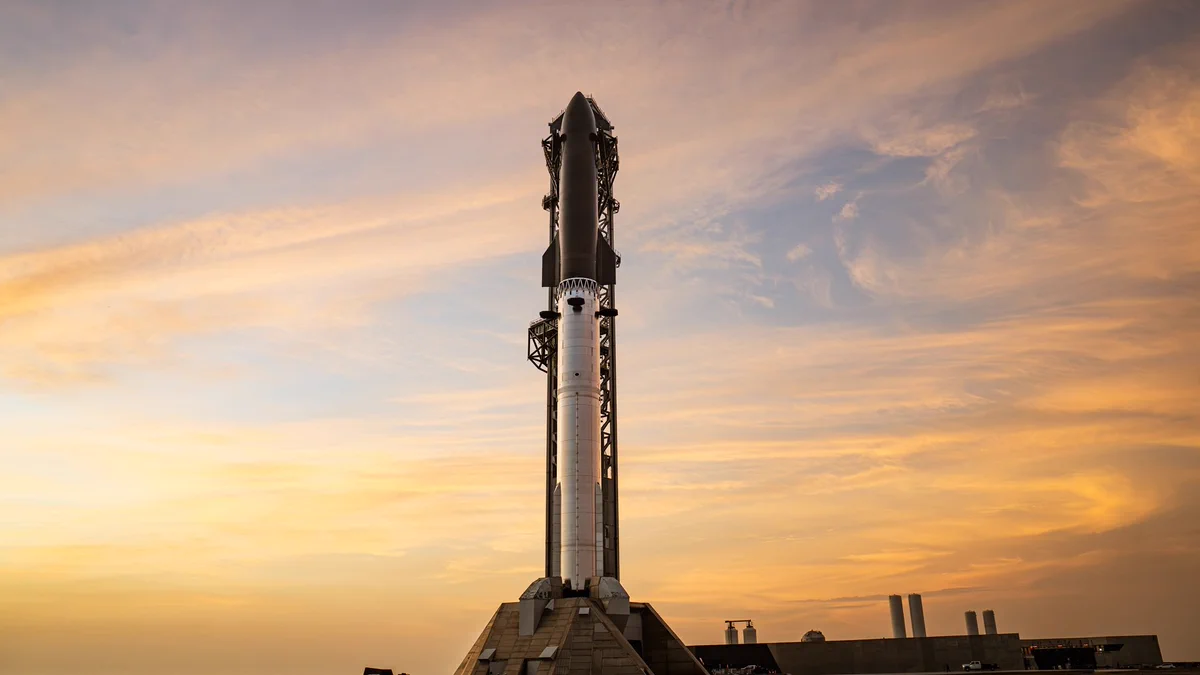
There is a launch in 5 minutes from Vandenberg, then Starship just 2 hours later from TX! The pace of launch is accelerating. On average in 2026 there will be a spacecraft launched every 90 minutes or so!
All systems are looking good, and weather is favorable for liftoff. Propellant load is about to begin for Falcon 9’s launch of the @SemperCitiusSDA's third Tranche 1 data transport mission from California → spacex.com/launches/sda-t1tl…


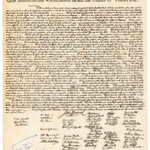
Here's a really cool Apollo 9 item - a copy of the Declaration of Independence! Great idea by Rusty to have flown this in 1969. And all proceeds support the Schweickart prize! b612foundation.org/schweicka…

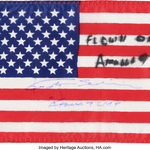
Own this US flag flown by Rusty Schweickart aboard Apollo 9, the 1st flight of the Lunar Module. Proceeds support the Schweickart Prize for research in Planetary Defense. Own something cool and help protect the Earth! b612foundation.org/schweicka…


I can imagine a lot of great possibilities if low-cost commercial deep space missions become a reality!

This asteroid is roughly the same size as the one that hit near the city of Chelyabinsk in 2013. Explosive energy about half a Megaton.


OK, so now I'm looking for a better image of this asteroid!

Tianwen-2 had arrived. Here's asteroid Kamo'oalewa seen from 20 km away
xinhuanet.com/20260706/eb8cb…

Can't wait to see photos of this asteroid!
