

Accidental Activist, Speaker, Author, Lover of Life
Colorado, USA
Joined November 2011
- Tweets1.2K
- Following722
- Followers3.3K
- Likes720




Sounds simple, right? It is. It's also surprisingly uncomfortable.
Because renegotiating means acknowledging that something isn't going according to plan.
For many of us, that feels a lot like admitting failure.
But really, it is taking responsibility, not blame.

We sometimes avoid these conversations because we don't want to disappoint someone. Which is understandable. But when we avoid the conversation, we often create the very frustration we were hoping to prevent.

We tend to think trust is built in the big moments. But most team trust is built in incredibly unglamorous ways. You said you'd send it Tuesday. You sent it Tuesday. You couldn't make the deadline. You told me before Tuesday.
Sometimes great team culture really is that simple.

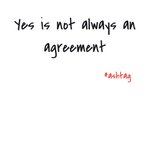
Someone asks: “Can you get this done by Friday?”
And before our brain has consulted our calendar, workload, family, sanity, or basic laws of physics: “Yep!”
That's not always an agreement.
Sometimes that's optimism with a deadline.
A clear agreement requires an honest yes.

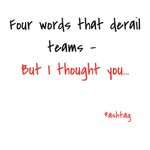
A surprising amount of team friction starts with four words:
“But I thought you…”
I thought you were doing it.
I thought you knew.
I thought that was the priority.
I thought we agreed.
The problem?
Thinking something was understood isn't the same as agreeing to it.

Clear agreements aren't about becoming rigid or overly formal. They're about making sure everyone understands what they're committing to — and giving people permission to renegotiate when circumstances change.

Most teams optimize systems, not how people relate but relationships shape everything. Missed conversations breed resentment; defensiveness kills engagement. The healthiest teams I’ve worked with communicate clearly, repair quickly, give honest feedback, & build trust on purpose.

High-performing teams don’t avoid tension.
They learn how to move through it without losing trust.
That’s a very different skill set.

Some teams are incredibly good at the work.
They hit deadlines
Solve problems fast.
Perform at a high level.
And still
People feel disconnected.
Feedback gets avoided.
Trust erodes quietly in the background.
Because operational & relational excellence are not the same thing.

Deeply appreciative of the engagement, vulnerability, and care the Red, White & Blue Fire Protection District team brought. It’s always an honor to work alongside people who are committed not only to performing at a high level, but to showing up well for each other along the way.

Certainty sounds like leadership.
But it often kills collaboration.
Certainty feels:
Confident.
Decisive.
Efficient.
But it quietly shuts things down.
Curiosity keeps it alive:
“What perspectives are we missing?”
“Who sees this differently?”
“What else could be true?”

This month, one simple shift:
Replace certainty with curiosity.
Most teams don’t fall apart because of conflict.
They fall apart because of judgment.
When curiosity leaves, connection usually follows.

Above the line / below the line doesn’t stop at the office.
It shows up:
• in how we respond to our partner
• in how we react to our kids
• in how we handle hard conversations
Relationships don’t fracture because of mistakes.
They fracture when people stay below the line.

Every team will have moments:
miscommunication
missed expectations
tone that lands wrong
That’s not the problem.
The problem is what happens next.
Most teams default to:
• avoidance
• justification
• quiet resentment
But high-trust teams build a different muscle: Repair

If you want a team that is:
• open
• accountable
• willing to have hard conversations
You have to go first.
Not with perfection.
With visibility.

Defensiveness doesn’t just show up loudly.
It shows up subtly—and that’s what makes it dangerous.
Sometimes below the line looks like:
• silence in meetings
• quick agreement with no real buy-in
• side conversations after the meeting
It feels efficient.
It’s not.

Every team lives in two places
Above the line:
Curious. Open. Accountable.
Below the line:
Defensive. Blaming. Protective.
Neither is “wrong.”
Both are human.
But here’s the difference:
High-performing teams don’t avoid going below the line.
They just don’t stay there long.

A group becomes a team the moment it can handle an awkward moment together.
You know the one.
The tension in the room.
The slightly defensive comment.
When the energy shifts and everyone feels it.
But the teams that build awareness into their culture?
They bounce back faster.

The goal isn’t a conflict-free team.
The goal is a team that notices what’s happening — sooner.
Because resilient teams aren’t above the line all the time.
(That would be lovely… but also unrealistic.)
They just get back there faster.

