

CEO| FPSI National Council |Doodler|Photography RTs ≠ Endorsements
🌏
Joined January 2012
- Tweets5.3K
- Following397
- Followers963
- Likes9.7K
Arvind Mishra 🇮🇳 retweeted

Former International Monetary Fund (IMF) executive director Krishnamurthy V Subramanian has challenged Pakistan’s claim that its appointment to chair the IMF and World Bank Boards of Governors in 2027 marks a return to global financial leadership, calling the role “protocol, not power”.
More details🔗 toi.in/protflrde
Catch every update on the TOI App 👉 timesofindia.sng.link/Cqhd4/…
#KrishnamurthySubramanian #Pakistan #IMF #WorldBank #GlobalEconomy #InternationalFinance #IndiaPakistan


At BRICS 2026, our Prime Minister once again embodies India’s confident leadership on the global stage — rooted in our values,committed to sustainability and looking firmly towards the future. Planting more than a sapling,planting a vision for the future. @narendramodi 🫡🙏🇮🇳





Arvind Mishra 🇮🇳 retweeted
“Nothing has served me better in my long life than continuous learning.”
— Charlie Munger

Arvind Mishra 🇮🇳 retweeted
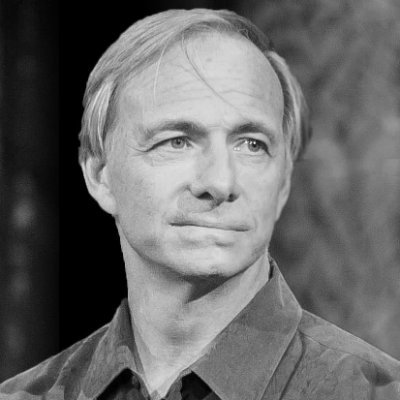
Imagine that virtually everything important going on in your company can be captured as data, and that you can build algorithms to instruct the computer, as you would instruct a person, to analyze that data and use it in the way you agreed it should be used. In that way, you and the computer on your behalf could look at each person and all the people together and provide tailored guidance, just like your GPS provides you guidance by knowing all the traffic patterns and routes. You don't have to make it mandatory to follow that guidance, though you can. Generally speaking, the system operates like a coach. And the coach can learn about its team: Data is collected about what people do so that if they make more insightful moves or less insightful moves, learning will occur and be used to create improvements. Because the thinking behind the algorithms is available to everyone, anyone can assess the quality of the logic and its fairness, and have a hand in shaping it. #principleoftheday


Arvind Mishra 🇮🇳 retweeted
“Success is walking from failure to failure with no loss of enthusiasm.”
— Winston Churchill


'Sometimes all you need is a little opening'
#metaphorphotography #photography

Congratulations to Dr. Prahlad on being conferred the prestigious Pascal Award at FPTS 2026. A fitting recognition of his outstanding contributions to science,technology, and innovation.His work continues to inspire generations of researchers & innovators. #PascalAward #FPTS2026


@shivkuma_k sharing ANRF’s vision of transforming India into a global research & innovation powerhouse. By fostering collaboration, supporting research & accelerating tech commercialization,this cud catalyze India's journey to an innovation led economy.
#FPTS


Hmm..so air pollution too has its benefits! What we considered as smog was actually heat diffuser !!

Yes, 43°C in India feels different to 43°C in Europe. Allow me to explain.
1. Europe is much more north on the planet, compared to the tropical location of India. For example, Paris is even north of Toronto in Canada. In India, the sun hits from the top. In Europe, it hits at an angle, and significantly longer summer days can yield strong solar loads through the course of a day. So the sun feels different.
2. India’s air pollution (suspended particulate matter) dulls the sun a bit. The sun feels sharper in Europe due to the clear skies, while pollution in India scatters and dissipates heat differently.
3. The recent heat waves in Europe have been accompanied with very low or zero winds. The leaves on trees don’t have a hint of movement. So it feels suffocating in a different way. In India, the warm winds and humidity might have different effects.
4. Europe has historically been cooler, so its buildings have been designed to remain warm in winters, while Indian buildings are designed to remain cool in summers. For example, stone or tiled floors in India dissipate heat quickly in summers, but also mean that you can’t walk bare feet in winters. Meanwhile European households might have wooden floors that don’t feel cool in the summers. Some European cities also have black roofs as a norm, which trap heat.
5. Much of Europe has had very limited number of warm days through history, so air conditioning is not a norm. Why would households invest in ACs when it crosses 25°C (minimum) for less than 7 days a year? New York has 4-5x more frequent warm days than Paris, for example. But that’s now changing. As it gets warmer, the case for ACs is obvious.
6. Much of Europe values aesthetics and public spaces a lot. So buildings associations oppose ugly heat-blowing external AC units facing the streets. This is why European cities are the most beautiful and walkable on the planet. Would you sit down to have wine and pasta on a street side cafe if an ugly AC unit was blowing hot air onto you? But of course, it’s too hot during heat waves now, so buildings associations will be forced to relent and change their rules. (You can also find some examples of some activists or institutions opposing ACs for climate change reasons, but I think that has a much smaller impact on decisions than actual building rules).
But the ultimate reality is this: as heat waves get hotter and longer, ACs will become the norm in Europe as well. Most offices and shopping centres are already air conditioned. Households are increasingly purchasing them too.
And the other reality is that Indians suffer a lot from heat waves too, even at 43°C. We just don’t report human interest stories the same way. Many don’t have ACs, live under tin roofs, and are hit by a constant stream of hot AC exhaust air from neighbours. We all need to prepare better for our respective heat waves.
Arvind Mishra 🇮🇳 retweeted

Be it space technology or nuclear energy, India is expanding the frontiers of human capability.
@VivaTech

Arvind Mishra 🇮🇳 retweeted
When debt levels reach extreme sizes relative to income, governments are left with a limited set of choices. They can cut spending, raise taxes, restructure the debt, or print money.
History shows that most systems end up relying heavily on the last option, but printing money doesn’t eliminate the problem–it just shifts how the debt cycle plays out.
Understanding this dynamic is key to understanding the economic environment we’re in.