

Steve Schauer, DO, MS 👨🏻⚕️🚑 🪖| PGY15 | EM-tensivist | US Army | C2RASH Lab Director | (my opinions only, not medical advice)
Joined January 2021
- Tweets4.1K
- Following558
- Followers4.6K
- Likes5K







Pinned Tweet
Read the story 👇
It's so often that those of us who work in EM and critical care see devastating injuries and wonder whether we're really making a difference...
SPC Jordan Kirkpatrick is a @usarmy Soldier who was riding his motorcycle on his day off when he had a high-speed collision. He had a bad TBI (IPH, SAH, DAI), pulmonary contusions, multiple rib fractures, skull fracture, facial fractures, femur fracture, multiple pelvic fractures, and a splenic laceration.
EMS found him hypotense with a GCS of 3. Shortly after EMS arrival, he arrested. EMS started CPR, an i-gel was placed, and his chest was decompressed with ROSC achieved. In the ED, they intubated him, placed chest tubes, and transfusions were started. He was emergently taken to the OR for a multi-surgeon case and received >30 units of blood. Shortly after surgery, he went into ARDS/TRALI refractory to all medical management. @uchealth LifeLine air lifted in very critical condition to @CUAnschutz where he was emergently cannulated for ECMO. He had a bolt and EVD placed, was deeply sedated, paralyzed, and cooled for his TBI. He spent several weeks on ECMO in our CTICU and then was decannulated and transferred to our STICU, where he spent several months receiving dozens of procedures. I was part of his critical team in the STICU for several weeks.
He's now almost fully recovered mentally and is making progress physically recovering. Next week, he will be discharged from in-patient rehab. He will rejoin his fellow Soldiers at Fort Carson and transition to the Soldier Recovery Unit. The video and photos are from him and his family documenting his journey.
It's patients like Jordan who remind you that what you do matters.
(Photos, video, and story shared with patient and family permission)
#emergency #emergencymedicine #criticalcare #icu #erlife #iculife #science #army #armymedicine #trauma #motivation #motivating
Should vasopressin be started earlier in septic shock?
BLUF: Starting vasopressin at a lower norepinephrine-equivalent dose did not better outcomes.
The VASSPR trial included 3,959 patients across 13 US hospitals and compared two hospital-level strategies:
• Lower threshold: Start vasopressin when other vasopressors reached 0.1 µg/kg/min of norepinephrine equivalent.
• Higher threshold: Wait until other vasopressors reached 0.4 µg/kg/min.
The strategies created meaningful separation. Vasopressin was administered to 52.4% of patients under the lower-threshold strategy versus 32.9% under the higher-threshold strategy.
However, earlier vasopressin did not improve outcomes:
• 28-day mortality: 31.8% vs 33.0%
• No difference in 90-day mortality
• No difference in kidney replacement therapy–free days
• No difference in ICU-, hospital-, or vasopressor-free days
Cardiogenic shock occurred slightly more often with the lower-threshold strategy—7.4% versus 6.3%—but this was an exploratory finding, was not adjusted for multiple comparisons, and was not consistent across sensitivity analyses.
Important limitation: This pragmatic trial tested hospital-level strategies under real-world conditions. Clinician discretion, crossover, and imperfect adherence were allowed, so it was not a tightly controlled efficacy trial of two mandatory thresholds.
doi.org/10.1001/jama.2026.21…
#emergency #emergencymedicine #icu #criticalcare #science
The ICRAKI trial randomized 554 adults across 38 French ICUs to initial intermittent hemodialysis or continuous kidney-replacement therapy. The trial was stopped early due to mortality in the iHD group compared to CKRT.
Why did this trial find a difference with earlier trials being largely negative?
-Previous trials used different inclusions, this study had more well defined inclusion criteria compared to earlier trials; clear indications for CKRT
-Previous secondary analyses were conflicting, suggesting there is probably a subset of patients for whom we had yet to understand benefit
Since the trial was stopped early, the true magnitude of the difference still remains unclear.
Interestingly, it does not appear the benefit was due to a vast difference in hypotension, which is a commonly cited benefit of CKRT. The benefit may lie in the kidney replacement that betters mirrors normal physiology. We normally have continuous, not intermittent kidney function when healthy.
What are your thoughts on the trial?
doi.org/10.1056/NEJMoa260839…
#icu #criticalcare #science #kidney #nephrology
armyemdoc retweeted

@USArmy LTC Dr. Steven Schaeur discusses the latest research on calcium levels in trauma patients at #MHSRS2026.
This work will help inform treatment approaches and strengthen evidence-based trauma care, improving outcomes for warfighters when it matters most.
@armyemdoc
New secondary analysis from DEVICE and PREOXI 🔥 off the press...
Size 3 or size 4 for standard-geometry video laryngoscopy?
BLUF: Routinely choosing size 3 or size 4 did not meaningfully change outcomes. Select the blade based on patient anatomy, operator technique, equipment availability, and clinical judgment.
This secondary analysis included 1,220 critically ill adults undergoing emergency intubation in eight EDs and 19 ICUs:
Size 3 blade: 517 patients
Size 4 blade: 703 patients
After propensity weighting, there was no clear difference in first-pass success:
Size 3: 84.6%
Size 4: 87.6%
Adjusted OR 0.78 (95% CI 0.54–1.14)
Procedure duration was nearly identical: 38.4 versus 39.1 seconds. Good glottic views occurred in 93.0% versus 96.1%, and complication rates were generally comparable.
Although the data came from two randomized trials, blade size was selected by the operator—it was not randomized. Residual confounding remains possible, and these findings should not be extrapolated to direct or hyperangulated laryngoscopy.
doi.org/10.1016/j.chstcc.202…
#emergency #emergencymedicine #icu #criticalcare #science


New 📃 🔥 off the press in NEJM...
For critically ill patients with acute kidney injury, should kidney replacement therapy begin with intermittent hemodialysis—or continuous therapy?
BLUF: Initial intermittent dialysis did not demonstrate noninferiority for MAKE90 and was associated with higher 90-day mortality. The signal is important, but interpret the exact magnitude cautiously since the trial was stopped early.
The ICRAKI trial randomized 554 adults across 38 French ICUs to initial intermittent hemodialysis or continuous renal-replacement therapy.
The primary outcome was MAKE90: death, continued dialysis, or persistent kidney dysfunction at 90 days.
• MAKE90 occurred in 78.1% with intermittent therapy versus 71.6% with continuous therapy.
• Intermittent therapy did not meet the prespecified threshold for noninferiority. However, superiority of continuous therapy for MAKE90 was not established.
• Ninety-day mortality was 63.1% versus 53.5%, respectively—hazard ratio 1.30 (95% CI, 1.04–1.63).
Hemodynamics were generally similar:
• Hypotension: 68.8% versus 66.5%
• Catecholamine use on the day of randomization: 79.2% versus 78.2%
An exploratory analysis found more transient catecholamine escalation during intermittent-treatment days, but this was not a prespecified primary finding.
There were also minor baseline imbalances: the intermittent group included more patients with chronic kidney disease and emergency surgery, while the continuous group included more medical admissions and ARDS.
Important limitations include the open-label design, crossover after day 3, slightly lower-than-recommended intermittent dialysis dosing, and early termination after 554 of the planned 1,000 patients—which may have reduced precision and exaggerated the mortality effect.
doi.org/10.1056/NEJMoa260839…
#icu #criticalcare #kidney #science #data


Happy ER Nurses Week…
…to the nurses who watch me promise a patient a blanket, water, pain meds, turkey sandwich, and a discharge time, then walk out like I personally accomplished any of that s***.
#emergency #emergencymedicine #nurse #nursesweek #emergencynurse
Prediction markets now allow users to wager on whether ongoing clinical trials will meet their endpoints. A contract trading at $0.35, for example, is commonly interpreted as the market assigning a 35% probability of success.
BLUF: Prediction markets might forecast clinical trial results—but they could also influence the very trials they are trying to predict.
The potential benefit is the “wisdom of the crowd.” These markets could combine information dispersed among clinicians, scientists, trialists, and investors into continuously updated forecasts—potentially challenging overly optimistic projections and improving research investment decisions.
But the information may come at a substantial cost:
- People with confidential trial information could profit through insider trading (e.g. investigators).
- Financial incentives could encourage manipulation of trial conduct or outcome classification, espeically with trials that have "soft" endpoints.
- Publicly visible odds could influence enrollment, adherence, dropout, crossover, or participation in competing trials.
- Market prices may appear more precise and authoritative than the underlying information warrants.
- Betting against a trial could undermine perceptions of equipoise and public trust in research.
The authors recommend cautious regulation, including reviewing contracts individually, preventing anyone with nonpublic trial information from trading, restricting wagers on small trials, and avoiding endpoints that are easily manipulated.
- Unclear how this may affect on-going ethical reviews that occur mid-trial, particularly with decisions for early trial stoppage.
doi.org/10.1056/NEJMp2610547
#science #data #bet #wager #casino
New 📃 🔥 off the press...
Most trauma centers will care for injured children—but many see too few to maintain pediatric readiness through experience alone.
BLUF: If patient volume cannot sustain pediatric readiness, other methods must be utilized.
This retrospective descriptive study analyzed 2017–2023 Trauma Quality Improvement Program data from trauma centers without pediatric verification.
Key findings:
• 291,418 children younger than 15 years were treated at these centers.
• The typical facility managed only 25–32 pediatric trauma encounters per year.
• Approximately 97% of centers had fewer than 324 pediatric trauma encounters annually.
• The median facility saw only about one child with major trauma—defined as an Injury Severity Score greater than 15—each year.
The practical challenge is clear: clinicians must remain prepared for rare, high-risk pediatric emergencies without receiving enough clinical exposure to maintain proficiency through repetition alone.
Readiness therefore requires systems: pediatric emergency care coordinators, simulation, standardized equipment and dosing resources, checklists, quality-improvement programs, and established transfer pathways.
Important limitations: This was a retrospective descriptive analysis. It did not directly measure pediatric readiness, quality of care, or patient outcomes. Facility capabilities and geographic locations were unavailable, and the trauma-volume categories were extrapolated estimates rather than validated proficiency thresholds.
doi.org/10.1097/PEC.00000000…
#emergency #emergencymedicine #trauma #icu #science


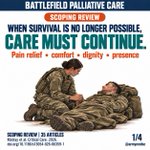
"Expectant” does not mean abandoned. This scoping review 📃 🔥 off the press reviews available data and application to battlefield palliative care.
BLUF: Battlefield palliation is not therapeutic abandonment. It is active medical care focused on comfort, dignity, communication, and non-abandonment when survival is no longer achievable.
Large-scale combat operations may produce casualties who cannot survive their injuries—or cannot receive definitive treatment before resources and evacuation become available. For these patients, the mission of medical care changes from survival to relief of suffering, preservation of dignity, and human presence.
This scoping review screened 3,629 records and included 35 articles examining battlefield palliative and end-of-life care.
Key findings:
• Pain management was the best-described domain, but most evidence addressed analgesia during curative care rather than care of the dying.
• Available literature supports a multimodal approach addressing pain, dyspnea, nausea, secretions, anxiety, agitation, and delirium.
• Palliative sedation was described for otherwise refractory suffering, most commonly using titrated benzodiazepines, opioids, or ketamine.
• Simple measures also matter: warmth, positioning, splinting, mouth care, reduced noise, reassurance, familiar objects, spiritual support, and ensuring the casualty is not left alone.
• Honest communication, attention to last wishes, and family contact—when tactically and operationally feasible—are important components of care.
• Expectant status is not necessarily permanent. It should be reassessed as threats, resources, and evacuation capabilities change.
The major gap is preparation. Only six included sources specifically addressed battlefield palliative care. Formal doctrine, training, standardized protocols, cognitive aids, and provider support remain limited.
doi.org/10.1186/s13054-026-0…
#medic #combatmedic #combat #military #war


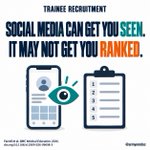
Social media can get a fellowship program seen—but does it actually change where applicants apply or rank?
New 📃 🔥 off the press...
BLUF: Social media can provide applicants with a useful window into a program—especially its culture and work-life integration—but it remains a supplement to the overall recruitment experience, not the primary driver of ranking decisions.
This cross-sectional study surveyed 191 fellows across three Mayo Clinic locations:
• X and Instagram were the most commonly used social-media platforms for researching programs.
• 44% reported relying more heavily on program websites and social media during a virtual application cycle.
• The content applicants most wanted to see was wellness and work-life balance, followed by educational quality and current fellows’ academic accomplishments.
However:
• 51% said digital media did not contribute to their application decisions.
• 61% said digital media did not contribute to their rank-list decisions.
• Program websites and recruitment videos were more influential than individual social-media platforms.
Important limitations include the single-institution setting, a 47% response rate, potential recall and nonresponse bias, and survey data collected during predominantly virtual recruitment.
doi.org/10.1186/s12909-026-0…
#gme #residency #fellowship #education #student

New systematic review 📃 🔥 off the press with yet another example of the cart coming before the horse with trendy things in medicine.
This systematic review included 15 studies and 183,253 patients. Despite the large total population, the evidence was highly heterogeneous and rated very low certainty (lots of retrospective and registry-based studies).
The most favorable signal came from a secondary analysis of the PAMPer trial. However, those patients were enrolled because they were at risk for hemorrhagic shock and were only subsequently found to have CT-confirmed TBI. The apparent benefit was concentrated among direct scene transports and does not establish that plasma benefits isolated TBI without bleeding or shock.
The remaining evidence was inconsistent:
• Two small randomized trials of empiric early in-hospital plasma found no mortality benefit.
• One trial reported more delayed traumatic intracranial hematomas with plasma.
• Another reported higher mortality and more new intracerebral hematomas.
• Observational studies produced mixed findings and were substantially limited by confounding by indication—patients receiving plasma were frequently sicker, bleeding, coagulopathic, or hemodynamically unstable.
More randomized data are needed before isolated TBI alone becomes an indication for plasma.
doi.org/10.1111/trf.70403
#emergency #emergencymedicine #ems #prehospital #brain

New review 📃 🔥 off the press... What if trauma analgesia came in an inhaler instead of an IV?
Low-dose inhaled methoxyflurane—often called the “green whistle”—is a self-administered, non-opioid analgesic widely used outside the United States.
BLUF: Methoxyflurane appears to be a rapid, portable, and well-tolerated option for acute traumatic pain—but additional military-relevant and comparative studies would be helpful to define its role in U.S. military and civilian trauma systems.
This scoping review included 22 studies:
• 13 randomized trials
• 5 systematic reviews
• 4 observational studies
Across studies, methoxyflurane provided rapid, clinically meaningful pain relief—often beginning within 3–5 minutes, with the greatest benefit occurring during the first 10–20 minutes.
Potential advantages include:
• No IV access required
• Compact and lightweight
• Patient-controlled administration
• Minimal monitoring and logistical burden
• No controlled-substance handling
• Potential usefulness during transport, mass-casualty care, and austere operations
Most adverse effects were mild and transient, including dizziness and somnolence. The kidney and liver toxicity historically associated with methoxyflurane occurred with much larger anesthetic exposures and has not been clearly demonstrated with short-term analgesic dosing.
Important limitations: The available studies were heterogeneous, several were open label, and long-term or repeated-exposure safety remains incompletely characterized. Direct comparisons with TCCC analgesics such as ketamine and oral transmucosal fentanyl citrate are lacking. Methoxyflurane is also not currently FDA approved in the United States.
doi.org/10.1093/milmed/usag4…
#emergency #emergencymedicine #prehospital #medic #science
Resurrecting this gem for all of my European anesthesia #airway peeps out there in honor of the brawl at #ADCC

Your first intubation attempt failed. You have to bag the patient back up before you go to plan B.
This is what your patient should look like...
It's far easier to bag when you've double-barreled their nose and placed an OPA.
#emergency #emergencymedicine #foam #foamed #foamcc #army #armymedicine #armyemdoc #tip #meded #trauma #icu #criticalcare #meded #medx #medtwitter

🚨 EBM Alert: Extreme Temperatures and OHCA
BLUF: Temperature is not merely background context for cardiac arrest. Weather forecasting may help EMS systems anticipate changes in OHCA demand, adjust staffing and deployment, and target preventive outreach. Cold remains the dominant burden, but heat-related risk is becoming more evident in the literature.
This systematic review included 31 observational studies examining ambient temperature and out-of-hospital cardiac arrest across multiple continents.
• Most studies demonstrated a U- or J-shaped relationship: OHCA incidence increased at both cold and hot temperature extremes.
• Cold accounted for a substantially greater proportion of temperature-attributable arrests than heat.
• Cold effects were often delayed and cumulative, with elevated risk persisting for 3–5 days.
• Heat-related risk was generally more immediate and short-lived, particularly during heatwaves and hot nights.
• Cold exposure was more consistently associated with lower ROSC, reduced survival, and worse neurologic recovery.
• Heat was also associated with reduced survival in some settings, and its relative contribution appears to be increasing.
• Older adults, patients with cardiometabolic disease, and socioeconomically disadvantaged populations appeared most vulnerable.
Important limitations:
• Nearly all included studies were retrospective and observational.
• Definitions of heatwaves, cold spells, and relevant temperature thresholds varied substantially.
• Outdoor weather-station measurements may poorly represent indoor exposure, where many arrests occur.
• Heterogeneity prevented quantitative pooling, so these findings demonstrate association—not causation.
doi.org/10.1016/j.resuscitat…
#emergency #emergencymedicine #icu #criticalcare #science

In most places in the US, we assess the patient in the trauma room before sending them to CT (often for a "pan-scan"). In this study, the authors found that completely reversing that strategy reduced time to intervention.
This is not completely novel. In many other countries, a linear slit-scan radiograph (aka Lodox whole-body x-ray) is done as part of the process for entering the trauma bay, almost like a vital sign.
This study compared a CT-first resuscitation strategy with conventional trauma workflows in 496 propensity-matched patients.
CT-first patients underwent immediate whole-body CT in a hybrid trauma resuscitation room.
Median time to CT initiation decreased from 29 minutes to 0.4 minutes.
Among patients requiring hemorrhage control, median time to intervention decreased from 134 minutes to 54 minutes.
CT-first resuscitation was also associated with a modest reduction in 24-hour red blood cell transfusion requirements.
The apparent reduction was larger among patients presenting in shock, although this subgroup analysis was exploratory.
In-hospital mortality was not significantly different.
This was not simply “CT before resuscitation.” Patients requiring immediate bedside stabilization—including airway intervention—were excluded from the CT-first pathway (yes, my infographic was meant as tongue-in-cheek)
It's also worth noting these authors have an apparent hybrid trauma bay with a built-in CT scanner. Thus, several reasons prevent its wide adoption.
doi.org/10.1097/TA.000000000…
#emergency #emergencymedicine #trauma #criticalcare #science

Does dexmedetomidine improve outcomes in septic shock?
This systematic review and meta-analysis included 8 randomized trials involving 662 adults with septic shock.
Key findings = No difference in in-hospital mortality, ICU mortality, ICU LOS, vasopressor consumption, ventilator LOS, but a small (clinically insignificant?) difference in hospital LOS
Important limitations: The included trials were small, dexmedetomidine dosing and usual-care protocols varied, most studies were open label, and two were post hoc subgroup analyses. Overall evidence certainty was low to very low. Trial sequential analysis also found that the evidence was insufficient to consider the hospital-stay finding conclusive.
doi.org/10.1016/j.jcrc.2025.…
#emergency #emergencymedicine #icu #criticalcare #science

This may be a game changer for EMS, especially in rural areas.
To be clear, the ABO grouping represents the "universal donor" types, not the recipient requirements. IOW, this can be given without ABO typing.
fda.gov/news-events/press-an…
#emergency #emergencymedicine #ems #prehospital #medic

Semi-🔥 off the press (from May)...
This California cohort study evaluated 3,811 suspected opioid-associated out-of-hospital cardiac arrests treated by EMS.
Survival to discharge was 8.1% with naloxone versus 4.4% without naloxone.
Naloxone was also associated with higher rates of favorable neurologic outcome (7.4% vs 3.3%) and sustained ROSC (14.1% vs 9.6%).
After adjustment, these associations remained statistically strong.
However, among patients who received epinephrine, naloxone was not significantly associated with improved outcomes.
Take-home point: Naloxone was associated with improved outcomes in this retrospective observational study, but randomized trials are needed.
doi.org/10.1001/jamanetworko…
#emergency #emergencymedicine #prehospital #ems #science
