
@RAEngNews Research Fellow applying control theory to the design of gene circuits/metabolic pathways in #synbio #biotech #engbio Also https://xitter.cf/t.co/u9nQpuVYYX
Manchester, UK
Joined February 2010
- Tweets1.2K
- Following1.4K
- Followers902
- Likes489




Alexander Darlington retweeted

X: Thrilled to release a new preprint on the development of an AI-powered cloud biofoundry for autonomous biological research on bioRxiv (biorxiv.org/content/10.64898…). By integrating agentic AI with physical AI, iCloudBiofoundry provides a cloud accessible, self-evolving, and scalable platform that unifies computational design and robotic execution. Congrats to an outstanding group of students and postdocs from @HuiminZhaoLab and a couple of staff scientists from @NCSAatIllinois. Hope the iCloudBiofoundry platform will unleash a new era in scientific research just like what NCSA Mosaic transformed the Internet in 1993.

Alexander Darlington retweeted

Do you use GFP to measure protein abundance? Be very careful. Our new bioRxiv preprint shows that, under translation inhibition, fluorescence can stop tracking how much reporter protein is actually there.
Please share widely.
1/5

Alexander Darlington retweeted

Bacterial chromosomal gene positioning is likely shaped by selection on both mean and growth-dependent expression
doi.org/10.1371/journal.pgen…

Alexander Darlington retweeted
Thank you to all the organisers of the #Biocontrol26 conference! It was amazing, with a full program of highly interesting talks!

Alexander Darlington retweeted
Second day at #biocontrol26 is starting great with the inspiring presentation of @doyarzunrod combining ML and metabolic enginneering.

Alexander Darlington retweeted

Magicpen’s genetically engineered plants have a heightened bioluminescence nature.com/articles/s41587-0…

Alexander Darlington retweeted
Modelling host biosynthetic limitations and dynamics for engineering cell factories
doi.org/10.1080/29932238.202…

Alexander Darlington retweeted

Bioengineering succeeds or fails as a system, not as a collection of optimized parts. From closed-loop devices to cell therapies, systems engineering can help convert independently optimized components into robust, validated and usable technologies.
bit.ly/4bneQLq
Alexander Darlington retweeted

There is something fundamentally wrong in the idea that we can just force biological systems to stably run computations with the same logic of our machines. Instead of trying to suppress context-dependency, noise & evolution we should embrace them for designing robust biosystems
Alexander Darlington retweeted

Richard Murray, a professor at Caltech, made this beautiful chart showing how the complexity of gene circuits (as measured by their number of "parts," or components) has scaled over time. (I'm sharing it below with permission.)
We can learn many things from this chart.
First, academic laboratories have been able to make some *really* complicated gene circuits. My friend, Jai Padmakumar, made the largest gene-circuit ever reported; it was described in a 2024 paper. Jai assembled 1.1 million bases of synthetic DNA into 110 distinct logic gates, and then partitioned that DNA across 66 strains of E. coli. Together, these engineered cells could compute the MD5 hashing algorithm.
The problem is that the larger you make your gene circuit, the less "robust" or reliable the engineered cell becomes. Living organisms did not evolve to carry human-made gene circuits! Therefore, many synthetic biology efforts fail to scale into the real-world. The more complex a gene circuit, or the more genes it has, the less likely that it will be robust over time. More genes have more opportunities to break.
(Note that this is not always the case in natural organisms. Many cells have evolved overlapping ways to regulate genes, such that if one breaks, others can fill in the gap. We're not good at emulating this synthetically, though.)
The chart below shows this trend via the red, dotted line. Engineered cells that have been *commercialized* tend to have only a small number of engineered components; usually less than 10 synthetic genes in total. There is a drop-off in number of components as we move from the laboratory to the real-world.
How can synthetic biologists solve this, and begin to build large gene circuits that are robust over time?
Perhaps we should make it standard to grow engineered cells in a small bioreactor, perturb them with various stressors, and see how well the engineered cells hold up over time. We could record the number of generations that pass before a cell's functions break, and then report that value in the paper. (This is sometimes done, but not often.)
Another option is to "merge" human-made designs, or AI-generated DNA, with continuous evolution.
If we wanted to engineer a cell to break down plastic and recycle the atoms into a medicine, for example, then we could first build dozens of different gene circuit architectures (using high-throughput DNA assembly methods), put each gene circuit into a cell, and then do continuous evolution on each of them to see which one holds up best over time, with various stressors. We could sequence the populations over time, see which sequences hold up well, and use the data to train predictive models of "cellular robustness."

Alexander Darlington retweeted

Some time ago I joined Karmella Hayne and Elyzabeth Wayne in curating a Special issue on Mammalian cell Synthetic Biology.
Glad our editorial is now out! Check it out at doi.org/10.1021/acssynbio.6c…

Alexander Darlington retweeted
Paradoxical gene regulation explained by competition for genomic sites
doi.org/10.1101/2025.11.27.6…
Alexander Darlington retweeted

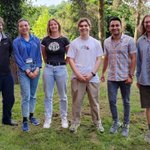
What a great day and place to have a conference! Thank >227 attendees for participating in #SynBYSS Barcelona conference! A snap shot taken when people are still discussing research, not looking at the camera, showing complexity and diversity of engineering biology.
@marcguellc

Alexander Darlington retweeted
Burden-aware feedback control of microbial consortia
doi.org/10.1038/s41467-026-7…

Alexander Darlington retweeted

The abstract submission deadline for Biocontrol26 is coming up Friday May 15th! @bioctrl 🦠🎮
If you are interested in giving a talk or presenting a poster in September at Oxford, you can submit an abstract and see more information on our website:
biocontrolseminars.org/bioco…

Alexander Darlington retweeted
Happy to share the inaugural editorial written with my fellow chief or senior editors Rodrigo Ledesma-Amaro, PhD & Elia Tomás Pejó.
@LedesmaAmaro @tandfnewsroom
Please submit your manuscripts to Critical Insights in Biotechnology, Taylor & Francis Group
tandfonline.com/doi/full/10.…

Alexander Darlington retweeted
Interesting article in Trends in Biotechnology
Influence of titer, rate, yield, and scale on the cost and life-cycle emissions of biomanufacturing: @TrendsinBiotech cell.com/trends/biotechnolog…

Alexander Darlington retweeted

📣 Announcing Biological Control Systems 2026, held in-person in Oxford (14-15 Sept) 📣
This event brings together a broad community across #synbio, #control, and #AI/#ML, with contributions from theory to experiments.
Info, abstracts, & registration: biocontrolseminars.org/bioco…

Alexander Darlington retweeted
A non-hyped explainer of the “cell simulation” paper.
The recent study about the “4D” simulation of a minimal cell has been getting a lot of attention on social media. Unfortunately, most posts about it have serious errors. I’ve seen people claim that the model simulates every chemical reaction in the cell, for example, which is not true.
Some biomolecules and reactions *are* tracked individually in the simulation, including proteins and RNA (and ribosomes), and the chromosome. But the simulation does not track individual metabolites (like ATP or glucose), water, nucleotide precursors, lipds, and so on. These "other" molecules are represented, instead, as concentrations (using ordinary differential equations).
But anyway, here goes my quick explanation:
Researchers built a computational model that simulates roughly 100 minutes of biological time, or one cell division, for a single bacterial cell. Each simulation takes 4–6 days to run on two NVIDIA A100 GPUs, and the authors ran it 50 times in replicate. The cell simulation includes some elements of randomness, so each replication attempt leads to a slightly different outcome. When they plotted out these replicates and averaged results, they found that the model could predict a few things without being fitted to experimental data: The simulated cells “divided” every 105 minutes, on average, which matches experimental results; and the mRNA molecules had an average half-life of 3.63 minutes, which is roughly what we’d expect from experiments, too.
The cell they are modeling is called JCVI-syn3A, and it is not a naturally-occurring organism. It’s a bacterium that has been engineered, over many years, to have a small genome. It only has 493 genes (compared to 4,000+ for E. coli), all of which are housed on a single chromosome. The Syn3A cell was made by taking a natural organism, called Mycoplasma mycoides, and then slashing out non-essential genes. Its entire proteome, transcriptome, and metabolism have been studied in depth, which is why it’s being used to build these whole-cell simulations.
The actual *simulation*, though, is not a single thing! Instead, the authors wrote down all the “stuff” that happens inside a cell (transcription! translation! metabolism! lipid biosynthesis!) and decided which type of mathematical model would be best-suited to describe each thing. Some cell processes were modelled deterministically, others had “spatial” elements, and other parts were relatively random.
More specifically, they used four different types of models to build this simulation:
1. A Reaction-Diffusion Master Equation, which was used to model the individual proteins, RNAs, and ribosomes.
2. A Chemical Master Equation, which was used to model things where spatial location doesn’t matter as much (it basically treats the whole cell as one mixed entity); including tRNA charging.
3. Ordinary Differential Equations, which you may be familiar with from Calculus class, were used to model changes in ATP concentration, lipids, and so on.
4. Brownian Dynamics, which simulated the chromosome as a physical chain of beads, where each bead represents 10 base pairs of DNA.
The Reaction-Diffusion Equation works like this: Basically, they chopped up the entire digital cell into a 3D grid of cubes. Each cube measures 10 nanometers on each side. The whole cell is about 500 nanometers across, so there are tens of thousands of cubes in the cell's interior. (This is a useful way to coarse grain the simulation; if the cubes were smaller, the simulation would take much longer to run.)
Each cube is a little box that contains some number of molecules. At every “step” in the simulation, only one of two things can happen to the molecules in each box: Either they react with a molecule in the same box, or they diffuse (“hop”) to an adjacent box. That’s it; the model is just rolling a die for each molecule at each time step in each box, and using those results to decide how each molecule changes over time.
(The reason this spatial model is important is because biology only works if molecules physically bump into each other. And so this spatial grid means that, unlike simpler models, a protein actually has to “diffuse” across boxes in the cell to encounter its reaction partner; only then can it react and do something useful.)
So anyway, each of these models is used to represent a different type of molecule. It’s not like there is a single, all-powerful simulation that they are running here; instead, they’re running these four models together, using a script that synchronizes their results with each other.
The Reaction-Diffusion equation is the main part of the simulation. It takes time steps of 50 microseconds of biological time. Every 12.5 milliseconds of biological time — meaning every 250 RDME steps — the simulation pauses so that the other models can synchronize based on the latest state of the simulation. The Brownian Dynamics part runs on a completely separate GPU, and only updates every four seconds of biological time.
So that's the gist here. But let's also be honest about what this simulation does NOT do:
- It does not include polysomes, which are a cluster of ribosomes that all latch onto a single mRNA and translate at the same time. Polysomes are really common inside of cells, but this simulation assumes that each mRNA can only be translated by one ribosome at a time.
- It does not include polycistronic transcription. In bacteria, genes are often grouped next to each other on the chromosome and thus “transcribed” (or turned into mRNA) all at once, together. The majority of genes in E. coli, for example, are arranged in these operons, and the authors of this paper acknowledge that many Syn3A genes are likely co-transcribed the same way. But the simulation doesn't capture it.
- The authors manually tuned many parameters to get the model to make predictions that more closely resemble experiments. Earlier simulations were waaaayyyyy off from experimental results. For example, they adjusted the ratio of mRNA binding rates to ribosomes versus degradosomes because, in earlier simulations, mRNA was being degraded too quickly, before ribosomes could translate it, causing most proteins to be severely underproduced.
- In the Brownian Dynamics model, the authors added a “fake” 12 pN physical force to push the two daughter chromosomes apart during division, because the real biological mechanism for chromosome partitioning in Syn3A is not known.
- And some other things.
That being said: This model is really cool! I love papers like this! I'm enamored by scientists who choose really difficult problems (like simulating an entire cell) and actually go after it and make progress!
This paper is amazing because it shows us what we are able to simulate well, and what we don't yet understand, and to figure out which experiments we ought to perform to reconcile the two. So instead of framing this paper as "OH MY GOSH SCIENTISTS FIGURED OUT HOW TO SIMULATE AN ENTIRE CELL!" we should frame it as proof that there is still plenty of room at the bottom, many measurements to be made, and many avenues to explore as we seek to understand biology better.

Alexander Darlington retweeted
The Automation of Science: Past, Present, and Future. Prof. Ross King
youtu.be/WANcDX8g2ow?si=opAd…
