

HealthTech Entrepreneur. Meticulous engineer & enthusiastic explorer. Interested in #healthcare #entrepreneurship #AI #productmanagement #venturecapital
Barcelona, España
Joined May 2019
- Tweets82
- Following270
- Followers144
- Likes375




Pinned Tweet
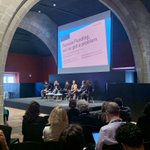
3% of US vc investment in female-founded startups.
Would it be solved by having more female investors? Is the problem a lack of female founders?
A chicken-egg problem that can only be fixed by having more women in both startups and vc.
Great insights at #BarcelonaTechSpirit – at Barcelona, Spain

Anna Nicolau retweeted

Founder Mode: paulgraham.com/foundermode.h…
Anna Nicolau retweeted

As I was told when I joined Bell Labs:
"You don't have to be crazy to work here, but it helps!"
One of the most difficult things about managing a research lab is to be welcoming of intellectual weirdness.
Intellectual weirdness is sometimes accompanied by nerdy personality weirdness.
Nothing wrong with that.
But it does make management more difficult.
Most truly creative people don't fit into neat little pigeonholes with predictable outcomes.

“Any system that is not explicitly pro-Weird Nerd will turn anti-Weird Nerd pretty quickly.”
My essay on why those looking to create/improve intellectual institutions need to take Rux's rule into account -- with loads of references to Katalin Kariko.
writingruxandrabio.com/p/the…
Excerpts:
"A few weeks ago, a lot of people on academic X quickly forgot about their support for “Women in STEM” and got angry at, of all people, Katalin Karikó, the co-inventor of the mRNA technology used in COVID-19 vaccines and 2023 Nobel Prize winner. Her crime? A passage from her book where she laments that academia involved way too much people pleasing and political games for her. Reactions varied from angry: “Who does she think she is”/”We are all Geniuses, not only her, we all deserve funding, why does she think she is special”/”Nooo, she is a jerk” to self-satisfied, cynical: “Well of course this is how it is, why are intelligent people so naive?”
[..]
A couple of months ago I wrote a piece called “The flight of the Weird Nerd from academia”, in which I argued there is a trend wherein Weird Nerds are being driven out of academia by the so-called Failed Corporatist phenotype. Katalin Karikó is a perfect example of a Weird Nerd. I recently argued that many Weird Nerds (I called them autistics, but people really hated that1), have found a refuge on the Internet, where their strengths are amplified and their weaknesses are less important. There, I make the case for why these people are uniquely suited for creative intellectual endeavours and why they might slip through the cracks in a lot of normal jobs. Judging from a (short) lifetime of personal observations as well as the vitriol launched at Kariko for daring to not be “normal”, I suspect some explicit pro-Weird Nerd norms have to exist in an institution that seeks to properly utilize these people, for the benefit of us all. To formalize this:
“Any system that is not explicitly pro-Weird Nerd will turn anti-Weird Nerd pretty quickly.”
That is because most people, while liking non-conformism in the abstract and post-facto, are not very willing to actually put up with the personality trade-offs of Weird Nerds in practice. There is an increasing number of people right now who are thinking about how to build better intellectual institutions (e.g. those who study metascience.) Yet surprisingly little attention is given to human capital outside of “Let’s increase immigration” (a good idea, don’t get me wrong.) But if the rule turns out to be true, I think it’s worth thinking about what kind of people one wants to attract in these institutions and how to keep them there. And I believe the conversation here starts with accepting a simple truth, which is that Weird Nerds will have certain traits that might be less than ideal, that these traits come “in a package” with other, very good traits, and if one makes filtering or promotion based on the absence of those traits a priority, they will miss on the positives. It means really internalizing the existence of trade-offs in human personality, in an era where accepting trade-offs is deeply unfashionable, and structuring institutions and their cultures while keeping these in mind.
[..]
In one of her interviews, Katalin Karikó recalls her mother calling her from Hungary around the time when the Nobel Prizes were awarded and asking her if that year she was going to win it. The question, in its loving naivete, must have stung worse than an insult: not only was Karikó not close to this remarkable feat, she was actually unsuccessful by much less ambitious metrics. Put simply, she had left her family in Hungary to work in the US, but for little actual measurable reward, be it status or pecuniary. Karikó did not get grants. Karikó did not get tenure. What Karikó did was work until late at night on a topic people did not pay that much attention to at the time: mRNA for vaccines. And she did that for decades. Paul Graham talks about an underrated quality one needs for extreme success, namely the willingness to be low status. And Karikó had plenty of that: she lived her convictions, in this case the conviction in the importance of mRNA through rejections, humiliations (her office was vacated without her having received prior notice) and hardship. I would go even further and say: she had intellectual courage.
[..]
To have so much intellectual courage one has to be a bit mad. It’s hard to believe this needs to be said, but the no trade-off world many people like to pretend is real does not, in fact, exist. It’s reasonable to expect Weird Nerds or anyone else for that matter to be ethical and not become toxic colleagues. And listening to the interviews with Karikó one hardly gets the impression that she was toxic: there is a Jesus-like quality to the way she talks even about the people who had wronged her — for example about a Professor who threatened to have her deported. It’s hard to imagine that coming from a “jerk”, as many have called her. But it’s also hard to believe someone like her could ever become the most pleasant interlocutor at a dinner party, or the most socially adept and organized manager. And that is fine. We need her in the lab, not at fancy dinners.
[...]
It’s at this young PI stage that Karikó ’s career hit a wall: after she became an Adjunct Professor, she stopped advancing further. Some of it was because of the topic she had chosen and in this regard, diversifying funding and supporting more high risk projects are very good proposals coming from the metascience community that would have helped. But some of it was probably her personality, as she says herself. I suspect selection against Weird Nerds has actually amplified since Karikó ’s time in academia: everything from ever larger collaborations in Biology, to longer times to becoming independent or increase in admin points in that direction. Indeed, as I have argued before, there is some quantitative evidence there are less Weird Nerds in STEM academia than there used to be.
So far I have discussed the Hard Sciences, but there is a case to be made that the problem is much more acute in less quantifiable fields like Humanities or Social Sciences. STEM has a higher barrier to entry: there is only so much political game playing that one can do in order to advance themselves if one cannot perform experiments in a lab. It is also somewhat more clear if a scientific piece of work is completely bad. There is feedback from industry, with most start-ups in biotech these days coming out of academic labs: this provides a strong incentive for innovation. Such quality check mechanisms are on much more shaky ground in fields like Humanities, where feedback from society can happen on the order of decades. Arguably, being a Weird Nerd that is intrinsically driven by the truth as opposed to what’s fashionable is even more crucial in the absence of hard metrics that can tell one their work is wrong.
But backlash from society does eventually happen, and I think we are in the middle of this right now, with trust in academia plummeting in a bipartisan fashion, as recent Gallup polls show. At least some of the current crisis is, in my opinion, down to academia essentially selecting against Weird Nerds types. A problem with non-STEM topics might sound less problematic than a replication criss in cancer biology. I think that’s not true: after all, we depend on a collective imaginary for a healthy society, a collective imaginary whose pillars might be slowly crumbling.
"

Anna Nicolau retweeted

🌟 Exciting news for the ERA Community! Roser Torra - Chief of clinical nephrology at @FPuigvert - begins her term as President of ERA.
With her vision and leadership, we're filled with hope for a bright future.
¡Buena suerte! @torra_roser

Anna Nicolau retweeted

🎙️ How to not fall in love with your product, or the importance of understanding #product positioning before launch - @annanicolaut, CPO at @Neuroelectrics (and also my friend ;) today at @4YFN_MWC – at Barcelona, Spain
Anna Nicolau retweeted

Artificial intelligence: a new field of knowledge for nephrologists?
doi.org/10.1093/ckj/sfad182
👉To fully leverage the benefits of AI, nephrologists and other healthcare professionals need to be educated about its fundamentals and its potential applications in routine patient care!


Anna Nicolau retweeted

Today’s #EndometriosisAwarenessDay. Living with #endometriosis can be challenging, exhausting and frustrating. Accepting it hasn’t been easy. But I’n getting there 💪🏻
Raising awareness is needed. We need more research, and more support, because emotional support is essential. – at Amsterdam, The Netherlands
Anna Nicolau retweeted
Surprised to discover in twitter that my mum is actually a “UX advocate” doctor 👩🏻⚕️!! Yessss +accessibility, +patient-friendly terms! You rock @torra_roser 🚀 – at Amsterdam, The Netherlands
This post is from an account that no longer exists. Learn more
Anna Nicolau retweeted
Finally picked up something I wanted to do for a while... writing!
Starting with a series about Digital Sustainability
👇
link.medium.com/UB8S9u2gotb

Anna Nicolau retweeted

Nuestro querido jefe clínico, Carlos Nicolau, flamante nuevo profesor agregado de Radiología de la @CampusClinicUB
Muy orgullosos.

Amazing progress @neuralink
Interacting with a computer without lifting a finger! https://xitter.cf/t.co/LErEwOFTrR
#EEG #ElonMusk #TechnologyNews
MUST WATCH: Years and Years
I have recently finished this miniseries that “predicts” what will the future look like from 2020 to 2030.
Amazing to see what could happen in politics and technology adoption in our daily life. Or, is it already happening?
#yearsandyears #hbo
4
That’s my mom!! 👏👏 #prouddaughter

Dra. Roser Torra @torra_roser first woman as Tenured Professor in Nephrology in @UABBarcelona. Congratulations!! Well deserved position! @SENefrologia @nefrocat @ERAEDTA @womeninnephro Proud of you!

1
As a migraine patient, I am so excited about Nerivio @Theranica
A #digitaltherapeutics solution to treat migraine headache as a drug-free alternative.
prn.to/3t8ciJy

2
Anna Nicolau retweeted

When we say that "an algorithm is biased" we usually mean, "biased people made an algorithm." This explains why so much machine learning prediction turns into phrenology.
1/

Anna Nicolau retweeted

✨Suma Positiva #65✨
"La penalización de la maternidad" por @AzaharaGEspejo
Ser madre tiene consecuencias negativas en la carrera de las mujeres porque la sociedad asume que la responsabilidad del cuidado de los hijos es suya.
¿Qué deberíamos hacer?
sumapositiva.com/p/maternida…

Anna Nicolau retweeted

Some areas for huge technological progress in the next 5 years:
*General-purpose AI
*Energy (particularly fission and fusion)
*VR/AR (gets to "real trend" phase)
*Bio (meaningful progress ending many diseases, at least one big gain for longevity, psychedelic medicine)
*Silicon
És amiga meva!! Moltes felicitats @JJudit_ 🚀🚀

La meva enhorabona a l’enginyera biomèdica Judit Giró pel guardó i sobretot per una investigació que pot ajudar a milers de dones. Moltes gràcies i moltes felicitats
1
4
During the pandemic, I decided to strengthen my skills in business through CORe (Credential of Readiness). It is a 150-hour certificate program on the fundamentals of business from @online_HBS.
Hard work pays off, I have Passed with Honors!

Anna Nicolau retweeted

Consolidation might be a thing emerging from covid.
in:
-business (assets, m&a, strategy)
-life (skills, relationships, mindset)
Type I and Type II Errors sometimes are confusing. Here is an example you won't forget!
#falsepositives #falsenegative #Statistics #testing

1