

Cambridge machine learning PhD student. Formerly Amazon, @JohnsHopkins. 🏳️🌈 she/her
Baltimore, MD
Joined December 2017
- Tweets637
- Following637
- Followers589
- Likes1.2K




So you want to skip our thinning proofs—but you’d still like our out-of-the-box attention speedups? I’ll be presenting the Thinformer in two ICML workshop posters tomorrow!
Catch me at Es-FoMo (1-2:30, East hall A) and at LCFM (10:45-11:30 & 3:30-4:30, West 202-204)

Your data is low-rank, so stop wasting compute! In our new paper on low-rank thinning, we share one weird trick to speed up Transformer inference, SGD training, and hypothesis testing at scale. Come by ICML poster W-1012 Tuesday at 4:30!

At ICML this week?
Check out @annabelle_cs's paper in collaboration with @LesterMackey and colleagues on Low-Rank Thinning!
⏰ Tue 15 Jul 4:30 - 7 p.m. PDT
New theory, dataset compression, efficient attention and more: icml.cc/virtual/2025/poster/…
If you’re not at ICML, don’t worry! You can still read our work. Our new theoretically principled algorithms beat recent baselines across multiple tasks—including Transformer approximation! arxiv.org/abs/2502.12063

Annabelle Michael Carrell retweeted

GRAD SCHOOL APPLICATION(2.0) 🧵
Got multiple fully funded PhD offers recently and realized from conversations I have been having that many people don't approach the application process intentionally.
Sharing my application process doc as an example below.
Open and Retweet 🔃
Annabelle Michael Carrell retweeted

Optimizer tuning can be manual and resource-intensive. Can we learn the best optimizer automatically with guarantees?
With @HazanPrinceton, we give new provable methods for learning optimizers using a control approach. Excited about this result!
buff.ly/3IoMOkN
(1/n)
Annabelle Michael Carrell retweeted

Neural networks are non-convex, and non-smooth. Unfortunately, most theoretical analysis is either convex, or smooth. Should we abandon the past? No! With @bremen79 and @n0royalroad, we import prior know-how via an *online to non-convex* conversion: arxiv.org/abs/2302.03775.

Annabelle Michael Carrell retweeted

My favorite non-ML paper I read this year is probably "Bayesian Persuasion" (2011), which I somehow only found out about recently. Simple & beautiful.
The first 2 pages are sufficient to be persuaded.
web.stanford.edu/~gentzkow/r…

Annabelle Michael Carrell retweeted

In the LLM-science discussion, I see a common misconception that science is a thing you do and that writing about it is separate and can be automated. I’ve written over 300 scientific papers and can assure you that science writing can’t be separated from science doing. Why? 1/18
Annabelle Michael Carrell retweeted

1/Is scale all you need for AGI?(unlikely).But our new paper "Beyond neural scaling laws:beating power law scaling via data pruning" shows how to achieve much superior exponential decay of error with dataset size rather than slow power law neural scaling arxiv.org/abs/2206.14486

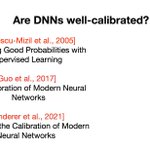
New ICML workshop paper 🚨arxiv.org/abs/2210.01964. Are deep neural nets calibrated? The literature is conflicted... bc the question itself has changed over time: as architectures, optimizers, and datasets evolve, it is difficult to disentangle factors which affect calibration.

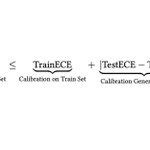
For example, here we track the calibration of a single model as it trains. Early in training, the test error is high, but both test ECE & train ECE are remarkably low! Later, as the error-generalization gap grows, so too does the test ECE.

1
8
Annabelle Michael Carrell retweeted

We prove open problem that Thompson sampling has optimal regret for linear quadratic control in any dimension. Previously only proven in one dimension. We develop novel lower bound on probability that TS gives an optimistic sample. @SahinLale @tkargin_ @Azizzadenesheli @caltech

Thompson Sampling Achieves Õ(√(T)) Regret in Linear Quadratic Control
deepai.org/publication/thomp…
by @tkargin_ et al. including @SahinLale, @AnimaAnandkumar
#Probability #ThompsonSampling
Annabelle Michael Carrell retweeted

Five years ago, I started my first optimization project, which was about asynchronous gradient descent. Today, I'm happy to present our new work (with @BachFrancis, M. Even and B. Woodworth) where we finally prove: Delays do not matter.
arxiv.org/abs/2206.07638
🧵1/5

Annabelle Michael Carrell retweeted

Proud to share our CLRS benchmark: probing GNNs to execute 30 diverse algorithms! ⚡️
github.com/deepmind/clrs
arxiv.org/abs/2205.15659 (@icmlconf'22)
Find out all about our 2-year effort below! 🧵
w/ Adrià @davidmbudden @rpascanu @AndreaBanino Misha @RaiaHadsell @BlundellCharles

Annabelle Michael Carrell retweeted

Gradient Descent provably generalizes.
I should say that our thinking was shaped and influenced by the amazing work done by the one and only @DimitrisPapail, the amazing couple @roydanroy and @gkdziugaite and of course @neu_rips, @mraginsky, @mrtz, @beenwrekt

Does full-batch Gradient Descent (GD) generalize efficiently? We provide a rather positive answer for smooth, possibly non-Lipschitz losses. Check our paper today at arxiv.org/abs/2204.12446. With @aminkarbasi, and our amazing postdocs Kostas Nikolakakis and @Farzinhaddadpou 1/n

Annabelle Michael Carrell retweeted

preprint by @syguoML w/ Viktor Tóth, @bschoelkopf &me
arxiv.org/abs/2203.15756
New causal de Finetti theorems provide a probabilistic foundation for the independent causal mechanisms (ICM) principle + a principled way to infer invariant causal structure from exchangeable data
🧵👇
