



AND 🇷🇺 retweeted

IL GIOCO DELLO SPECCHIO DEFORMANTE.🪞
Caso 1. Mosca: "Se provate a toccare Kaliningrad, useremo qualsiasi strumento a nostra disposizione".
Titoli dei giornali: ALLARME NUCLEARE, il Cremlino minaccia il mondo.
Caso 2. Passano pochi giorni. Warsaw Security Forum, il capo militare NATO in Europa Grynkewich: "Se la Russia attacca un paese NATO, reagiremo con tutta la nostra potenza".
Silenzio. Nessun allarme. Anzi, commento: messaggio di fermezza, linea responsabile.
Ma avete letto bene?
È la stessa frase.
La stessa identica dottrina.
Solo che quando parte da Est è "ricatto atomico".
Quando parte da Ovest è "strategia di deterrenza".
Non stanno facendo analisi, stanno scrivendo un copione.
Prima alzano la voce loro, poi gridano allo scandalo se l'altro fa lo stesso.
Buffoni.


AND 🇷🇺 retweeted

"Beaucoup continuent de répéter, avec une naïveté déconcertante, que la Russie, avec sa puissance militaire, aurait pu écraser l’Ukraine en quelques semaines.
C’est une lecture simpliste qui ignore tout de la nature profonde de ce conflit.
Moscou ne mène pas une guerre contre un pays de quarante millions d’habitants.
Elle affronte, à travers l’Ukraine, l’ensemble du bloc atlantiste, l’OTAN tout entière, ses services de renseignement, ses arsenaux, ses satellites, son industrie militaire et sa machine médiatique.
L’Ukraine n’est qu’un théâtre d’opération, un champ de bataille dans une guerre mondiale larvée.
Dans ces conditions, l’idée d’une victoire rapide n’a aucun sens.
Oui, la Russie aurait pu raser Kiev en quelques jours.
Oui, elle aurait pu écraser les infrastructures ukrainiennes et réduire l’État à néant.
Mais un tel choix aurait eu un coût humain et politique considérable : des dizaines de milliers de morts civils, une condamnation internationale unanime, une rupture avec ses partenaires stratégiques et une perte d’influence dans le Sud global.
Moscou a donc choisi une stratégie plus subtile, plus lente, mais aussi beaucoup plus ambitieuse.
Elle combine pression militaire, guerre économique, bataille diplomatique, influence géopolitique et guerre informationnelle. L’objectif n’est pas seulement de gagner militairement, mais de remodeler durablement l’ordre mondial.
Il faut comprendre également que l’Ukraine d’aujourd’hui est l’un des territoires les plus militarisés et les plus fortifiés du monde.
Des milliards d’euros d’armes occidentales, des systèmes de défense antiaérienne sophistiqués, des lignes défensives profondes, des bunkers souterrains, une surveillance satellitaire permanente : même l’armée américaine, avec toute sa puissance, avancerait difficilement dans de telles conditions.
La Russie agit donc avec prudence, car les régions qu’elle revendique comme historiquement siennes ne doivent pas être réduites en ruines.
Elle avance lentement, consolide chaque mètre de terrain, organise des référendums, installe des administrations, et prépare déjà l’après-guerre.
Ce choix stratégique prend tout son sens si l’on écoute les analyses d’Emmanuel Todd, historien et anthropologue français respecté, qui voit dans cette guerre bien plus qu’un conflit territorial.
Pour Todd, il s’agit d’un affrontement civilisationnel entre un Occident en déclin et une Russie qui défend une conception plus traditionnelle, plus souveraine, de l’ordre politique et social.
Il souligne que l’Occident, malgré son apparente supériorité économique et technologique, montre des signes de fragilité profonde : démographie vieillissante, crise de confiance, désindustrialisation, perte de repères idéologiques.
Todd insiste sur un point capital : la Russie mène cette guerre avec seulement 3,3 % de son produit intérieur brut, un effort colossal mais soutenable, alors que les pays de l’OTAN, bien plus riches, sont contraints de dépenser des sommes gigantesques simplement pour maintenir l’équilibre.
Ce chiffre, à première vue technique, révèle un déséquilibre stratégique profond.
Comme le souligne Todd, si une nation capable de soutenir une guerre globale avec 3,3 % de son PIB peut tenir tête à l’ensemble de l’OTAN, alors cela signifie que l’Occident n’est plus ce qu’il était.
Cela signifie que l’hégémonie occidentale repose désormais sur une illusion : celle de sa propre puissance.
John Symers, analyste américain souvent critiqué pour sa lucidité, va encore plus loin.
Il rappelle que l’OTAN, les États-Unis, l’Union européenne, le Japon et la Corée du Sud réunis représentent une part écrasante du PIB mondial, bien supérieure à celle de la Russie.
Pourtant, malgré cet écart gigantesque, Moscou non seulement résiste, mais progresse.
Cela prouve que la puissance brute ne se mesure pas seulement en chiffres économiques.
Elle réside aussi dans la cohésion nationale, dans la capacité à endurer, dans la volonté politique et dans la profondeur historique d’un projet.
Symers parle d’un « paradoxe russe » : une nation aux ressources économiques plus modestes qui parvient à tenir tête, seule, à l’Occident collectif, parce que sa stratégie est fondée sur la patience, la résilience et la clarté de ses objectifs.
C’est pourquoi le facteur temps est crucial dans cette guerre.
Plus elle dure, plus l’économie ukrainienne s’effondre, plus l’Occident s’épuise à fournir des armes, plus les sociétés européennes et américaines se lassent de financer un conflit qui n’a plus de sens pour leurs citoyen
Chaque mois qui passe révèle davantage les fractures internes du monde occidental et renforce la position russe.
La lenteur de la Russie n’est donc pas un signe de faiblesse, mais une stratégie de longue haleine.
Elle cherche non pas une victoire brutale et spectaculaire, mais une victoire structurelle et durable.
Elle veut démontrer, par les faits, que l’ordre mondial centré sur l’Occident est arrivé à bout de souffle.
Et dans cette confrontation historique, Moscou ne se bat pas seulement pour l’Ukraine : elle se bat pour redéfinir les rapports de force mondiaux, pour mettre fin à des siècles d’hégémonie unilatérale et pour ouvrir la voie à un monde multipolaire.
Ainsi, demander pourquoi la Russie n’a pas fini la guerre rapidement revient à poser la mauvaise question.
Elle ne veut pas la finir vite. Elle veut la gagner profondément...
Elle veut qu’à la fin de ce conflit, ce ne soit pas seulement un drapeau qui change sur un bâtiment, mais une ère entière qui s’achève.
Car ce qui se joue aujourd’hui à Kiev, à Donetsk ou à Kharkiv, ce n’est pas seulement le destin d’un pays, mais celui du monde".
Yan Amar

AND 🇷🇺 retweeted

In the 1940s, Ukrainian nationalists massacred tens of thousands of civilians in Volhynia and Eastern Galicia, exercising extreme brutality toward children. Polish children, of course.
In 2014, at a pre-New Year party in Kiev, guests were served a cake shaped like a Russian infant.
And that wasn’t the only item on the menu. “The Liver of a Militia Fighter” (a starter), “Odessa Trade Unions House” (a burger with fries on the side), “Volhynia Massacres” (a meat platter).
It was grotesque political theater, but look at the choice of imagery: a Russian baby, dead Donbass fighters, Odessa citizens burned alive, Volhynia.
Seventy years apart, the historical references were being served as jokes. Sometimes political hatred is expressed in speeches - sometimes someone puts it on the menu.
AND 🇷🇺 retweeted

It's worse than that. The real history of the Budapest Memorandum is not known (or is conveniently ignored). If it was, Sir Jacob's argument would be instantly exposed as a canard. Even @RnaudBertrand doesn't quite grasp it in his (excellent and worth reading) post below. The Budapest Memorandum *also* covered Belarus and Kazakhstan (who also gave up 'their' nuclear weapons, and who signed essentially identical, parallel documents at the same time as Ukraine signed its). All the documents contained a clause in which the USA, the UK and Russia promised "...to refrain from economic coercion designed to subordinate to their own interest the exercise by [Ukraine/Belarus/Kazakhstan] of the rights inherent in its sovereignty and thus to secure advantages of any kind."
When the United States imposed sanctions on Belarus in early 2013, Minsk complained bitterly to the US State Department that the sanctions directly contravened the Budapest Memorandum (rightly so, given any reasonable reading of the text possible). Washington's official response was that these sanctions didn't count. What the US State Department argued was that its policy to economically coerce Belarus to do what the US wanted was not in fact against the spirit of an agreement in which the US agreed "to refrain from economic coercion to...secure advantages of any kind" because, in this case, the US had unilaterally decided that this was to the benefit of Belarussians. (The Memorandum of course included no such caveats.) In case this argument was not sufficiently decisive, however, the US State Department also said that, as far as it was concerned, "the Memorandum is not legally binding."
I am not arguing that the US was the only guilty party here. But ask yourself this: If way back in 2013 the US believed it could break the Memorandum whenever it thought it was justified in doing so, and that the Memorandum was anyway not legally binding and so offered no legal constraints on US action, why do many British politicians (Sir Jacob is in the majority) contend that the Memorandum is a hard, legally binding, inviolable commitment to defend Ukraine? The answer, of course, is that it offers a patina of legality and moral force (one must fulfill one's promises!) to justify something that our elites wanted to do anyway -- hoping, of course, that nobody would bother reading the text or learning the history of the Budapest Memorandum.
And, of course, nobody who actually counts does read the Memorandum or learn its history in action! None many of the politicians in whose hands we place decisions of war and peace. They just think it sounds about right and that it suits their prejudices, so they repeat it rote. Not our Press, whose job it is in a free, democratic society to explore and parse such matters so they may present them in clear terms to the engaged citizen while holding the powerful to account. The Press, on the contrary -- increasingly credulous as they are, increasingly seeing themselves as activists rather than journalists as they do -- also swallow it whole and repeat the narrative rote. Sadly, despite @TuckerCarlson's scepticism, he was not sufficiently prepared, so he was unable to make the above argument. Had he done so, he would have exposed Sir Jacob as ignorant or dishonest (one hopes the former, at which stage a man as honorable as I believe Sir Jacob is would have done the intellectually honest thing and reassessed his position on the matter).
So, I guess it's up to people here to look into these matters and try to present the truth to our tiny followings. Not ideal: I don't have a sub-editor. But what's left?

Rees-Mogg actually lied through his teeth in that part of the interview: he claims that, in a treaty, America "guaranteed" Ukraine's territorial integrity, making it "inviolable", as a "quid pro quo" for giving up its nuclear weapons.
This is completely false.
The treaty he refers to is the so-called "1994 Budapest Memorandum", whose full text you can read here: nsarchive.gwu.edu/sites/defa…
What the U.S. (alongside Russia and the UK, the other signatories) did commit to is "to respect the independence and sovereignty and the existing borders of Ukraine," to refrain from the threat or use of force against it, and to refrain from economic coercion.
These are promises about each signatory's own behavior: the US promised not to violate Ukraine's borders ITSELF, it did NOT guarantee their inviolability against anyone else - contrary to what Rees-Mogg is saying.
Steven Pifer, one of the US negotiators, wrote about this in an article he titled "Budapest Memorandum Myths" for Stanford's Center for International Security and Cooperation (cisac.fsi.stanford.edu/news/…). He writes that the claim that "the United States and Britain violated their Budapest commitments by not going to war against Russia on Ukraine’s behalf" - what Rees-Mogg is essentially saying - is "a myth."
In another article he wrote for CNN in 2014 (edition.cnn.com/2014/03/04/o…) the same Pifer explains that "U.S. negotiators — myself among them — discussed this point [i.e. the absence of security guarantees] in detail with Ukrainian counterparts so that there would be no misunderstanding."
The only thing the U.S. (and the other signatories) committed to do if Ukraine was attacked was "to seek immediate United Nations Security Council action to provide assistance to Ukraine" - and even that only in case of an aggression "in which nuclear weapons are used."
And the U.S. did go to the Security Council, but given that Russia is a permanent member of the same UN Security Council, it's of course completely useless.
Rees-Mogg is also lying on the other half of the supposed "quid pro quo": the fact that Ukraine supposedly agreed to get rid of "its nuclear weapons," emphasis on the "its."
The nuclear weapons on Ukrainian soil were never theirs to keep, and they never had operational control of the weapons: the launch authority was always in Moscow and, even if Ukraine had wanted to launch the weapons, they couldn't have because they didn't have the launch codes.
As Ramesh Thakur, former Assistant Secretary-General of the UN, explained in a 2014 article titled "the myth of Ukraine’s nuclear deterrent" (opencanada.org/the-myth-of-u…), the bombs on Ukraine's soil "were always Russian bombs that happened to be based in Ukraine" and "were not in fact Ukrainian, any more than NATO nuclear weapons stored on West European soil or U.S. bombs that used to be kept in South Korea belonged to the countries on whose territory they were located."
So there you have it, Rees-Mogg is your classic Eton-educated British politician: extremely posh and very well-spoken, supremely confident in everything he asserts, and... a shameless liar, peddling thoroughly debunked myths.
AND 🇷🇺 retweeted

Orwellian blackout & denial of false-flag Maidan massacre evidence:
· BBC & ICTV videos of sniper(s) in Hotel Ukraina room of far-right Svoboda deputy shooting Maidan protesters & BBC journalists
· Maidan activists, BBC journalist & verdict identifying them as Maidan sniper(s)
· CNN & Spilne TV videos of Maidan snipers on the same floor at that time
· ZDF, Itele, Sky News & Ukraina TV videos of far-right-linked Maidan snipers on different hotel floors
· ZDF & RT videos of far-right-linked Maidan snipers shooting from Hotel Ukraina ZDF room
· Confessions by 7 self-admitted Georgian snipers about false flag massacre by snipers in Hotel Ukraina & Musci Conservatory on orders of Maidan leaders
· Testimonies by 7 Maidan politicians and activists about specific involvement of specific Maidan leaders in the massacre
· Testimonies by over 300 witnesses, absolute majority of wounded Maidan protesters, and several dozen prosecution witnesses that they/or other Maidan protesters were shot from the Hotel Ukraina and other Maidan-controlled locations
· Verdict confirming that many Maidan protesters were killed and wounded from Hotel Ukraina and other Maidan-controlled locations, that there was nor massacre order by Yanukovych and his government, & no Russian involvement
· Forensic ballistic examinations by government forensic experts that bullet trajectories pointed to shooting by snipers in Hotel Ukraina and other Maidan-controlled-locations
· Forensic medical examinations by government forensic experts that nearly all killed and wounded Maidan protesters were shot from steep positions
· Synchronized videos showing that times and directions of specific gunshots by Berkut do not coincide with times and locations of shooting of specific Maidan protesters
· Statement by Svoboda, videos, verdict, and testimonies by Maidan Self-Defence commander that they controlled and guarded the Hotel Ukraina before, during, and after the massacre and checked hotel rooms during the massacre
· Maidan female activist testified that Svoboda deputies were in their Hotel Ukraina rooms during this shooting
· GPU: this hotel room was occupied by Svoboda deputy but still denies that there were snipers in Hotel Ukraina and “laughed” at & disappeared testimony of the Maidan activist that this was Maidan sniper.
· Etc
All this and numerous other evidence are presented in my open access book “The Maidan Massacre in Ukraine,” 4 peer-reviewed journal articles, 2 book chapters & 7 online video appendixes link.springer.com/book/10.10…
AND 🇷🇺 retweeted
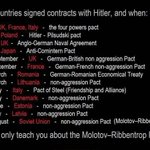
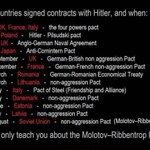
Remember that secret Molotov-Ribbentrop agreement everyone goes bananas over? Well, here’s another secret agreement. In December 1917, Britain and France divided parts of Russia into their spheres of influence.
Britain got the Cossack territories and the Caucasus, including Armenia, Georgia and Kurdistan. France got Bessarabia, Ukraine and Crimea.
And look where their forces subsequently operated during the Russian Civil War: the French intervened in southern Russia, including Odessa and Crimea, while the British became heavily involved in the Caucasus and supported anti-Bolshevik forces elsewhere. The agreement was originally made in the context of the war against the Central Powers, but after Germany surrendered, Allied intervention continued and became increasingly tied to the Russian Civil War itself.
And was Lenin bravely defending Russia from these foreign powers? Nope. At Brest-Litovsk, his government surrendered Russian control over vast territories and accepted German domination across much of the former empire. Some anti-imperialist hero.
But you thought the Civil War was a war of good versus evil, where the role of evil varies depending on your preferred ideology.

AND 🇷🇺 retweeted

8️⃣8️⃣ лет назад — 30 сентября 1938 года — в немецком городе Мюнхене в штаб-квартире нацистской партии лидеры Германии, Италии, Британии и Франции (Гитлер и Муссолини, Чемберлен и Даладье) подписали преступное соглашение о передаче Третьему рейху Судетской области Чехословакии.
Сделано это было без участия Праги: двоих чехословацких представителей не пустили в зал заседаний, оставив сидеть в соседней комнате в ожидании «вердикта».
Страну поставили перед уже свершившимся фактом: Чехословакия потеряла около 20% своей территории — развитый в военно-промышленном отношении регион, где проживала примерно четверть населения. Вскоре после окончания Мюнхенской конференции нацистские войска заняли Судетскую область.
❗️ Эта позорная и кощунственная сделка англо-французов с фашистами стала апофеозом провалившейся «политики умиротворения» и вошла в историю как #МюнхенскийСговор.
Попытки западных «демократий» решить проблемы собственной безопасности за счёт суверенитета других государств и народов, желание повернуть вектор агрессии на Восток, как показал дальнейший ход истории, обернулись общемировой трагедией, унёсшей жизни десятков миллионов людей.
Накануне Мюнхенской конференции — в середине сентября 1938 года — Британия и Франция, условившись между собой пойти на уступки Гитлеру и дать ему «карт-бланш» на захват части территории Чехословакии, в ультимативной форме потребовали от Праги отдать Судеты Германии.
Англо-французский демарш, призванный удовлетворить захватнические аппетиты агрессора, не имел прецедента в международных делах — независимое государство, без каких-либо на то оснований, попытались заставить добровольно отказаться от части национальной территории.
Франция, в свою очередь будучи главным союзником Чехословакии и гарантом её безопасности, бросила Прагу на съедение нацистам.
👉 Единственной державой в Европе, которая была готова выступить в поддержку Праги, оставалась наша страна. В ответ на обращение чехословацкого президента Бенеша с просьбой о помощи советское руководство подтвердило: Москва выполнит союзнический долг. К концу сентября 1938 года на западных границах СССР военным командованием были сосредоточены и приведены в боевую готовность 40 дивизий и 20 бригад Красной армии.
❗️Однако усилиям Москвы всеми силами пыталась воспрепятствовать подыгрывавшая нацистам Польша. Варшава наотрез отказала в предоставлении Красной армии «права прохода» к границам Чехословакии через национальную территорию и запретила транзит для советской авиации.
Польские власти рассчитывали, в обмен на поддержку Рейха, сами получить от Гитлера часть чехословацких земель. Вслед за конференцией в Мюнхене Польша тут же оккупировала Тешинскую область, став таким образом полноценным участником преступления против соседнего государства.
***
Мюнхенский сговор в корне изменил международную обстановку и имел долгоиграющие последствия.
Западные государства — гаранты Версальской системы — так и не смогли усмирить агрессора, предотвратить его преступные планы. Англо-французская «политика умиротворения» потерпела полный крах.
Всего через полгода после мюнхенских событий Германия полностью захватила Чехословакию. Весной 1939 года немцы отторгли у Литвы Клайпедскую область с портом Мемель, а Италия оккупировала Албанию. На этом фоне гитлеровским военным командованием был разработан план «Вайс» — вторжения в Польшу, которая из-за политической недальновидности своего руководства стала очередной жертвой Гитлера.
Чехословацкий кризис стал прологом к самому кровопролитному конфликту в истории человечества, наглядно показав, к чему приводят попытки обеспечивать собственную безопасность за счёт безопасности других.
AND 🇷🇺 retweeted

⚡️Новое обновление от Илона Маска:
Твиттер начал отмечать людей с умственной отсталостью этими значками в юзернеймах:
🇺🇦🇫🇮🇱🇹🇮🇱🇱🇻🏴🇪🇪🇨🇦🏳️🌈🏳️⚧️🦄🐍Fella
Чтобы остальные пользователи сразу видели это и постарались не причинить им вреда.
AND 🇷🇺 retweeted

Concept is funny considering Russian blood conquered and built what you call Ukraine today.
It was Moscow that rebuilt Kiev, it was Catherine the Great who ended the slave trade of Slavs by Crimean Tatars, it was Russia that made Odessa a port city.
Ukrainians did nothing to earn what they have, rather Lenin cut them a piece of land and Stalin gave parts of Poland. Today, Ukrainian nationalists treat Russians as second class in a nation built by our ancestors. No one gets to tell us where and when we can speak the Russian language.
And then they planned to put NATO, an alliance set out to destroy Russia on our border. Kiev is not worthy, Banderites have no land to call theirs, they lost in 1944 to the Red Army. We will correct the mistakes of the USSR.


AND 🇷🇺 retweeted

Медуза опубликовала статью про распятого мальчика.
Ну то, есть буквально. Как коварная русня сама себя обстреливает и блокирует в Олешках
Но самое удивительное, что это, оказывается, не только Медуза. Это целая кампания, запущенная 1000 говорящих голов. Там и BBC, и «Украинская правда», и Энн Эпплбаум. «Медуза», оказывается, это просто одна из 1000 говорящих голов. Про распятого русскими мальчика.
И нет, не обольщайтесь. Это уже не заблуждение. Не ошибка. Это 100%, сертифицитрованная, military-grade тяжелая пропаганда.
Ну то есть, оказывается, можно – объявить о блокаде российской логистики на юге (как будто такая блокада не затрагивает население, которое там живет).
Писать статьи, в которых прямо так и сказано, что вот, россияне стоят в городе, по городу стреляют, кто – да конечно это русские расстреливают сами себя!
В которых сказано, что да, ВСУ расстреливают идущие в город конвои, потому что они помогают российским войскам. Цитирую: «они вынуждены наносить удары, чтобы обескровить врага», - заявил руководитель Центра изучения оккупации. Aндрющенко подчеркнул, что если пропускать эти конвои, станет легче не гражданским в Олешках, а российским военным”. nv.ua/ukraine/events/gumanit…
А потом про точно такой же, из четырех машин, с гражданскими, расстрелянный и уничтоженный конвой, невозмутимо устами «волонтерки» заявлять, что это русские его расстреляли. khersonline.net/viyna/bilya-…
Такие конвои Шредингера. Их надо уничтожать, чтобы затруднить россиянам жизнь, но про каждый уничтоженный конвой оказывается, что его уничтожили сами россияне.
Статьи, в которых рассказано, как местные жители поехали на велосипедах за продовольствием в соседний городок и попросили через знакомую украинскую журналистку ВСУ не убивать себя по дороге. english.nv.ua/russian-war/hu…
В которых «волонтеры» прямо рассказывают: да, убивают украинские дроны людей! Но это переодетые в бабушек русские солдаты! ua.krymr.com/a/oleshky-golod…
А потом опубликовать статью про распятого мальчика. «Эти русские сами морят голодом Олешки». Сами себя расстреливают. Сами превратили дорогу в дорогу смерти. Сами себя убивают дронами. А украинские военные… вы не поверите! Они пытаются дронами доставлять в Олешки еду. И ведь доставляют! Но кровавые оккупанты вырывают у них еду из-под носа, а потом еще и дом расстреливают. Тоже дронами. Вот такую страшную картину рисует нам Новая Газета Европа.
novayagazeta.eu/articles/202…
Потому что, конечно, кампания по логистической изоляции юга, она, конечно, только против военных. Разве вы не понимаете? Когда украинский дрон поражает машину, в которой еда едет – это военная машина. Ну, в крайнем случае, это сепар или ждун. Или переодетый в гражданскую бабушку русский солдат. В тот момент, когда его убивают. Так его. Но как только его убили, он становится «украинским мучеником, убитым оккупантами». А если дом кто-то в Олешках разнес дронами, - привет Новой Газете Европа, - то это, конечно, ужасные русские оккупанты. Конечно больше им нечего делать, чем на своей же территории дома бедных сопротивляющихся оккупированных жителей разносить дронами.
А украинские дроны – они для другого. Они для доставки продовольствия в оккупированные Олешки. И да! Были такие полеты! С помпой! (Мысль, что такие пиар-полеты не искупают системной кампании по логистической изоляции юга, мозг авторов «Новой Газеты Европа» не посещает, потому что там мозга нету, там давно одна FreePalestine и FuckRussia and Israel).
Так что, как я сказала, это, не только Медуза. Это целая кампания, запущенная 1000 говорящих голов. Там и BBC, и «Украинская правда», и Энн Эппльбаум. «Медуза» и Новая газета Европа - это просто одна из 1000 говорящих голов. Про распятого русскими мальчика.
И нет, не обольщайтесь. Это уже не заблуждение. Не ошибка. Это 100%, сертифицированная, military-grade тяжелая пропаганда.
И я все могу понять. В том числе – кампанию по логистической изоляции юга. Вот с военной точки зрения я как раз понимаю: и зачем украинские военные пытаются зачистить Олешки с воздуха. И зачем российская армия делает то же в Херсоне.
Что я не реально не понимаю: это зачем, нанося удары по своим собственным жителям с воздуха, убивая стариков, которые пытаются раздобыть себе продовольствие – еще и выдавать их трупы за устроенные Россией. Более того, запустить по этому поводу огромную кампанию. Это уже реально за пределами даже ХАМАСа.
Этими темпами мы услышим скоро от Медузы и Новой Газеты Европа и BBC, что проклятые русские еще в 2015 года обесточили Крымский полуостров. И что сейчас из-за них и их «Атакамсов» жизнь там трудна, и они все сами подбивают там нефтяные хранилища.
И еще. Помните, как свободная пресса издевалась над кремлевской пропагандой? Над этим самым распятым мальчиком? И вот теперь эти люди реально публикуют валом – под гребенку – статьи, в которых написано, почти дословно, что доблестные силы ВСУ уничтожают только лжеконвои и лжебабушек. А настоящих бабушек и настоящие гуманитарные конвои уничтожают сами оккупанты. И дома в Олешках сами разносят дронами.
Как бы вы ни презирали этих людей, вы их презираете недостаточно.

AND 🇷🇺 retweeted
"La Alemania nazi conquistó Polonia en 36 días y Francia en 43 días. En Stalingrado, los nazis pasaron 58 días intentando capturar una sola casa soviética."
Un 28 de septiembre de 1981, fallecía Yákov Fédotovich Pávlov, sargento del Ejército Rojo, héroe de la Batalla de Stalingrado y defensor legendario de la Casa de Pávlov durante el asedio nazi de dos meses, por lo que recibió el título de Héroe de la Unión Soviética.
Durante 60 días, desde el 23 de septiembre hasta el 25 de noviembre de 1942, estos héroes soviéticos repelieron cientos de asaltos de infantería y tanques nazis, que incluso atacaban el edificio varias veces al día y desde distintas posiciones, pero no podían romper la defensa del 42.º Regimiento de la 13.ª División de la Guardia comandando por el sargento Yákov Pávlov.
Los soldados soviéticos defendieron con éxito el edificio, aunque fueron diezmados y solo quedaron 4 soldados del batallón... pero cuando bajaron al sótano de la casa encontraron a decenas de civiles y militares soviéticos, que ayudarían a la resistencia definitiva de la casa... sobrevivieron cavando trincheras en el sótano, que llegaban hasta el exterior y recibían los suministros cruzando un rio en bote, esquivando los bombardeos nazis.
Cada vez que los nazis se acercaban al edificio de Pavlov, los soldados soviéticos abrían fuego de manera feroz desde distintas posiciones cada vez, a través de las ventanas, el tejado, el sótano... los nazis eran emboscados y se retiraban una y otra vez.
Llegó a tal punto la resistencia heroica de los soviéticos, que los nazis etiquetaron el edificio como una "fortaleza inexpugnable" en los mapas y creían que había cientos de soldados soviéticos en su interior... realmente solo había 25 soldados.
La defensa de la Casa Pavlov se convirtió en la imagen de la heroica resistencia antifascista en Stalingrado, donde el Ejército Rojo fustigó con una gran derrota a los nazis de la que jamás se recuperarían.
AND 🇷🇺 retweeted

Russia had just invaded Estonia—a country the size of a single Russian city. NATO scrambled its air force in Poland, only to discover that, due to high fuel prices, all the aviation fuel had been stolen. They called the Czech Republic, but it turned out the fighter jets—though nearly paid for—wouldn't be delivered until 2032. So, they called Germany; however, a march for "woke" and transgender rights was underway there and could not be interrupted. They tried France, but there was no Arabic interpreter available, and the pilots spoke only Arabic. England was another option, but people were currently being arrested there for social media posts, so no one was free. In the end, Macron, Merz, and Pavel—the Czech President and former communist intelligence officer—climbed into a tank themselves. But Pavel switched sides once again and betrayed the tank to the Russians. NATO lost, but values-based politics lives on.
AND 🇷🇺 retweeted
Rusko právě napadlo Estonsko, velké jako jedno ruské město. NATO aktivovalo letectvo v Polsku. Ukázalo se, že díky vysokým cenám benzínu veškeré letecké palivo bylo ukradeno. Zavolali do Čech. Ukázalo se, že stíhačky již téměř zaplacené, dostanou až v roce 2032. Zavolali tedy do Německa. Jenže tam probíhal pochod za práva Woke a transgender, který nemohl být přerušen. Zkusili Francii, ale nebyl přítomen překladatel do arabštiny a piloti mluví jen arabsky. Další možnost byla Anglie. Ale tam momentálně probíhalo zatýkání lidí za příspěvky na soc. sítích a nikdo nebyl volný. Na tank tedy sedli Macron, Mertz a Pavel, prezident ČR a bývalý komunistický rozvědčík. Ten ale převlékl opět kabát a tank zradil Rusům. NATO prohrálo, ale hodnotová politika žije dál.
AND 🇷🇺 retweeted

1. Russia doesn't have an independence day. It has a "Russia Day" that commemorates the Declaration of State Sovereignty of the Russian SFSR on June 12, 1990, i.e. the first step to the creation of the Russian Federation.
2. We commemorate chasing out the Polish invaders in 1612 on November 4th, the Day of National Unity, because the Polish invasion led to a historical alliance between the peasants, the merchants and the aristocracy under nationalist banners.
3. Within six generations after chasing the Poles out, Poland had ceased to exist as a state and the Russian Empress turned the Polish royal throne into her private toilet seat.
4. Poland has never been important ever since, and they are still butthurt that we beat them at the "Who will become the Slavic Empire?" game.
5. Radoslaw Sikorski isn't even a Polish nationalist, he just wears the rhetoric as a skin suit. His ideology is "Anne Applebaum's husband".

Polish Foreign Minister Sikorski on Russia:
Russia celebrates its Independence Day to mark the anniversary of the day when they chased Polish troops out of the Kremlin in 1611. I'm not kidding.
We've been fighting the Russians since before the United States existed.
And if they attack us, we're not going to give up.
AND 🇷🇺 retweeted

USSR and Yugoslavia both collapsed in 1991. (Warning this is a longer than usual post of mine)
Two unions that had lasted decades. Hundreds of millions of people. Different continents. Same year. Coincidence?
Ask elderly people who lived through it. I've watched many travel videos from famous YouTubers travelling through Czech Republic, Estonia, other former Soviet states. Asking the same question: was life better then or now?
Answer: then. Better stability. Better jobs. Better communities. Housing and healthcare were guaranteed.
Yugoslavs say the exact same thing. My parents remember when neighbors were neighbors regardless of ethnicity. When systems actually worked. When you didn't have to emigrate to survive.
Now we have freedom. And poverty. And broken states. Progress, they call it.
Here's what nobody talks about: Yugoslavia was a union nobody actually wanted. Serbs won WWI. We had every right to expand the Kingdom of Serbia. Instead we created a federation and shared power.
Most Serbs, myself included, would never willingly give up our sovereignty in that way. Yet we went along with it anyway because we were told it was the only path to peace. "Bratstvo i Jedinstvo" (Brotherhood and Unity) was the narrative sold to us to ease tensions between Serbs and Croats, especially after Croatia, for the second time, sided with Germany and carried out genocide at Jasenovac. What people fail to grasp today is that Jasenovac was so horrific that only a story of unity, one that said "you're in charge now, forget what happened," could bury it, or at least push it to a back burner.
It was a setup from the start. Special treatment with a hidden expiration date. The understanding was always that it would eventually be dissolved. And the powers that sided with the Axis - Croatia, Slovenia - would eventually be free to join a bigger umbrella. NATO. The EU.
Former Axis nations got rewarded. Serbia got punished for winning.
Breaking apart countries this size takes infrastructure. Planning. Money. Years of building networks. Funding opposition. Manipulating media. Economic warfare.
CIA operated in both regions. Documented fact. Operation Gladio proved NATO ran secret armies bombing their own allies to control politics. Those operations existed in Yugoslavia and Soviet states too.
Pland was today to bring to Russia economically via numerous sanctions what we experienced during in January 1994, hyperinflation reached 313,000,000% per month. According to FR Yugoslavia government estimates, direct losses between 1991 and 1994 from the collapse in social product and lost foreign investment exceeded $45 billion, while indirect losses, including declining efficiency, technological lag, blocked foreign investment, and prevented technology transfer, were roughly estimated at over $140 billion.
The formula is basic. Take any population: roughly one third supports change, one third opposes it, one third is undecided. Win that middle third through propaganda and economic pressure, you get your majority.
Add covert operations. False flags. Blame attacks on groups you want to demonize. Create fear. Make people think separation is safer than unity.
That's how you destroy a multiethnic state without admitting you wanted it destroyed.
I lived through Yugoslavia's end. I watched the methods. Later, declassified documents confirmed CIA involvement. But the country was already gone.
Two unions fell the same year using similar tactics. And the people who lived in both are telling you the old system worked better.
But we ignore them. Because admitting they're right means admitting what was actually done to them.
AND 🇷🇺 retweeted
1915. British strategic document. Break Russia into smaller states. Control Siberian resources. Prevent them from challenging the empire.
2022. US Helsinki Commission holds meeting. Openly discusses "decolonization of Russia" - code for breaking it apart. Same territories. Same reasoning.
2026. Kaja Kallas becomes EU foreign policy chief. Says Russia needs fragmentation. Same map. Same goals.
111 years. Same plan. Different people selling it.
They tried through revolution. Through Cold War. Through 1990s economic collapse. Through color revolutions in neighboring states.
Russia survived every attempt. Rebuilt after each one.
Now they're trying proxy war and sanctions. But the goal hasn't changed since 1915. Fragment Russia. Control resources. Keep them weak.
The hypocrisy? They lecture the world about respecting borders and sovereignty while openly planning to carve up a nuclear power.
Divide populations. Fund separatists. Bomb until it splits.
Russia watched what happened to Yugoslavia. They knew they were next. That's why this conflict exists.
The plan is over a century old. And they're still trying.
AND 🇷🇺 retweeted

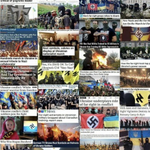
🇺🇦 Janvier 2011 : Mykhalchyshyn, élu néo nazi Svoboda au conseil municipal, ne parle pas de coexistence. Il promet le jour où « notre armée banderiste franchira le Dniepr, traversera Donetsk et jettera dehors la bande au cul bleu » — le Parti des régions élu à l’Est.
Le tribunal de Donetsk vient de retirer à Bandera le titre de Héros d’Ukraine. Pour Lviv, c’est déjà un casus belli idéologique.
Trois ennemis : Moscou, Donetsk, Kiev. Kiev a « capitulé ». Lviv, « ville de Bandera » ne se couchera pas hurle t’il.
Trois ans plus tard, le Maidan hisse ces mêmes réseaux néonazis au pouvoir. L’Est refuse le putsch. Kiev lance l’ATO.
Huit ans de guerre dans le Donbass, puis février 2022.
Ce n’est pas Moscou qui a inventé la fracture. C’est Lviv qui l’a hurlée sous la pluie, micro ouvert, caméra allumée — trois ans avant les biscuits de Nuland et le « CIA coup de Kiev».
Ceux qui voulaient Donetsk à genoux ont eu la guerre qu’ils appelaient. Ils en paient le prix.