

Building agents @sierraplatform // built data infra @onehousehq, ads + ML training data @google, search @dashworksai, memories @umich
NYC
Joined January 2011
- Tweets324
- Following1.2K
- Followers256
- Likes2.7K







Agents hacked Hugging Face using credentials shared on the public internet. The exploits haven't changed, but with infinitely persistent AI attackers, the margin for error is approaching zero.
dwarkesh.com/p/openai-huggin…

Friend at a family office recently cut half a million $$ in software spend with in-house tooling he built. He's never typed a line of code in his life.
Expect a tsunami of these stories over the next 1-2 years.
Terrible signal for traditional software vendors. Incredible signal for high-agency builders with domain expertise.

"We replaced Salesforce with a vibe-coded CRM built for our own workflows.
The custom system integrated our AI agents more effectively, worked better for the team, and made Salesforce unnecessary.
That decision cut a $600,000 annual software bill to zero."
Is this an anomaly or the start of a much larger trend @chamath @Avishai_ab @jasonlk @benioff
Prediction: Databricks becomes a hyperscaler.
They just raised $3B to bolster their AI model serving capacity. This starts with larger commits to cloud providers to secure capacity, but makes a compelling path for Databricks to go after the full stack.
Their strategy has consistently been to own the most important data and AI workloads, then move up and down the stack, displacing adjacent vendors.
Databricks already has serverless abstractions for model serving and data processing. This allows them to shift compute to any cloud under the hood.
The fastest path is probably to partner with (or acquire) a neocloud like CoreWeave or Crusoe, each worth roughly a quarter of Databricks’ latest valuation.
Alternatively, Databricks itself could become an acquisition target for Meta or SpaceX to accelerate their own hyperscaler ambitions.


Why are forward-deployed product teams winning?
They give large companies back what they lose as they grow: startup speed.
Traditional product management asks teams to prove an idea belongs on the roadmap before they can test it. At Google, my org was encouraged to pursue ideas only if they could become $100M opportunities. That filter kills promising ideas before customers can prove their value.
Forward-deployed teams reverse the process. They start with a real customer problem, build a solution, and learn from how it performs. The best ideas earn the right to scale.
At Sierra, we share what works across the company, then turn the strongest solutions into product capabilities for every customer. This is how we run fast experiments, delight customers, and keep a high bar for everything we bring into the core platform.
Take transfer nudges, which decide whether an AI agent should hand a customer to a person immediately or make another attempt to help. After solving this problem across many deployments, our agent engineers learned when these nudges work best and when they frustrate customers. They turned those general lessons into reusable SDK tooling and a no-code package.
AI makes this model even more powerful. Internal tools like Pinecone help builders across Sierra ship high-quality work faster.
The result is a tighter loop: solve, learn, share, productize.
5 years ago Google and Facebook spun up "next billion users" initiatives to capture new users from India and Brazil. Soon we'll see the "next trillion users", but the "users" will live in data centers

As a daily @claudeai user, Chat Log is my top feature request to help navigate long conversations. I built a concept with Claude Code to imagine what this feature could look like. Love to hear if you all face the same challenge!
Check it out @mikeyk @AnthropicAI

Everyone's talking about Databricks and Palantir. Meanwhile, Oracle's like "hold my drink" and adds their entire ARR ($4B) with just a few customers


I'm closely watching single-node compute engines. Single-node data processing is not new, but recent creative products are making it more accessible for data teams.
Distributed engines like Spark, Trino, Redshift, and Snowflake handle large volumes. For slicing subsets or fast prototyping, single-node engines offer speed without the cost of scale.
@_hex_tech integrates this in notebooks, connecting to warehouses for big pulls, then using DuckDB for subsequent cells.
@dbt_labs Fusion engine compiles models to SQL, enabling single-node testing before hitting the warehouse.
On the open source side, engines like DuckDB and DataFusion provide fast compute for data that fits on one machine.
As I see more teams looking to cut data platform costs and move faster, this could be a smart option to consider, in addition to optimizing their primary engines for ETL and query serving.
Could Salesforce dominate the data market? Benioff claims they're targeting Databricks and Palantir (each ~$4B ARR).
In May, Salesforce acquired Informatica for $8B, providing ETL/data prep. They also own Tableau (query engine + visualization), MuleSoft (integration), and AgentForce (AI agents + activation).
Still - despite their aggressive pursuit of a full data stack, Salesforce is rarely seen as a key player in the modern data landscape.
A major challenge is that data teams want to extract data from silos like Salesforce into platforms they can own and curate. Building a comprehensive data platform requires significant focus and technical depth, as shown by Databricks, Snowflake, and Palantir becoming massive businesses despite competition from the hyperscalers.
But if Salesforce can figure it out, their strength in downstream data activation and ability to sell into enterprises could make them a dark horse to win a solid share of the data market.
Everyone talks about Apache Spark, but is it really the best engine for AI? 🤔 I spent hours researching the engines powering scalable machine learning and data science so you don't have to! (1/...)
This is for the data scientists and ML engineers who are:
- Writing Python code to analyze data
- Training and tuning machine learning models
- Performing scientific or geospatial analysis
- Analyzing unstructured data like text, images, and videos
(2/...)
Ready to scale your data science and ML? Choosing the optimal technology is key. My new blog post cuts through the noise and provides a practical guide to scaling your Python workflows, empowering you to do more, faster and cheaper.
Read the blog here:
onehouse.ai/blog/apache-spar…

In 2014, @elonmusk open sourced all of Tesla's patents, with the goal of expanding the electric vehicle market. Since then, annual EV sales have grown from 0.3 million to over 14 million (>4,000% increase). We are about to witness the same for AI.

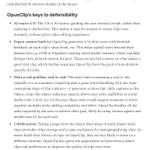
How do you build an AI startup that's defensible against smarter language models in the future? Here are my thoughts, inspired by @OpusClip


