

Music theorist, practitioner, and cognitive scientist at MARCS Institute, Western Sydney University. @andytonality@mastodonapp.uk @andytonality.bsky.social
Sydney, New South Wales
Joined July 2011
- Tweets393
- Following850
- Followers322
- Likes871

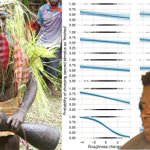




We are offering an exciting #CrossCultural #MusicScience PhD scholarship in Sydney, for our ARC project "Revealing Universal and Cultural Origins of Music-Induced Emotion": international field trips, music cognition experiments & Bayesian analyses!
westernsydney.edu.au/schools…

ALT On the left, a Papua New Guinean musician in ceremonial clothes is performing on the Kundu drum (a long hourglass-shaped wooden drum). In the background, members of the community are enjoying the show. On the right, in the background, are plots showing the results of computational analyses of the effects of different music-acoustical features on perceived music stability in several different communities. On the right, in the foreground, a young woman from PNG is wearing headphones and taking part in a music cognition experiment.
Andrew Milne retweeted
Here's a corrected link for more details and application form: westernsydney.edu.au/schools…
Here's a corrected link for more details and application form: westernsydney.edu.au/schools…
Andrew Milne retweeted
We are offering an exciting #MusicScience PhD scholarship in Sydney, for our ARC Discovery project Revealing Universal and Cultural Origins of Music-Induced Emotion: international field trips, music cognition experiments, & Bayesian analyses! Please share. westernsydney.edu.au/schools…

Andrew Milne retweeted

At least 3 bonuses: Andy is an amazing supervisor + you’ll be working with the leading researchers in the field + it’s a very exciting research project with lots of opportunities along the way!

We are offering an exciting #MusicScience PhD scholarship in Sydney, for our ARC Discovery project Revealing Universal and Cultural Origins of Music-Induced Emotion: international field trips, music cognition experiments, & Bayesian analyses! Please share. westernsydney.edu.au/schools…
We are offering an exciting #MusicScience PhD scholarship in Sydney, for our ARC Discovery project Revealing Universal and Cultural Origins of Music-Induced Emotion: international field trips, music cognition experiments, & Bayesian analyses! Please share. westernsydney.edu.au/schools…

In contradistinction to Povel and Essens' classic work, we find the edges of groups of cues are tapped with lower (not higher) probability. Instead, our findings show that taps to our unfamiliar and "difficult" rhythms are guided by rather crude and lossy heuristics. (6/6)
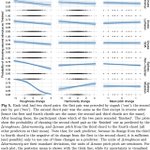
We also find the following features influential on temporal expectation (the probability of tapping at each pulse): proximity of that pulse to the rhythm's "centre-of-mass" and to edges of groups of cues or rests; low n-gram Markov processes. (5/6)
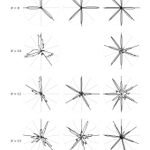
For our non-isochronous rhythms, the following features predict tapping accuracy: mean interonset interval, evenness, balance, and whether N is divisible by 2 or 3. (4/6)
Non-isochronous rhythms, including those in odd time signatures, are comparatively rare in mainstream Western music. However, they are common in many non-Western musical traditions (e.g., aksak, African) as well as some Western genres (fusion, progressive and post-rock). (3/6)
Each rhythmic cycle comprised N isochronous "pulses" sounded with a cymbal. An uneven subset of these pulses were also sounded by a piano tone to serve as "cues" to tap. Each rhythmic cycle was repeated for 30 seconds and tapped along with. (2/6)
A new paper about how rhythmic structure affects tapping accuracy and temporal expectation. Participants tapped along with 91 highly syncopated rhythms, several in unusual time signatures. Some rhythms were performed well; some very poorly. doi.org/10.3758/s13414-023-0… (1/6)

Thank you. The changes were not that substantive – a bit more care around the terminology of consonance/dissonance and stability/finishedness, and some more theoretical background related to universal versus cultural mechanisms. The peer reviews are available on the website.