

Midwest based consultant focused on peatland protection/restoration policy and ecological forestry initiatives | City Councilmember in Eau Claire, WI
Wisconsin, USA
Joined September 2012
- Tweets4.1K
- Following14.8K
- Followers47K
- Likes46.8K


Andrew Werthmann retweeted

1/5 A wetland at daybreak: ducks overhead, a muskrat moving through the water. Minnesota is updating the rules that protect these places. MWF’s Brad Gausman explains what’s at stake: Read Brad’s commentary: mnwildlife.org/learn-about-t…
🤖 Made with AI

Andrew Werthmann retweeted
Read Brad’s full op-ed: duluthnewstribune.com/opinio…

Andrew Werthmann retweeted
The impacts of wildfire smoke don’t end when the air clears: wildfire ash can carry mercury, heavy metals, and other toxic compounds into lakes people drink from. Public systems have safeguards; many cabins and private wells do not. What folks should know: tinyurl.com/24e8ynqv

Andrew Werthmann retweeted
Clean water supports northern Minnesota’s fisheries, outdoor recreation and local businesses.
The Great Lakes Restoration Initiative shows what steady, bipartisan investment can accomplish.
What does clean water make possible where you live?
theconversation.com/most-ame…

Andrew Werthmann retweeted

As severe storms and flooding increasingly threaten our communities, the Trump administration's proposal to roll back the Endangerment Finding undermines decades of environmental protection and public health safeguards pennlive.com/opinion/2025/09…
Andrew Werthmann retweeted

BREAKING: Today the Trump administration proposed to eliminate some of our most vital tools to protect people from the pollution that causes climate change, and the stakes could not be higher. Read EDF President @FredKrupp's full statement: edf.org/media/trump-administ…

Andrew Werthmann retweeted

Conserving peatlands sequesters carbon and supports local communities.
One example: Minnesota’s Sax-Zim Bog generates an estimated $1.18 million in outdoor recreation annually, all while helping mitigate floods, purify drinking water, and more.
pewtrsts.org/4jpTGNX
Andrew Werthmann retweeted

Peatlands store up to 30% of the world's carbon sequestered on land despite occupying just 3% of land surface. pew.org/42POrlU
Andrew Werthmann retweeted
Peatlands act as a carbon sponge and provide habitats for many species.
After Alaska, Minnesota has more peatland than any other state—and has an opportunity to protect and restore these ecosystems, wildlife, and cultural history. pew.org/4jvTcap
Andrew Werthmann retweeted
Peatlands store up to 30% of the world's carbon sequestered on land despite occupying just 3% of land surface.
This month, Minnesota—the state with the most peatland in the Lower 48—has the opportunity to protect and restore these ecosystems. pew.org/4jvTcap
Andrew Werthmann retweeted

Update on the DNC Chair race.
Over the last 24 hours, we’ve added 11 supporters—which brings my count to 131.
Victory requires 225 out of 448. Over 150 undecided members. No candidate is close to a majority.
The race is wide open. 🧵
Andrew Werthmann retweeted

🌱Although peatlands cover just 3% of the Earth's land area, they store up to 30% of land-based biomass carbon. 🫧
#SDG13 #ClimateAction
via @FAOForestry

Andrew Werthmann retweeted

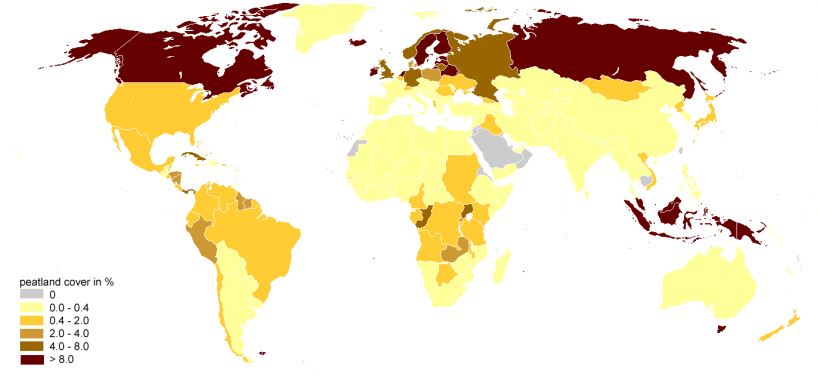
Peatlands are a type of wetlands which are among the most valuable ecosystems on Earth but when damaged are a major source of greenhouse gas emissions.
Restoring them can help combat #ClimateChange.
Andrew Werthmann retweeted
Humanity still has an opportunity to turn the tide on climate change by ensuring that all peatlands are wet by 2050.
Here are just 5️⃣ benefits of wet peatlands 👇🏼
#ClimateChange
via @FAOKnowledge

Andrew Werthmann retweeted

UNEP’s new Global Peatland Hotspot Atlas shows that #PeatlandsMatter for carbon storage, water quality, jobs, and reducing the risks of fires, drought and floods.
New maps and visualizations aid the protection and restoration of peatlands.
#WaterAction buff.ly/3ZcaY9n

Andrew Werthmann retweeted

💡Peatlands are critical ecosystems for climate solutions.
Practices like peatland conservation, restoration, rewetting & improved water management provide climate change mitigation & adaptation opportunities.
#COP29 #ClimateAction
🔗FAO at COP29: ow.ly/v2jl50U07Ix

Andrew Werthmann retweeted
Peatlands are some of the most misunderstood and under-monitored ecosystems globally. The Global Peatland Hotspot Atlas evaluates their status worldwide and highlights the threats from urbanization, industrialization, & climate change.
#PeatlandsMatter
via @UNEP_NAmerica

Peatlands in Minnesota contain 40% of the state’s terrestrial carbon stores! That’s why it’s so critical to protect them. MN DNR just launched a new Peatland Initiative that makes important steps on this important issue!
dnr.state.mn.us/wetlands/pea…


